What will calm, modern outdoor and Indoor spaces look like in the coming year, and how can serenity be designed even in a Tiny or Small backyard? In this article, I explore the most relevant Zen Garden ideas 2026, combining traditional Japanese principles with contemporary materials, Easy layouts, and inspiration drawn from Animal crossing, Acnh, and real-world design practice. Whether you are working with Backyard small spaces, a Corner, or a Tabletop arrangement, these ideas balance Simple, Cozy, and mindful design while remaining highly practical.
Black Basalt Minimalist Courtyard
I approach the Black Basalt Minimalist Courtyard as a refined exterior solution for a Small backyard or modern Backyard that demands calm without visual clutter. This design relies on dark basalt stone to ground the space visually, creating a meditative atmosphere that feels intentional rather than decorative. I often recommend this layout for homeowners who want a Backyard japanese style garden that feels architectural and timeless while still being Easy to maintain.
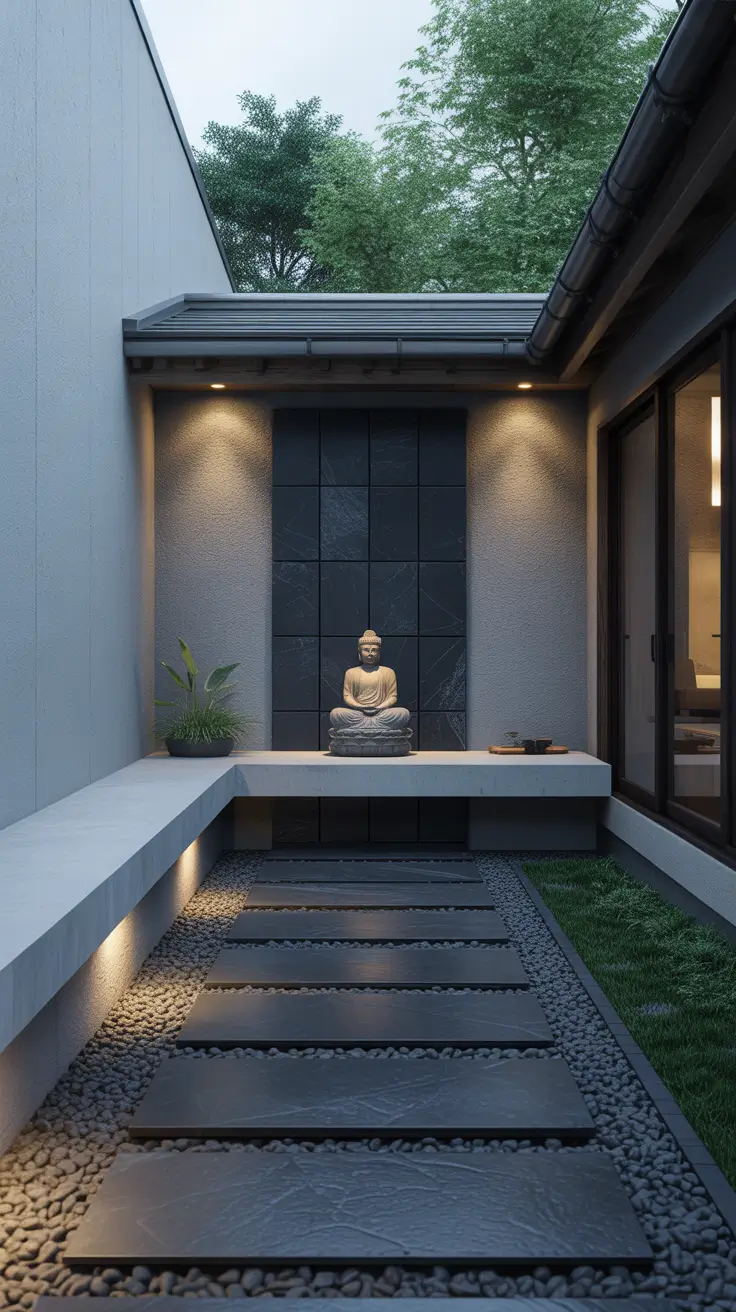
In this courtyard, I use large-format black basalt pavers, subtle gravel joints, and low-profile seating in matte wood or concrete. A single sculptural element such as a Buddha statue or stone water basin becomes the focal point, avoiding unnecessary accessories. I prefer built-in benches over movable furniture to preserve clean lines and maintain flow across the entire room-like outdoor space.
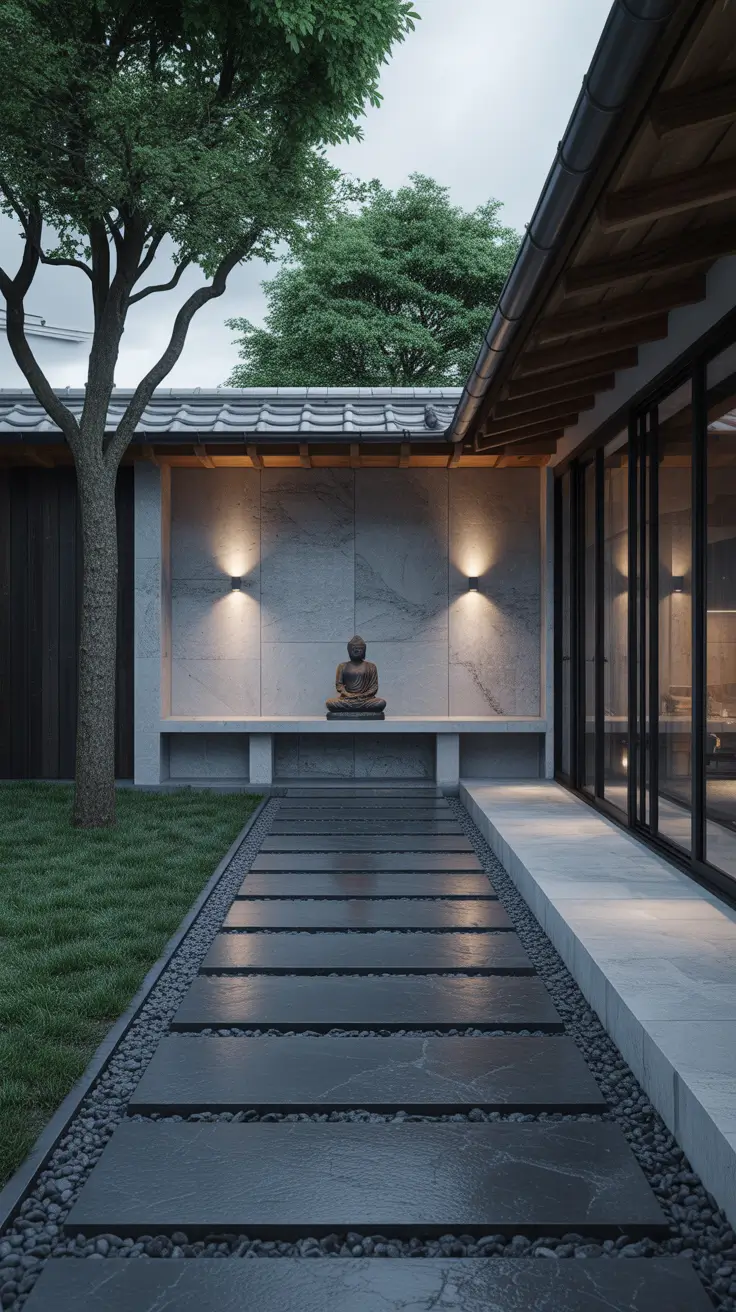
From my experience, designers featured in Architectural Digest often emphasize restraint in Japanese-inspired courtyards, and I fully agree. I have seen basalt courtyards perform beautifully in urban environments where noise and distraction are constant. The depth of the stone absorbs light and sound, making the space feel more Cozy and enclosed than its actual footprint.
What I would add here is soft, indirect lighting integrated into the stone edges to extend usability into the evening while preserving the minimalist character.
Moss And Stone Lantern Corner
I design the Moss and Stone Lantern Corner as a compact yet expressive solution, especially effective for Backyard small spaces or shaded garden edges. This layout emphasizes texture and contrast rather than size, allowing even a Tiny garden to feel intentional. The combination of moss and stone lanterns reflects classic Japanese garden philosophy adapted for modern living.
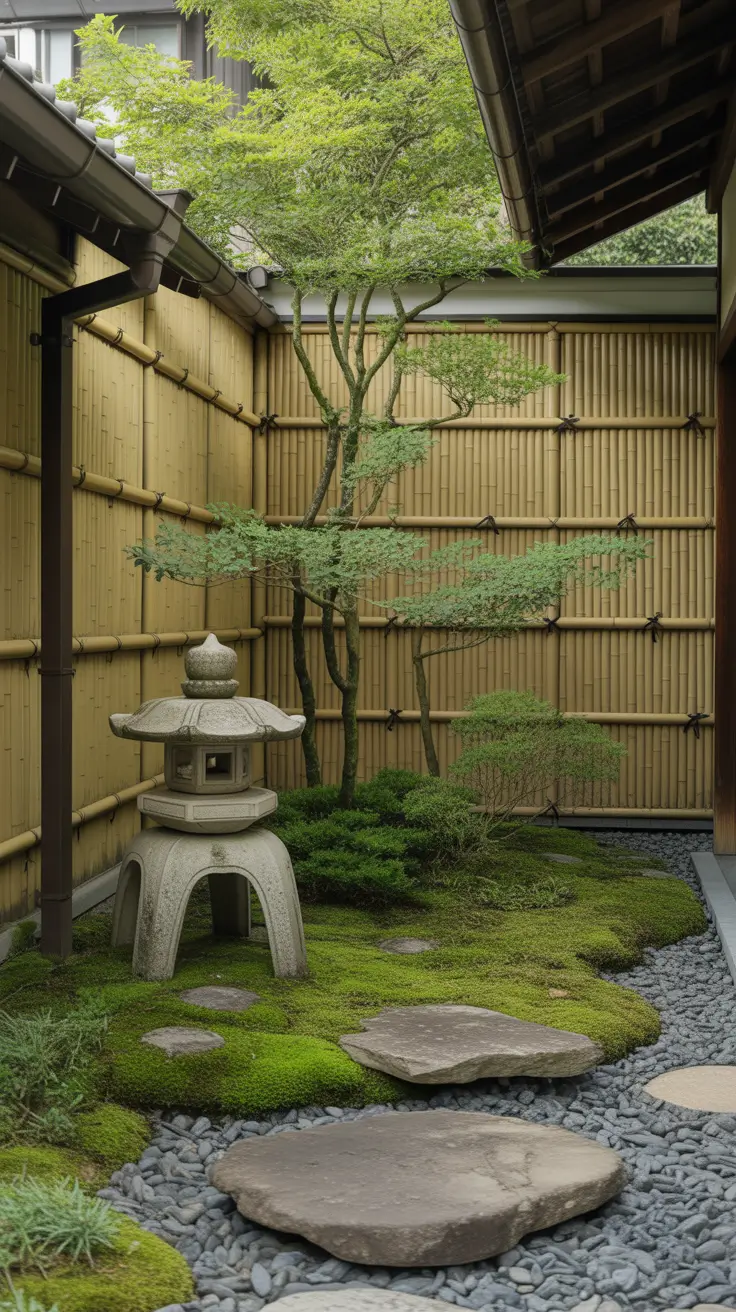
In this design, I include natural moss groundcover, irregular stone slabs, and a traditional ishidoro lantern scaled appropriately for residential use. I often frame the corner with dark wood fencing or bamboo screens to isolate the vignette visually. Each element is chosen for durability and low maintenance, making it an Easy addition to an existing garden.
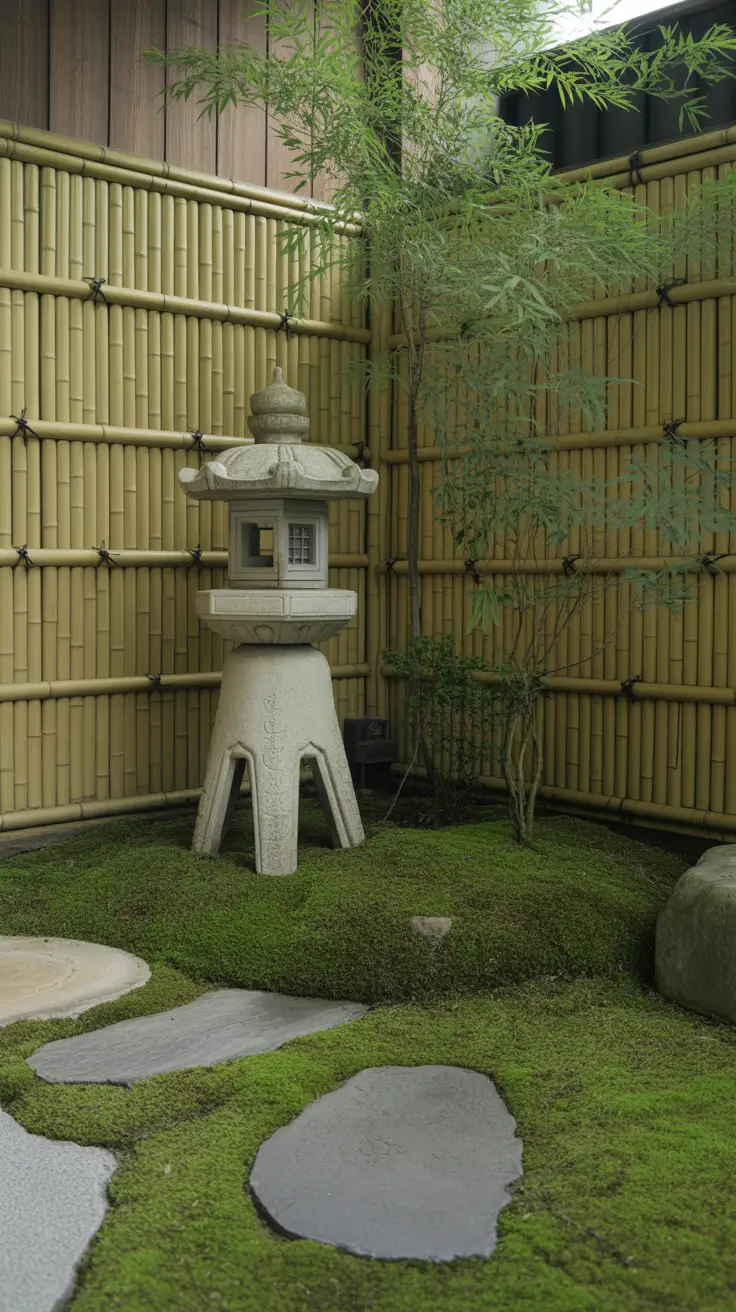
I personally appreciate how this corner echoes the quiet storytelling seen in Animal crossing and Acnh bamboo environments, where small details create emotional impact. Garden designers from the Portland Japanese Garden often stress asymmetry and patience, and this corner embodies those principles beautifully.
If anything is missing, I would integrate a subtle gravel border to prevent moss overgrowth and maintain long-term clarity in the design.
White Gravel Bamboo Strip
The White Gravel Bamboo Strip is one of my favorite linear solutions for narrow Backyard layouts or side yards. I use it to visually elongate space while introducing rhythm and repetition, which is essential in Zen Garden ideas 2026. This concept works equally well outdoors or in semi-covered Indoor garden corridors.
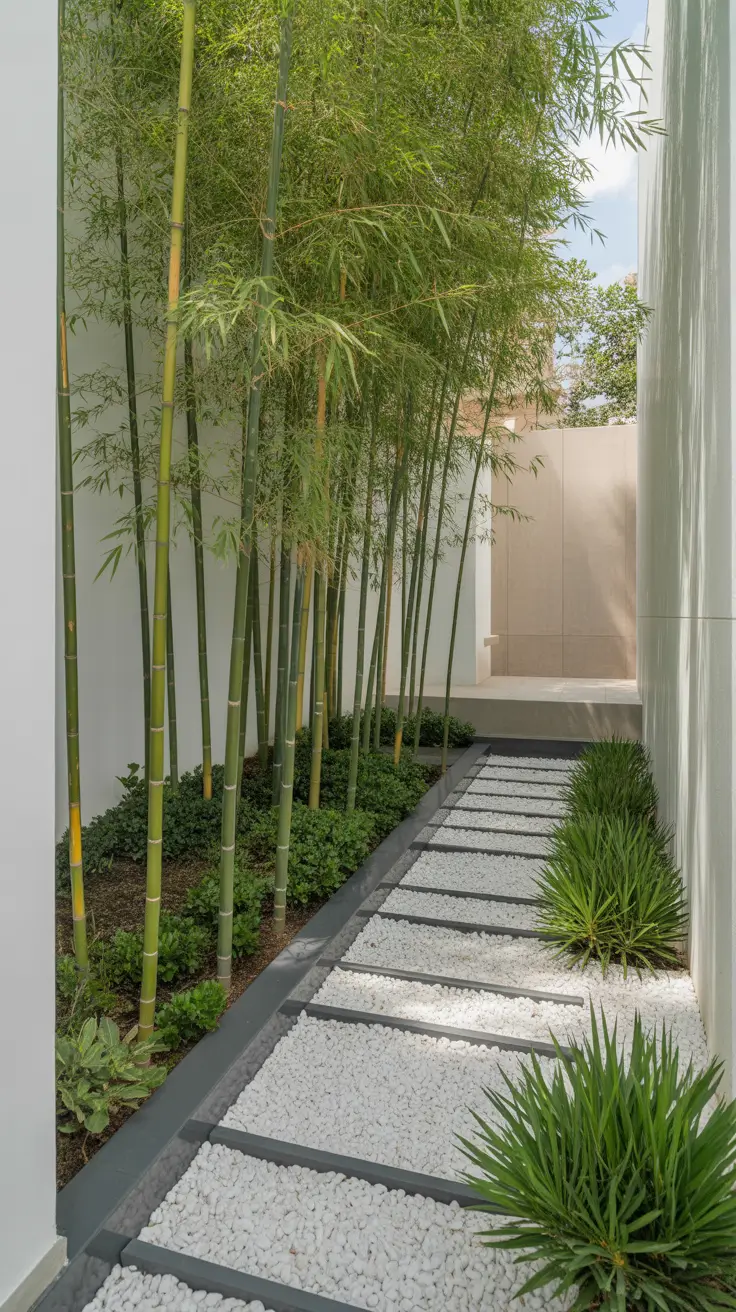
I rely on fine white gravel, vertical bamboo poles, and discreet steel or wood edging to keep the strip crisp. Bamboo provides height without bulk, while the gravel reflects light and brightens constrained spaces. I avoid overcrowding this design, keeping furniture minimal or eliminating it entirely to preserve movement.
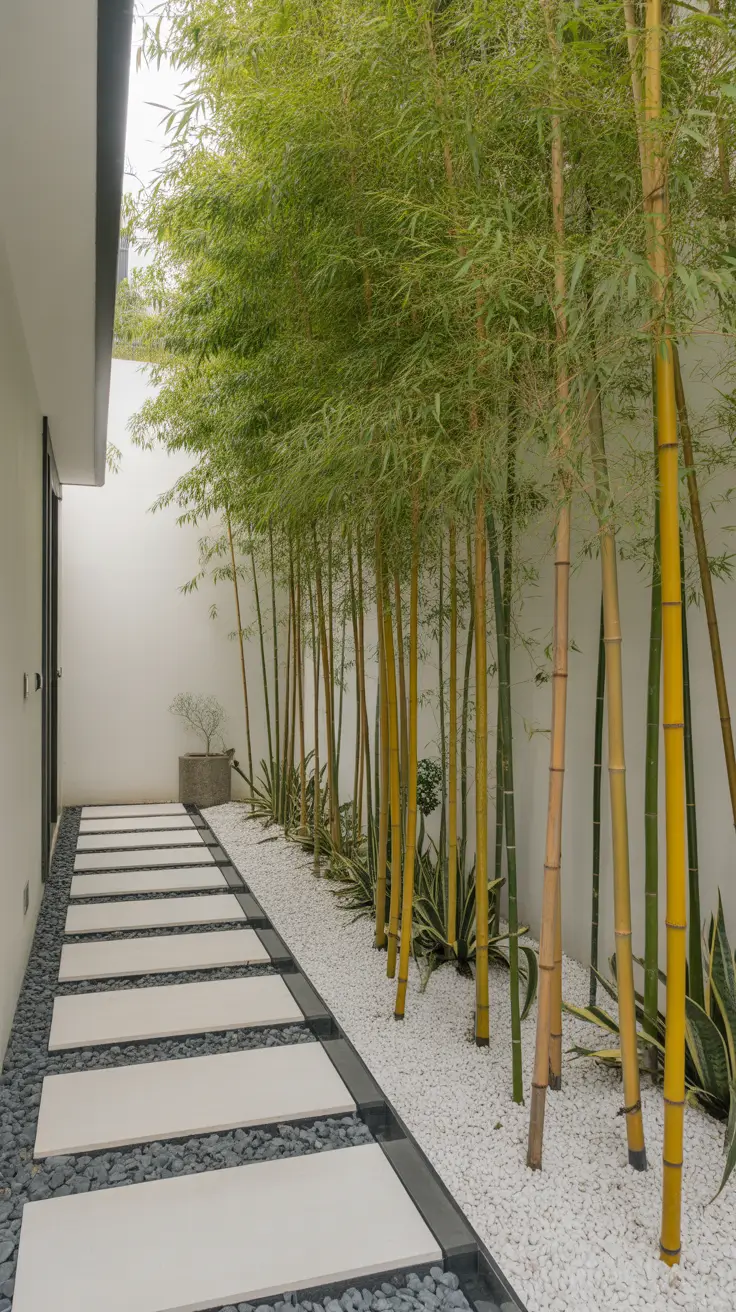
In my practice, I have seen this approach recommended by Dwell Magazine as an effective way to blend privacy and aesthetics. Personally, I find the contrast between white gravel and green bamboo especially calming, echoing the balance seen in Acnh environments.
To enhance this section, I would add a concealed drainage layer beneath the gravel to ensure longevity and easy upkeep.
Charcoal Gravel Steel Edge
I consider the Charcoal Gravel Steel Edge garden a contemporary interpretation of traditional Zen principles. It is ideal for modern homes that want a structured yet meditative Backyard japanese style aesthetic. The darker palette gives the space a grounded, architectural quality that suits urban settings.
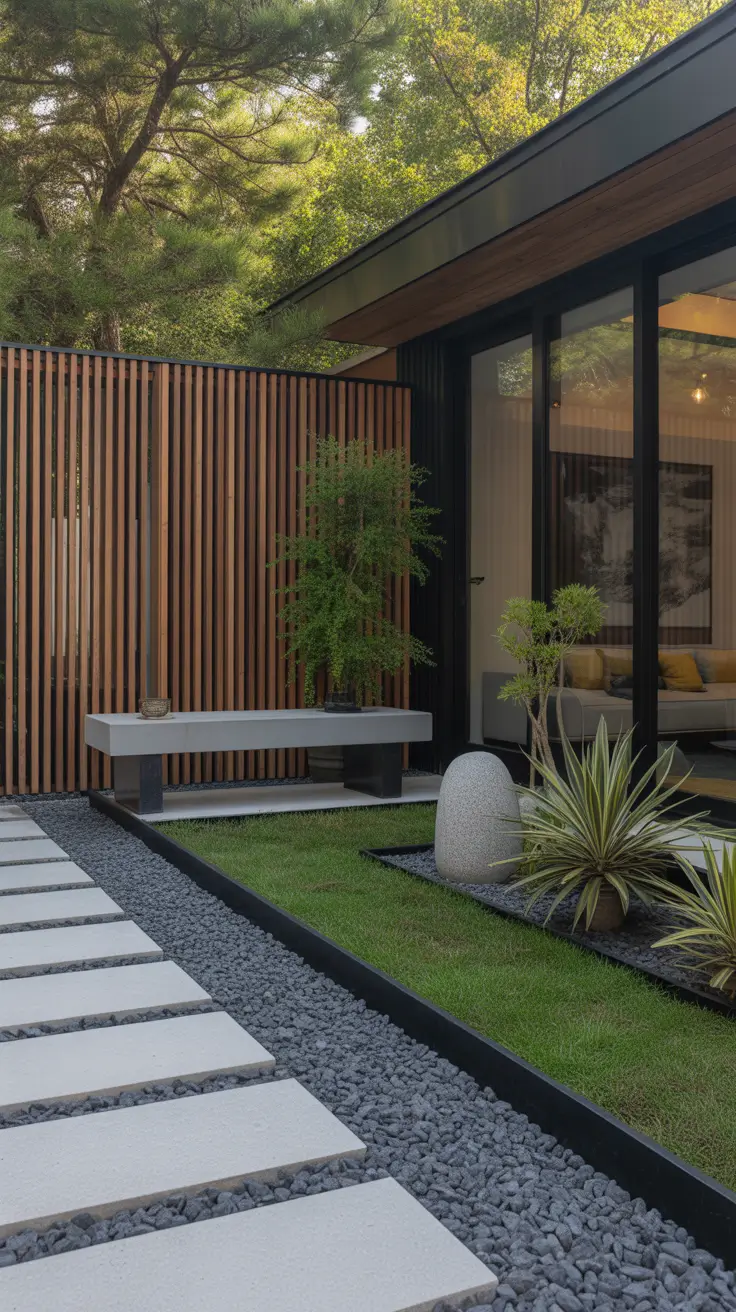
This design includes fine charcoal gravel, corten or black steel edging, and geometric stepping stones. I often pair it with minimalist outdoor seating or a low stone bench to keep the layout functional without breaking visual harmony. The steel edge ensures clean lines and prevents gravel migration.
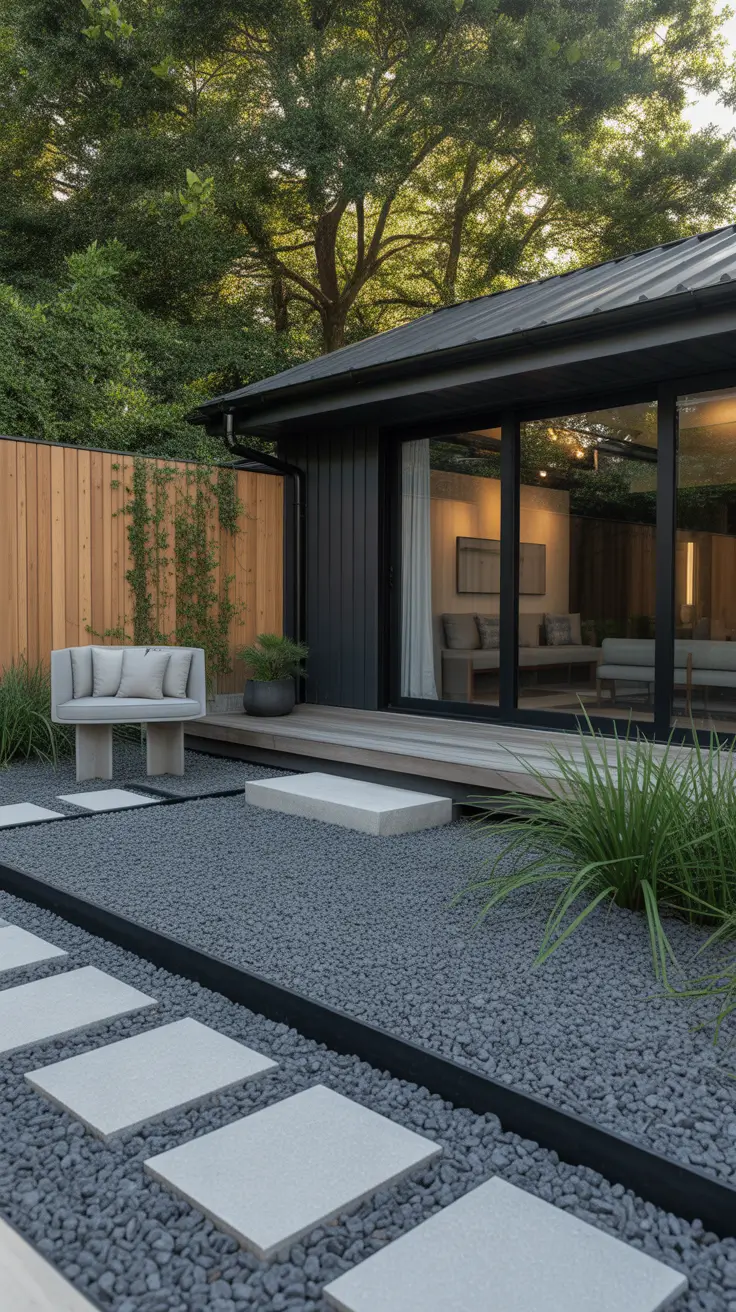
From my experience, landscape architects featured in Dezeen often highlight steel edging as a long-term solution for precision gardens. I agree, as it allows the garden to age gracefully while remaining Simple and intentional.
I would recommend adding a single accent plant, such as dwarf pine, to soften the rigidity without compromising the concept.
River Pebble Dry Stream
The River Pebble Dry Stream is a symbolic and practical feature I use to guide movement through a Backyard or courtyard. It references flowing water while remaining water-free, making it an Easy and sustainable option for Zen Garden ideas 2026.
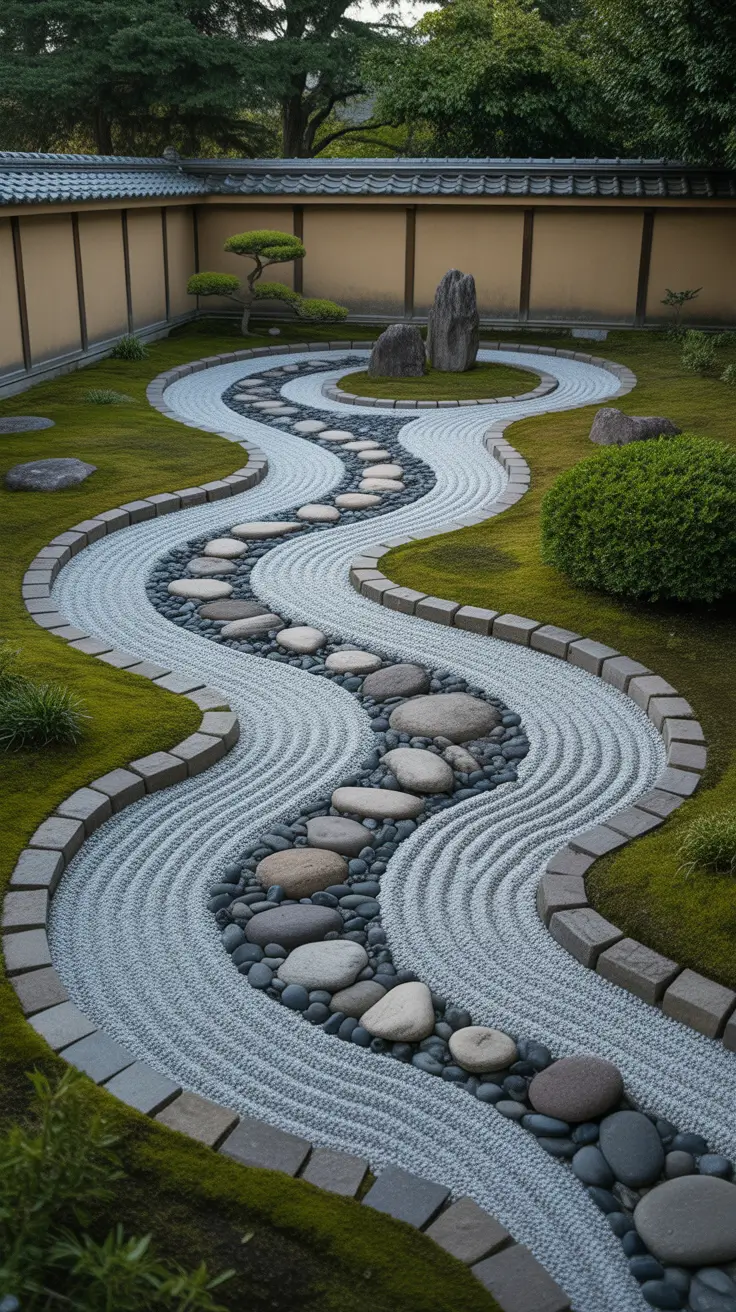
I construct this stream using smooth river pebbles in varied sizes, bordered by gravel or flat stones. Gentle curves create visual flow, and I sometimes integrate stepping stones for interaction. This element works beautifully as a connector between different garden zones.
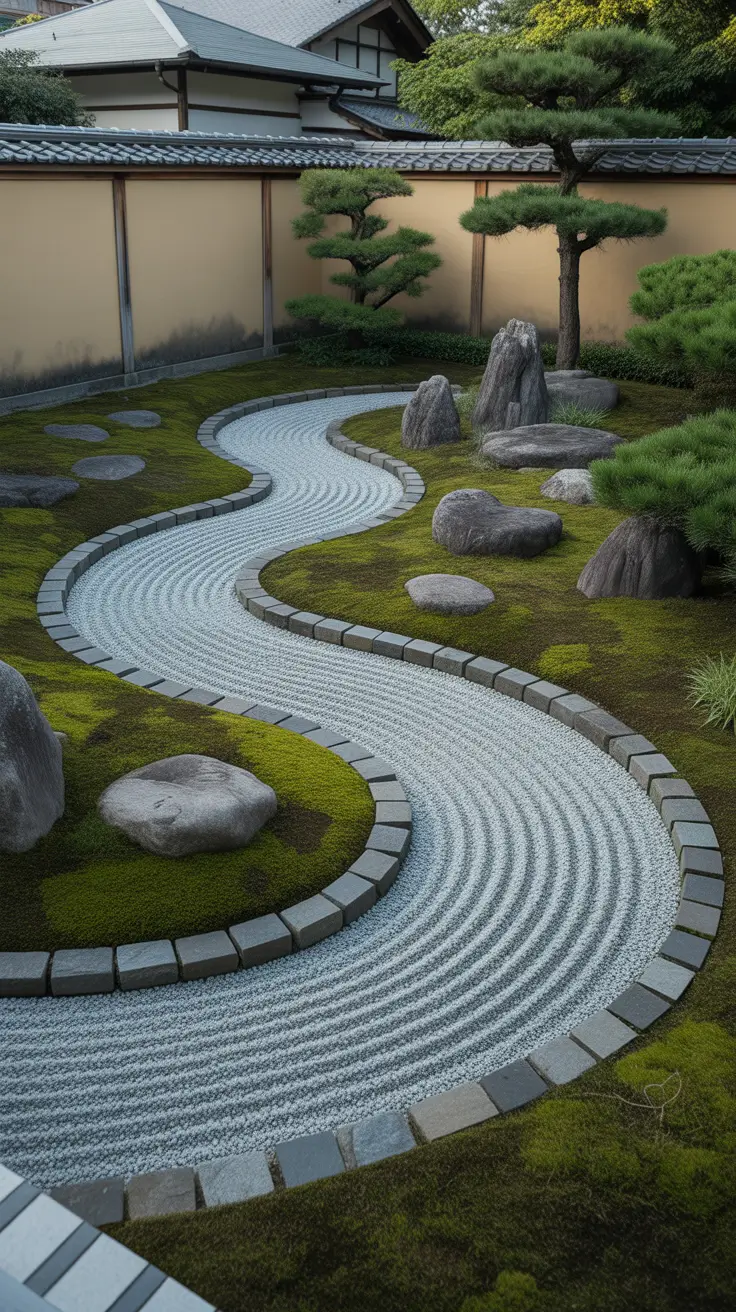
Personally, I find this design resonates strongly with fans of Animal crossing, where dry streams often signal calm transitions. Landscape designers from Sunset Magazine often note that symbolic water elements reduce maintenance while preserving meaning.
To complete this section, I would introduce subtle elevation changes to enhance realism and depth.
Sand Ripples With Pavers
Sand Ripples With Pavers represent the most iconic Zen expression, adapted here for modern residential use. I often recommend this design for Indoor courtyards, patios, or Tabletop Zen arrangements scaled up to full-room proportions.
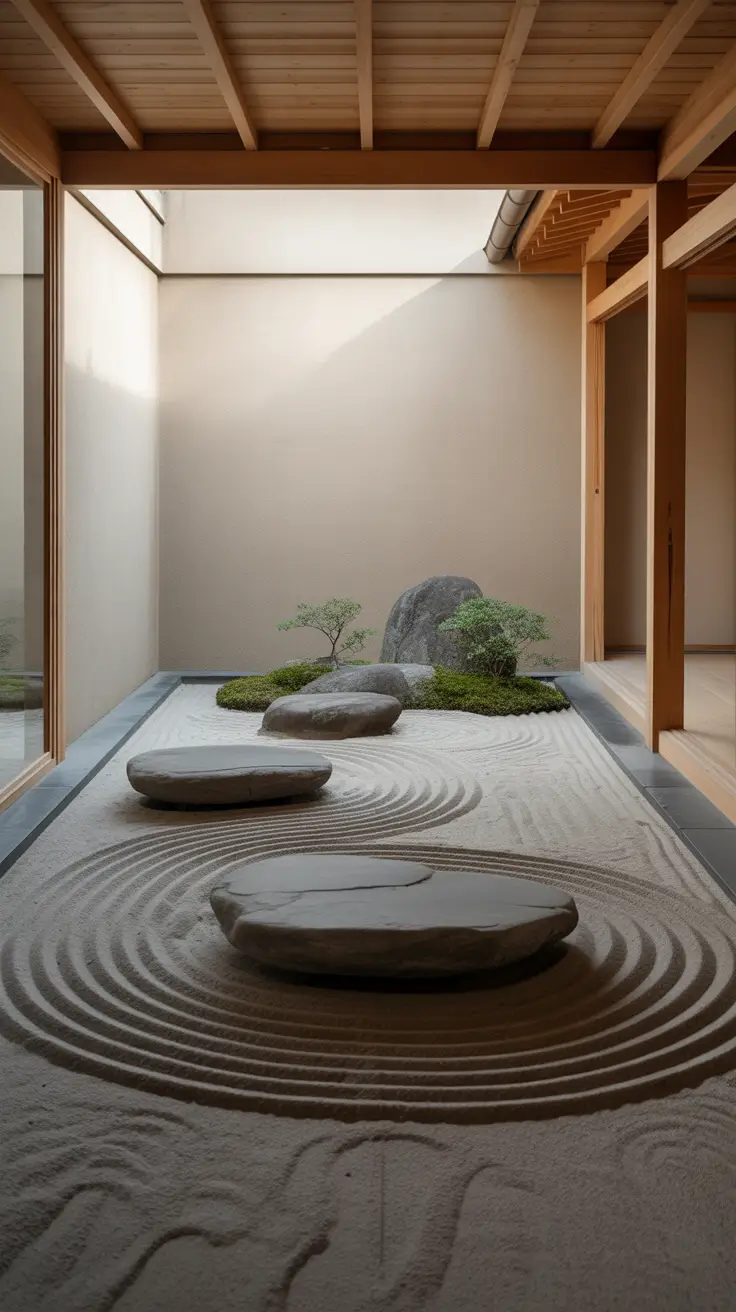
This layout features fine sand carefully raked into ripples, combined with large stone or concrete pavers that float visually above the surface. I ensure paver placement feels intentional, allowing for walking paths without disrupting the sand patterns.
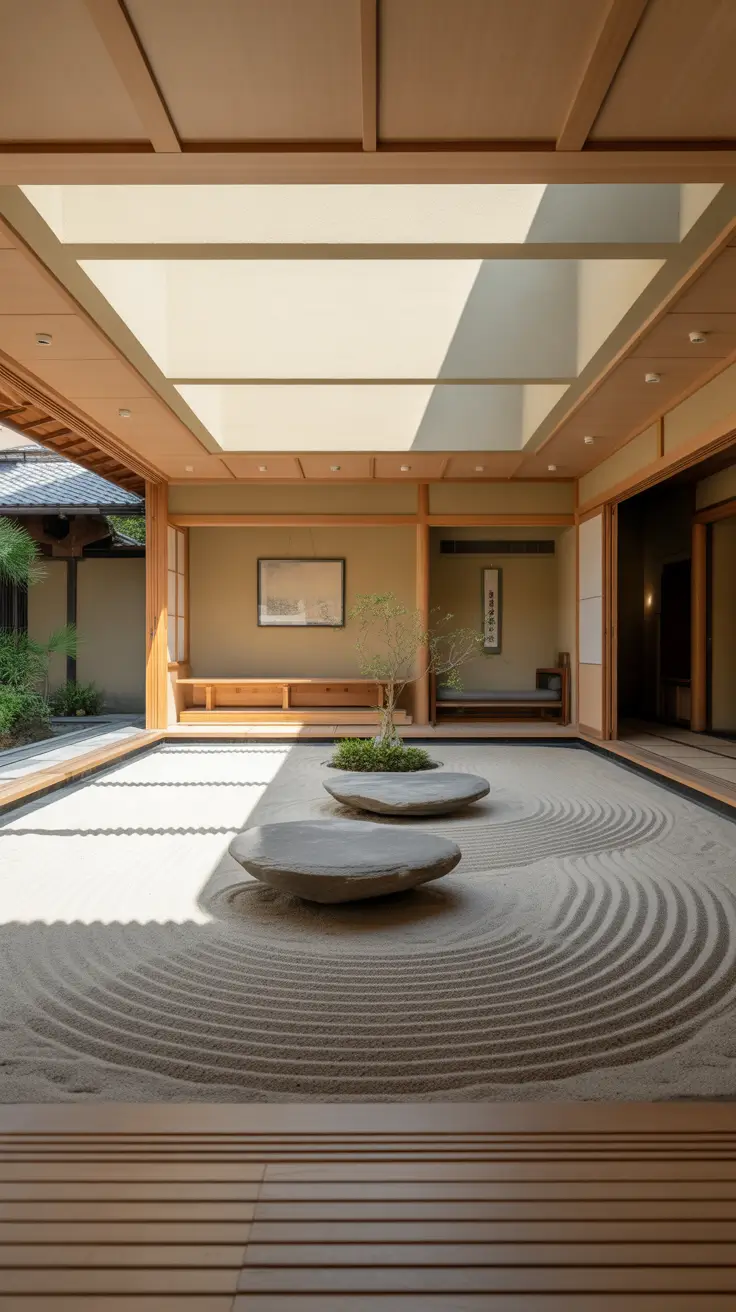
In my own work, I follow guidance from Japanese garden scholars who emphasize maintenance as meditation. Raking sand regularly reinforces mindfulness, making this one of the most Cozy and meaningful layouts despite its simplicity.
What could be added here is a dedicated storage space for raking tools to encourage consistent upkeep.
Pink Gravel Sakura Corner
The Pink Gravel Sakura Corner introduces softness and seasonal emotion into Zen design, making it especially appealing for expressive Backyard small spaces. I use this concept to gently modernize tradition while respecting its roots.
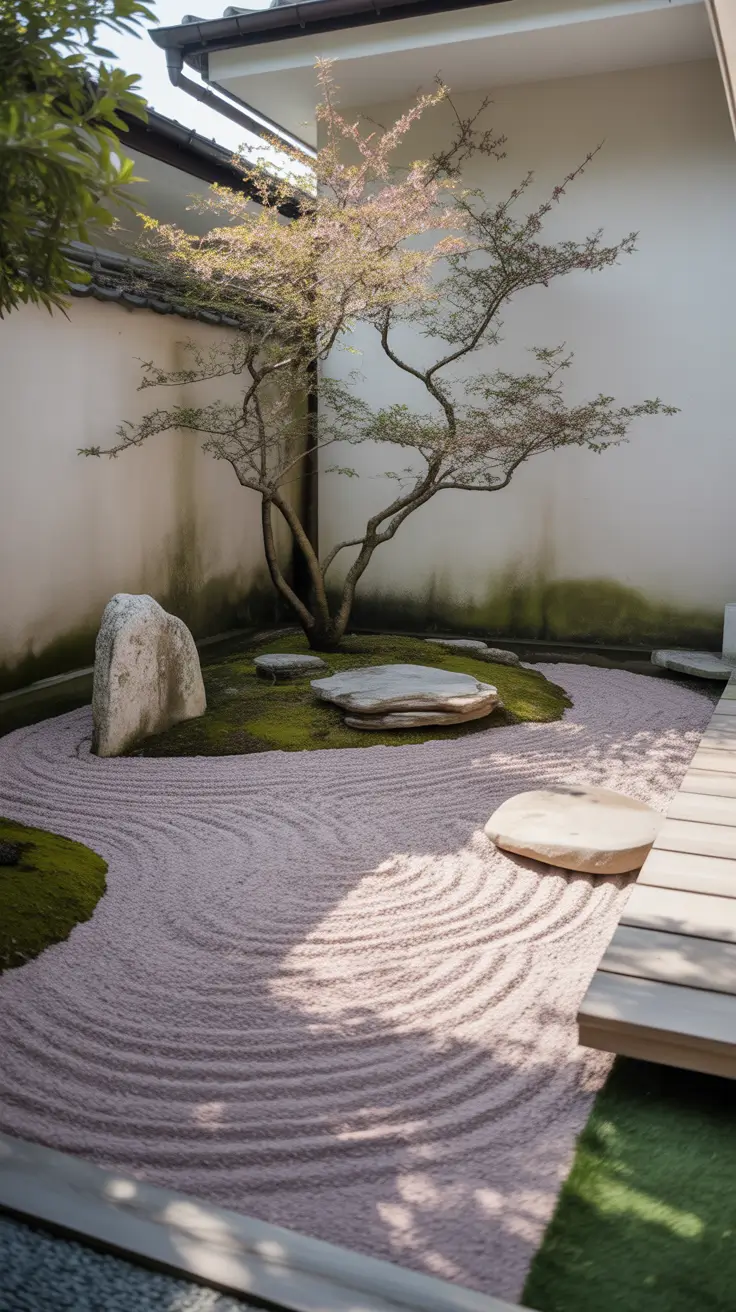
This design includes pale pink gravel, a small ornamental cherry tree or artificial sakura, and neutral stone accents. I often keep furniture minimal, allowing the color and texture to define the space naturally.
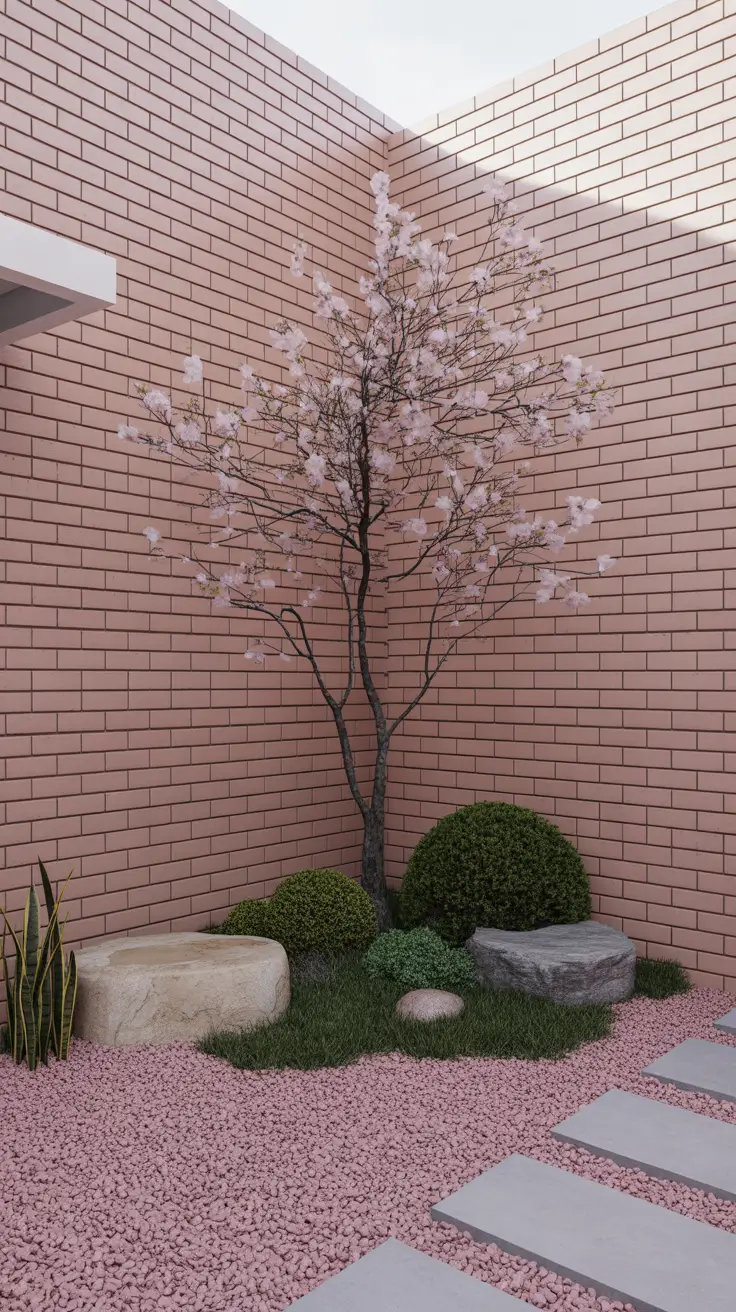
From my perspective, this corner mirrors the emotional storytelling seen in Acnh environments, where color plays a subtle but powerful role. Designers from Better Homes and Gardens frequently highlight seasonal symbolism as a way to personalize outdoor spaces.
To improve this section, I would add a low seating stone to invite quiet reflection during peak bloom periods.
Indigo Gravel Rock Constellation
I design the Indigo Gravel Rock Constellation as a visually poetic interpretation of Zen principles, ideal for a modern Backyard or contemplative Indoor courtyard. The deep indigo gravel creates a night-sky effect, while carefully placed stones resemble constellations, making this layout both artistic and grounding. It works especially well in Small backyard settings where visual storytelling replaces size.
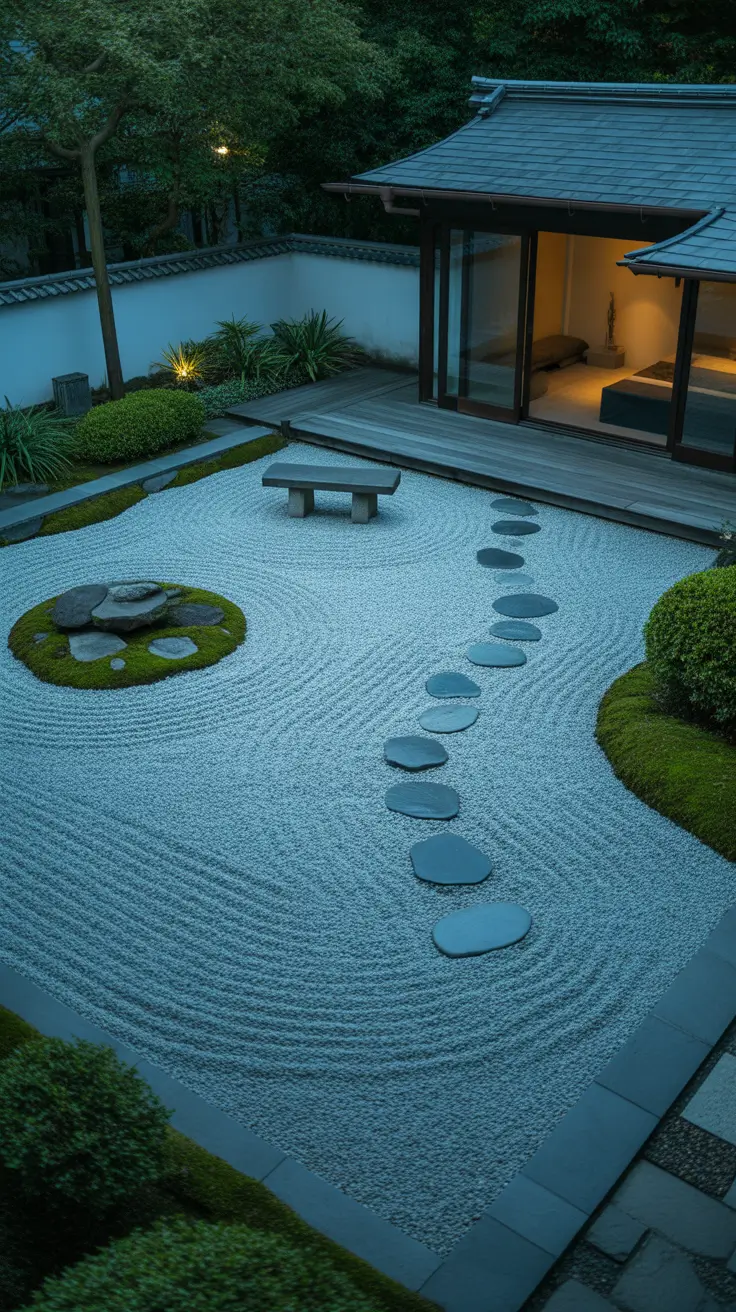
In this design, I use fine indigo-toned gravel, smooth river rocks in varying sizes, and subtle edging to maintain clarity. I avoid excessive furniture, but when needed, I include a low stone bench positioned at the perimeter to allow full appreciation of the composition. Each stone is placed intentionally to encourage slow observation and calm movement.
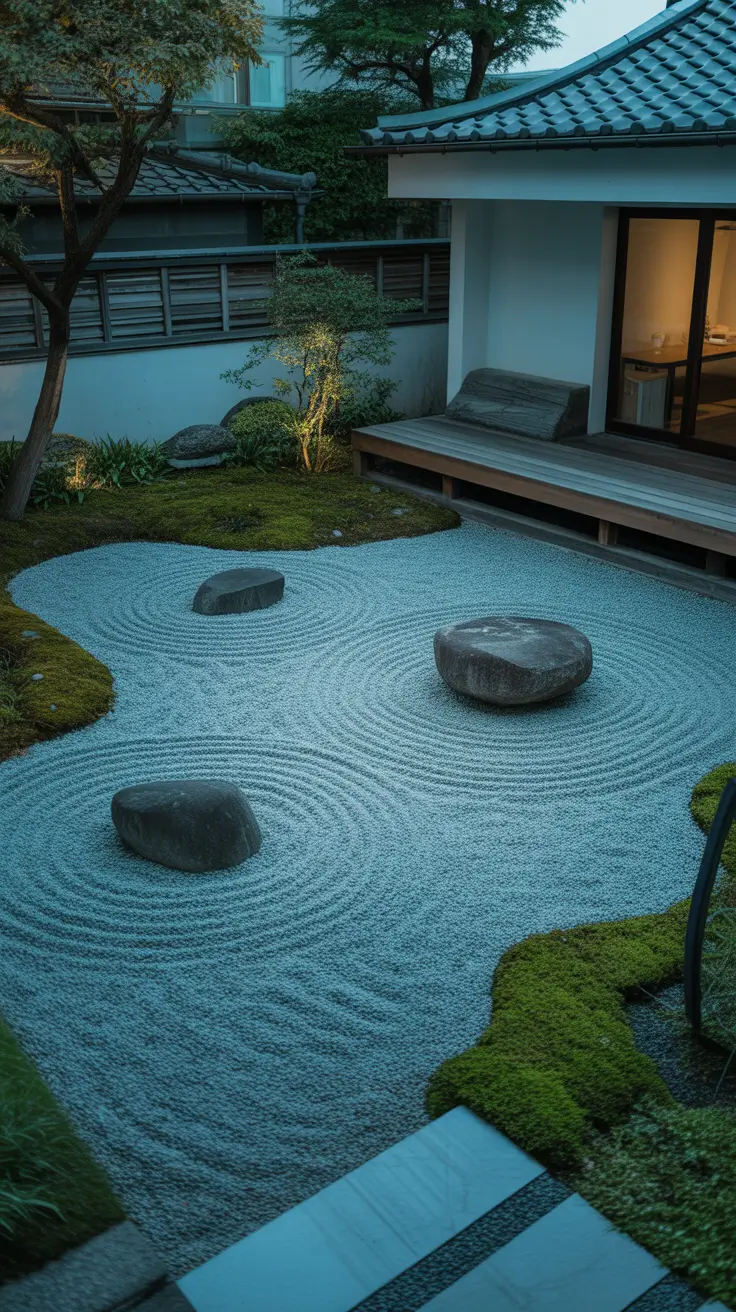
From my professional perspective, this approach reflects ideas often discussed in Interior Design Magazine, where designers emphasize narrative landscapes. I find that this layout resonates with people familiar with Animal crossing aesthetics, where symbolic arrangements create emotional depth without complexity.
To strengthen this section, I would add discreet solar ground lighting to softly highlight the stone constellation at night.
Emerald Moss Lava Spine
The Emerald Moss Lava Spine is a bold yet organic concept I use to introduce movement and contrast into Zen Garden ideas 2026. This design centers around a linear lava stone feature covered partially in moss, making it ideal for Backyard japanese style gardens that seek balance between raw and refined elements.
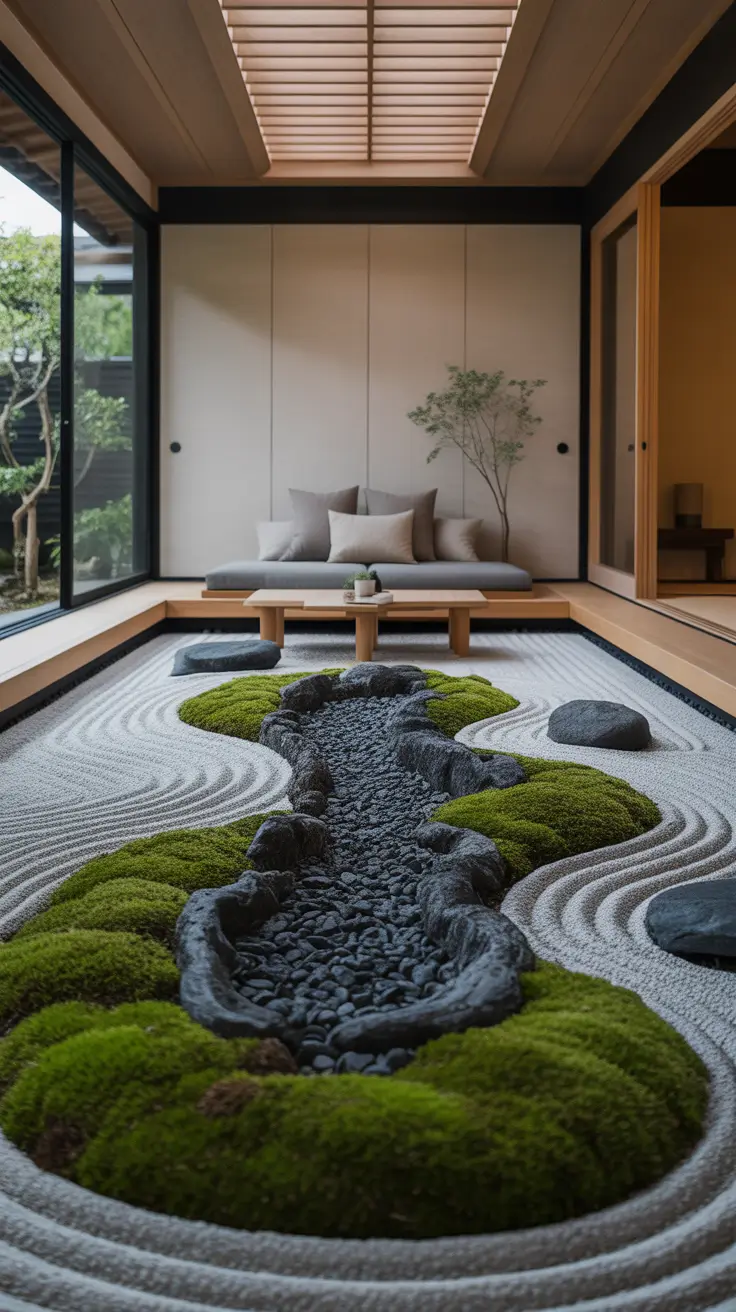
I construct this layout using a central lava rock spine, emerald moss patches, and neutral gravel on either side to frame the composition. I typically keep furniture minimal, sometimes adding a single wooden stool or meditation seat to preserve focus on the natural materials.
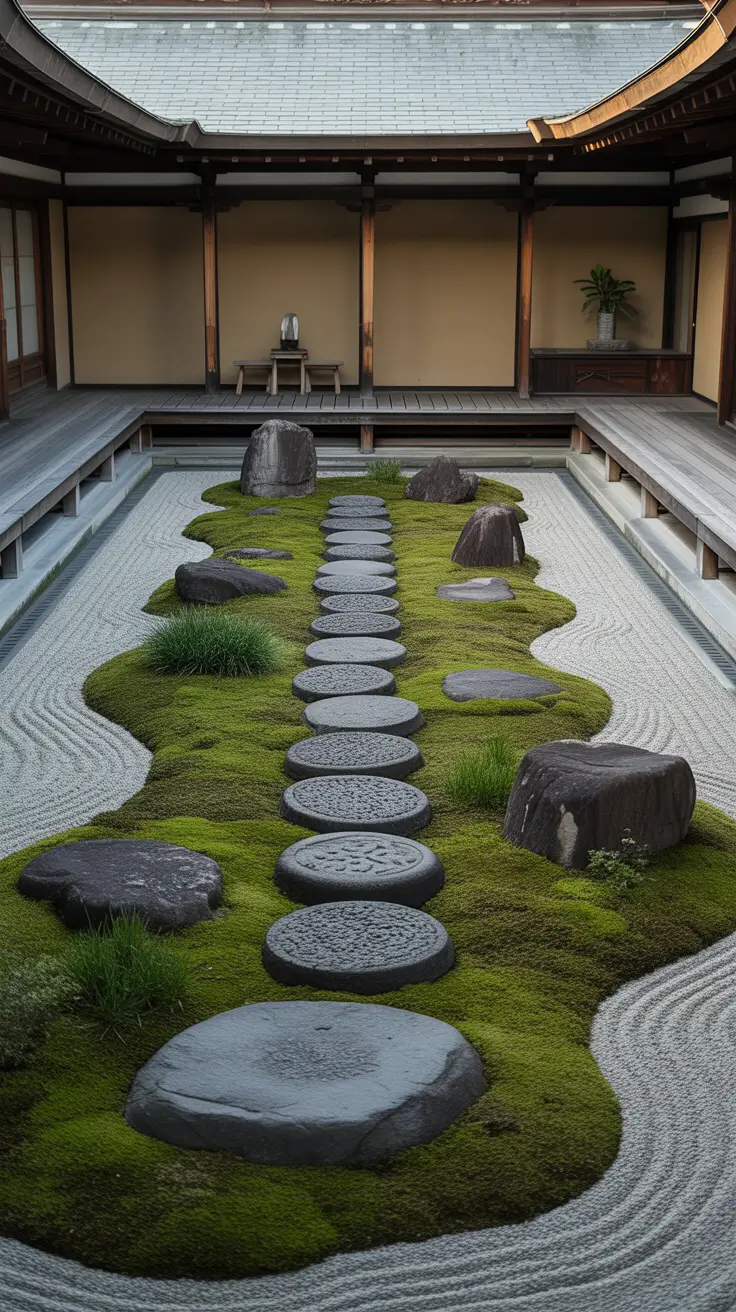
In my experience, landscape architects from the American Society of Landscape Architects often emphasize the value of contrast in meditative spaces. I personally appreciate how the lava spine adds structure while moss introduces softness, creating a Cozy yet powerful visual rhythm.
What could enhance this section further is an irrigation mist system to maintain moss vibrancy without manual effort.
Beige Sand Desert Zen
I approach the Beige Sand Desert Zen garden as a minimalist interpretation inspired by arid landscapes and traditional Zen philosophy. This layout is especially effective for Tiny yards, rooftops, or Tabletop adaptations scaled up for full outdoor use.
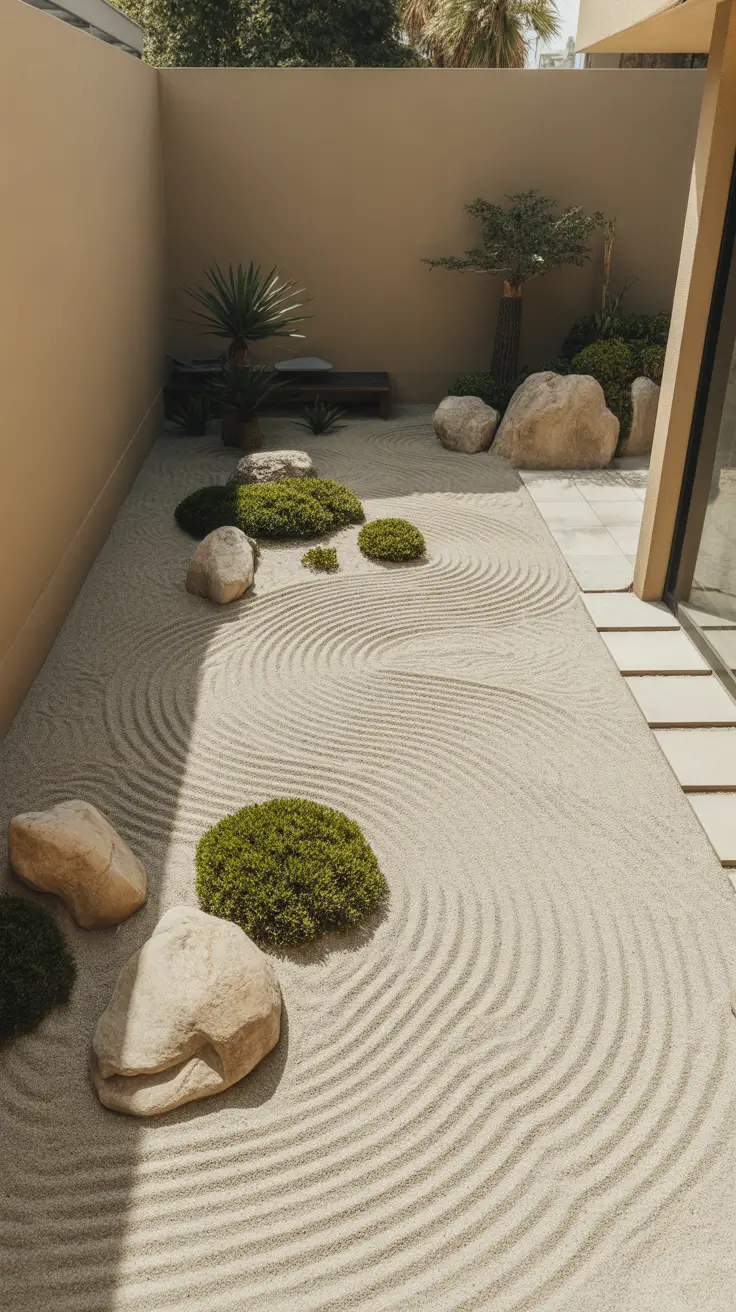
This design features fine beige sand, sparse stone groupings, and occasional sculptural rocks that evoke desert calm. I intentionally exclude dense planting and limit accessories to maintain openness. If seating is required, I use low-profile wooden platforms that blend into the environment.
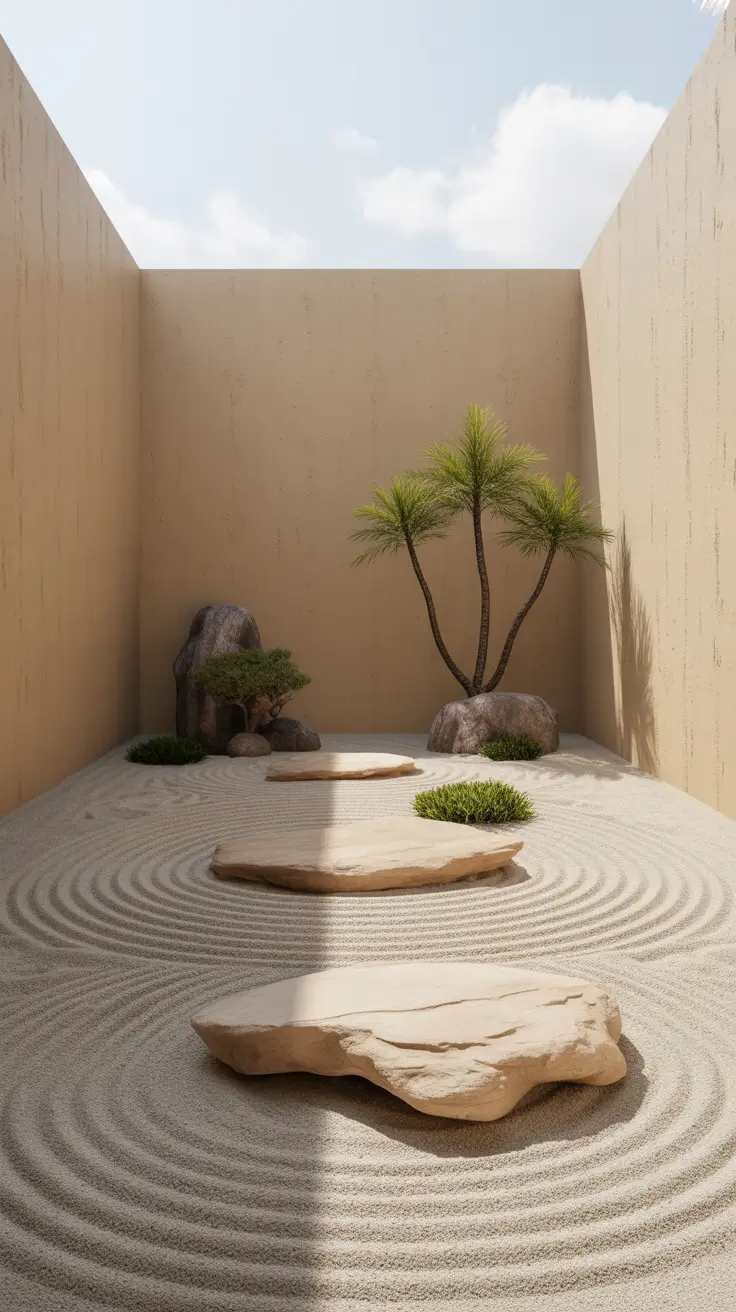
From my point of view, this concept aligns with ideas shared by designers in Dwell, who often highlight negative space as a powerful design tool. I find this layout extremely Simple, meditative, and surprisingly adaptable to both Indoor and outdoor environments.
To complete this section, I would recommend adding wind-protected borders to preserve sand patterns over time.
Sea Glass Coastal Zen
The Sea Glass Coastal Zen garden is a modern fusion concept I use when clients want tranquility with a lighter, more playful tone. It works beautifully in a Backyard near coastal regions or as a thematic accent in urban homes inspired by nature.
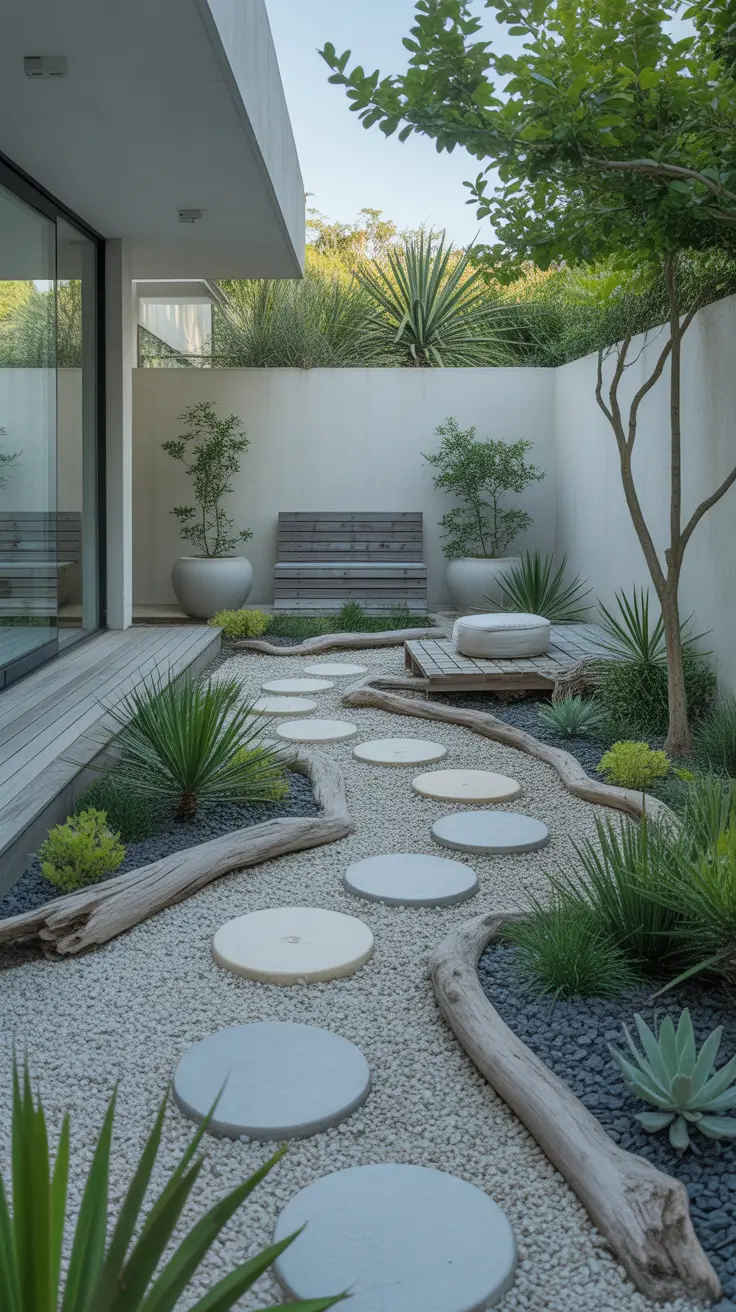
I design this space using tumbled sea glass tones, pale gravel, driftwood accents, and smooth stone seating. The materials are arranged to suggest shoreline movement while maintaining Zen order. I ensure the layout feels cohesive and not overly decorative.
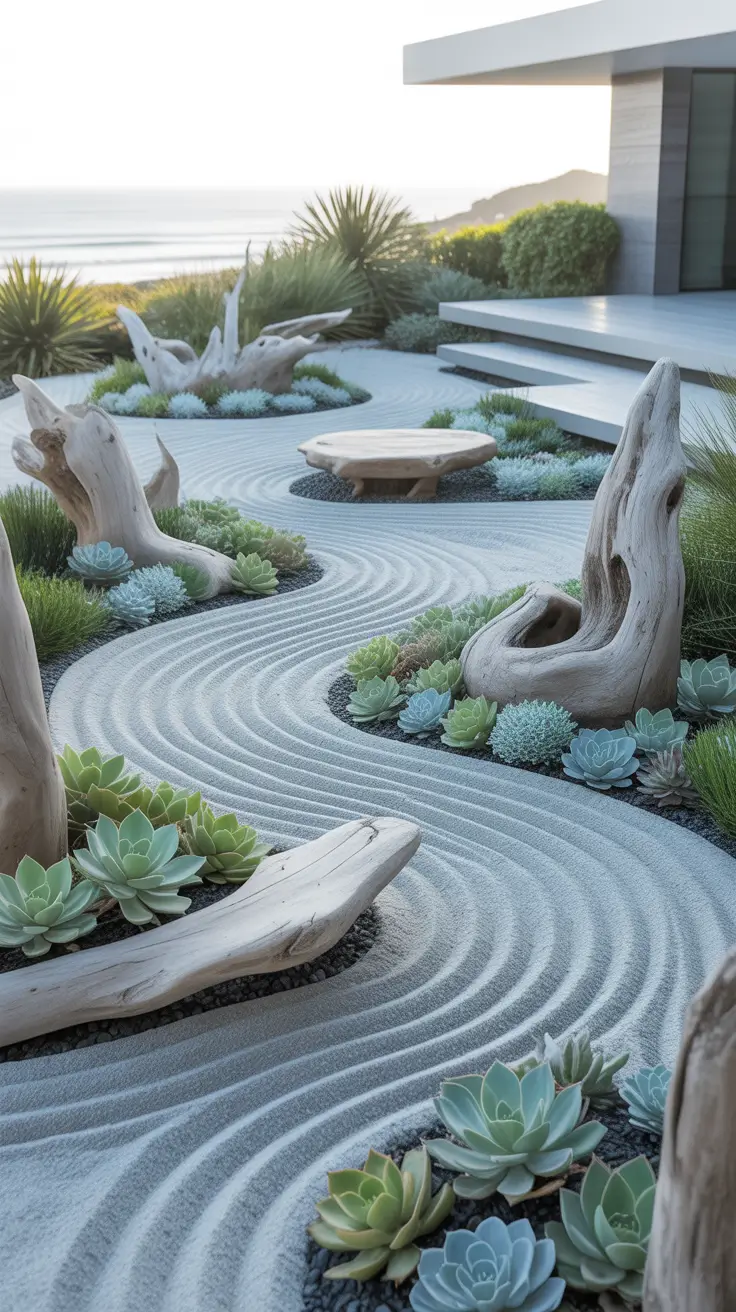
Personally, I see strong parallels between this style and Acnh design environments, where color and texture evoke emotion without overwhelming the space. Better Homes and Gardens often highlight coastal materials as calming elements, and I agree when they are used with restraint.
What I would add here is a neutral stone border to visually ground the lighter materials.
White Marble Quartz Zen
White Marble Quartz Zen is a refined, almost gallery-like approach to Zen garden design that I recommend for luxury homes or high-end Indoor courtyards. This layout emphasizes purity, light, and precision, making it ideal for contemporary architecture.
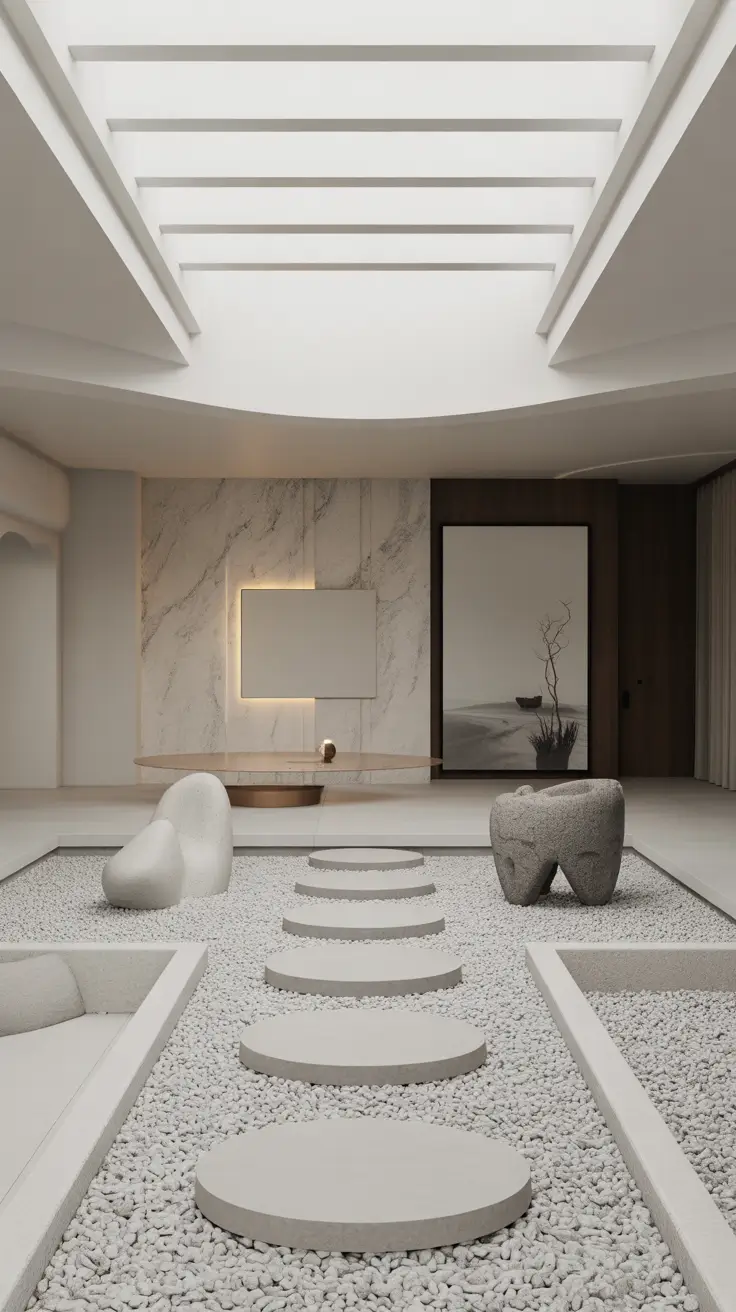
I use white marble gravel, quartz stone accents, and minimalistic planters to create contrast through texture rather than color. Furniture is limited to sculptural stone stools or integrated seating to maintain a clean, uninterrupted flow.
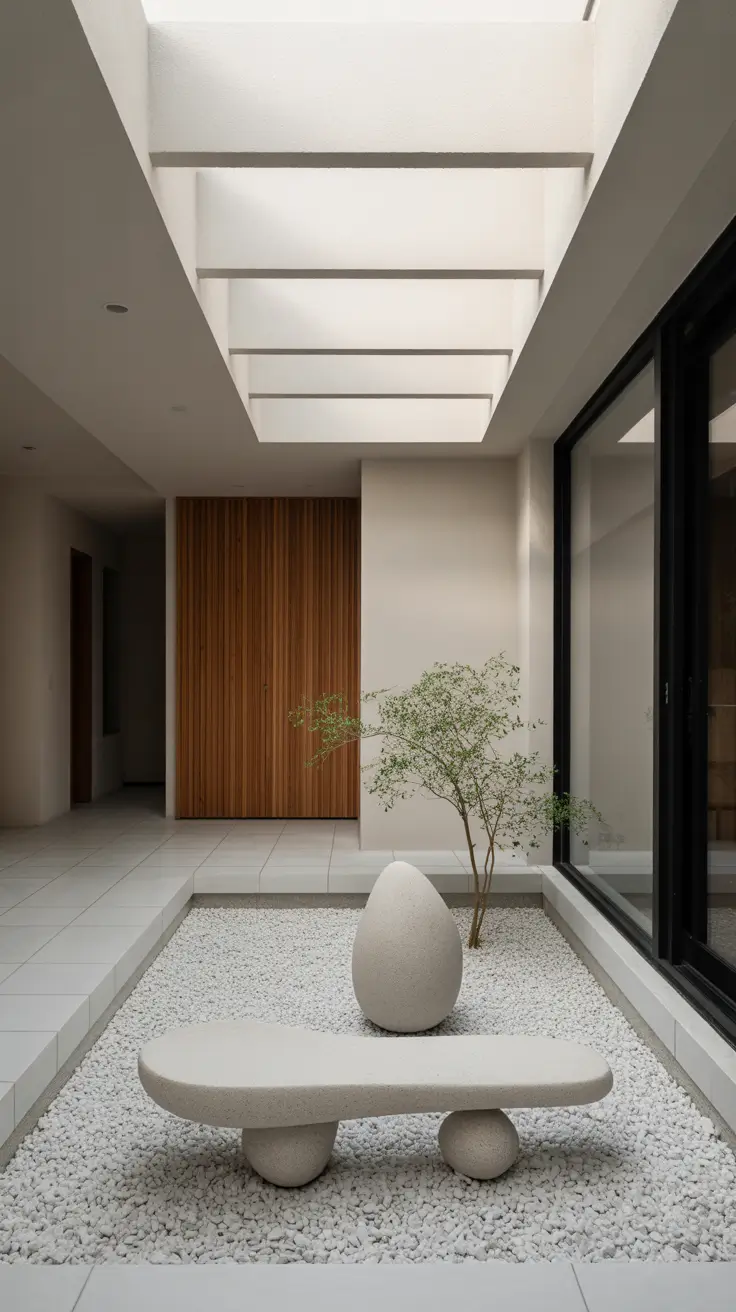
In my professional experience, architects featured in Architectural Digest often stress material quality over quantity. I find that marble and quartz elevate the Zen concept while still honoring its Japanese roots.
To enhance functionality, I would integrate underfloor drainage to protect the stone surfaces long term.
Cream Limestone Halo
The Cream Limestone Halo garden is a circular Zen composition I use to create a sense of enclosure and focus. It is especially effective in Backyard small spaces where symmetry can bring calm and order.
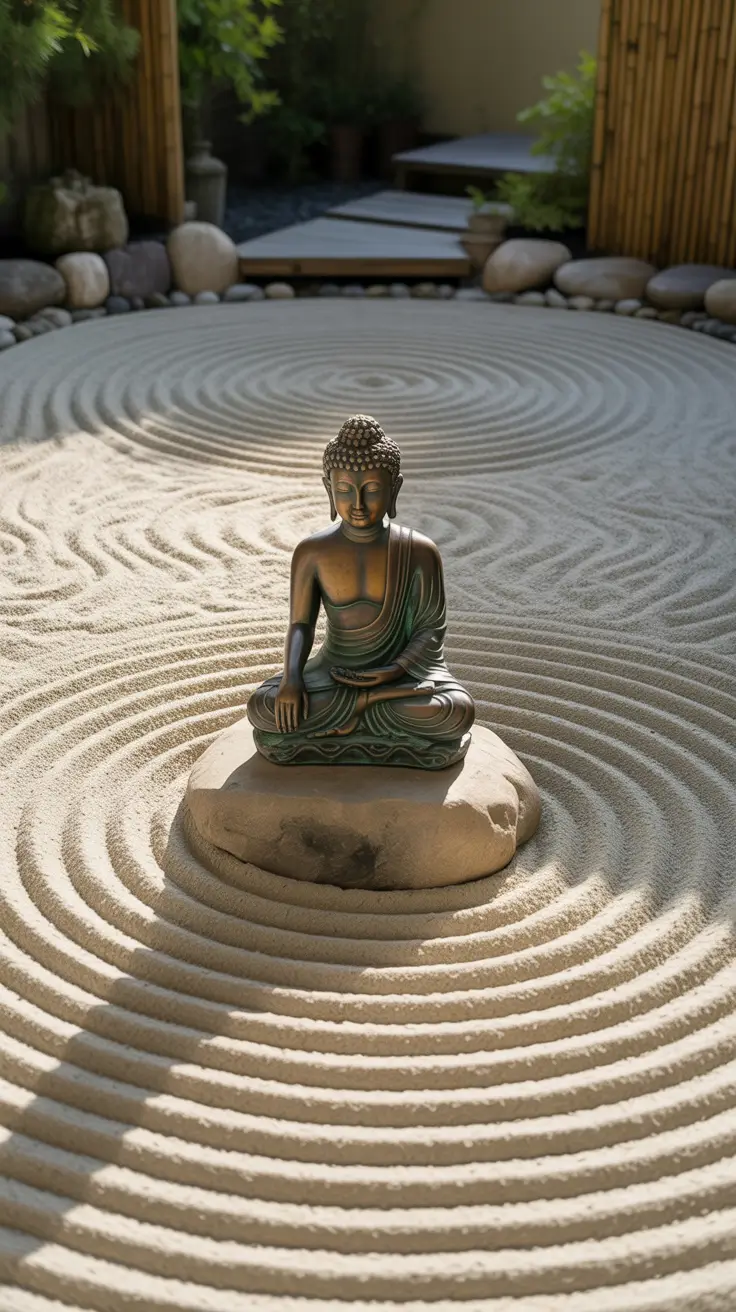
This design includes cream limestone gravel arranged in concentric circles, a central stone or Buddha figure, and subtle edging to maintain the halo effect. I often avoid furniture here, allowing the space to function as a visual meditation zone.
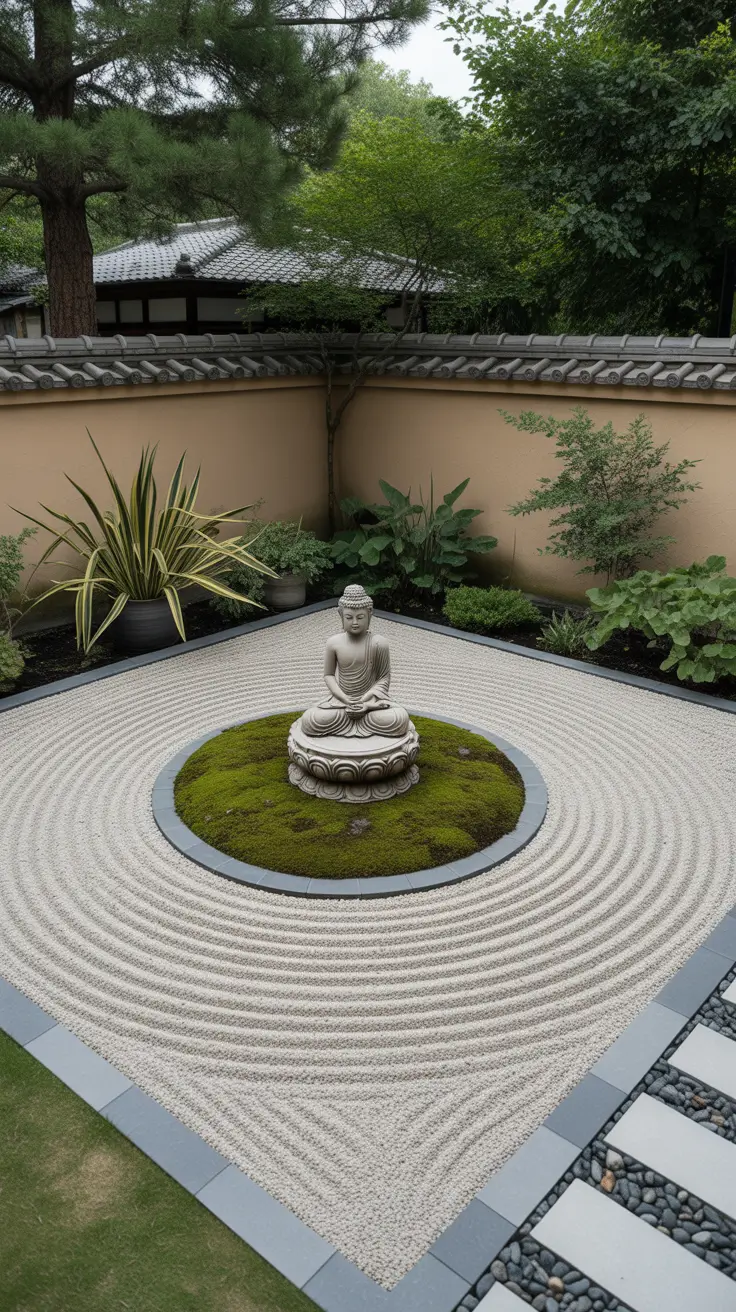
From my perspective, this layout reflects principles discussed by Japanese garden historians, where circular forms symbolize continuity. I personally value how this design feels Cozy without being crowded.
If anything is missing, I would add a surrounding planting buffer to visually separate the halo from the rest of the yard.
Dark Slate Rain Garden
The Dark Slate Rain Garden is a functional and aesthetic evolution of Zen design, perfectly aligned with sustainability trends in Zen Garden ideas 2026. I recommend it for eco-conscious homeowners looking to merge mindfulness with environmental responsibility.
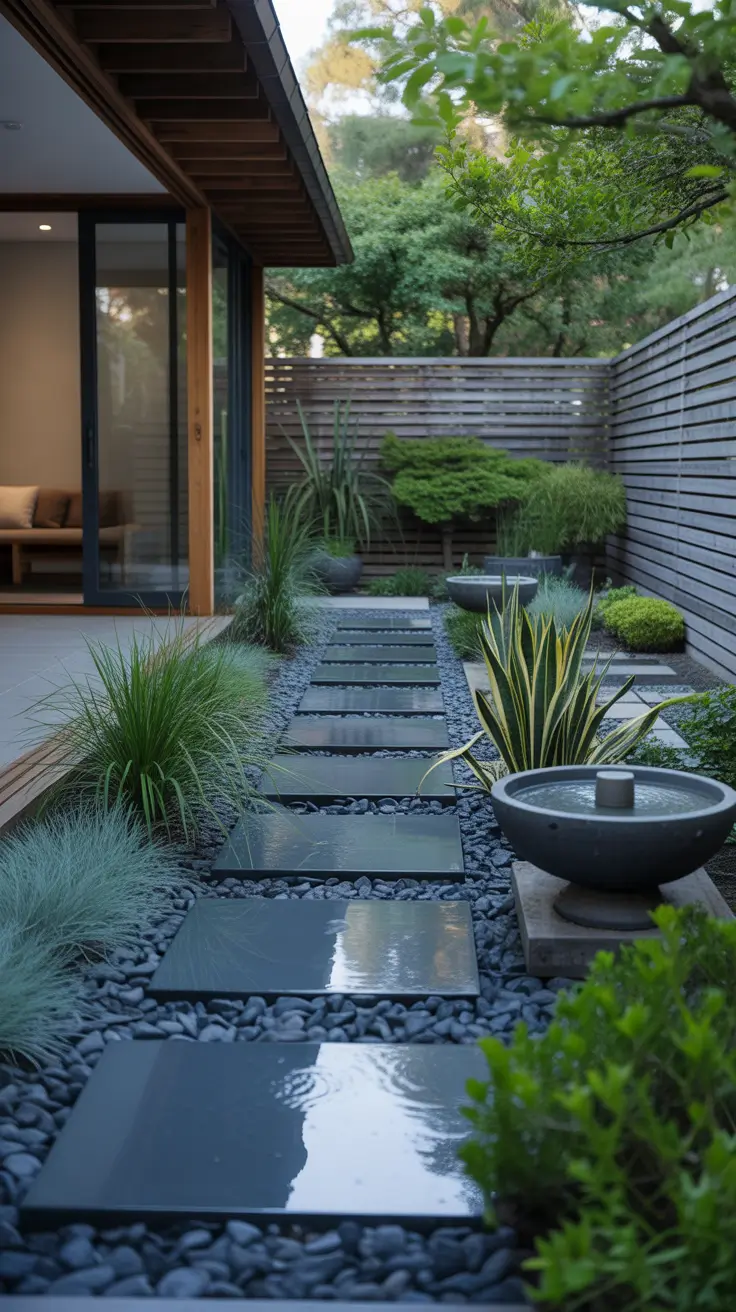
This layout uses dark slate tiles, permeable gravel, and water-tolerant plants arranged to manage rainfall naturally. I design the entire Backyard space to guide water flow while maintaining a calm, ordered appearance.
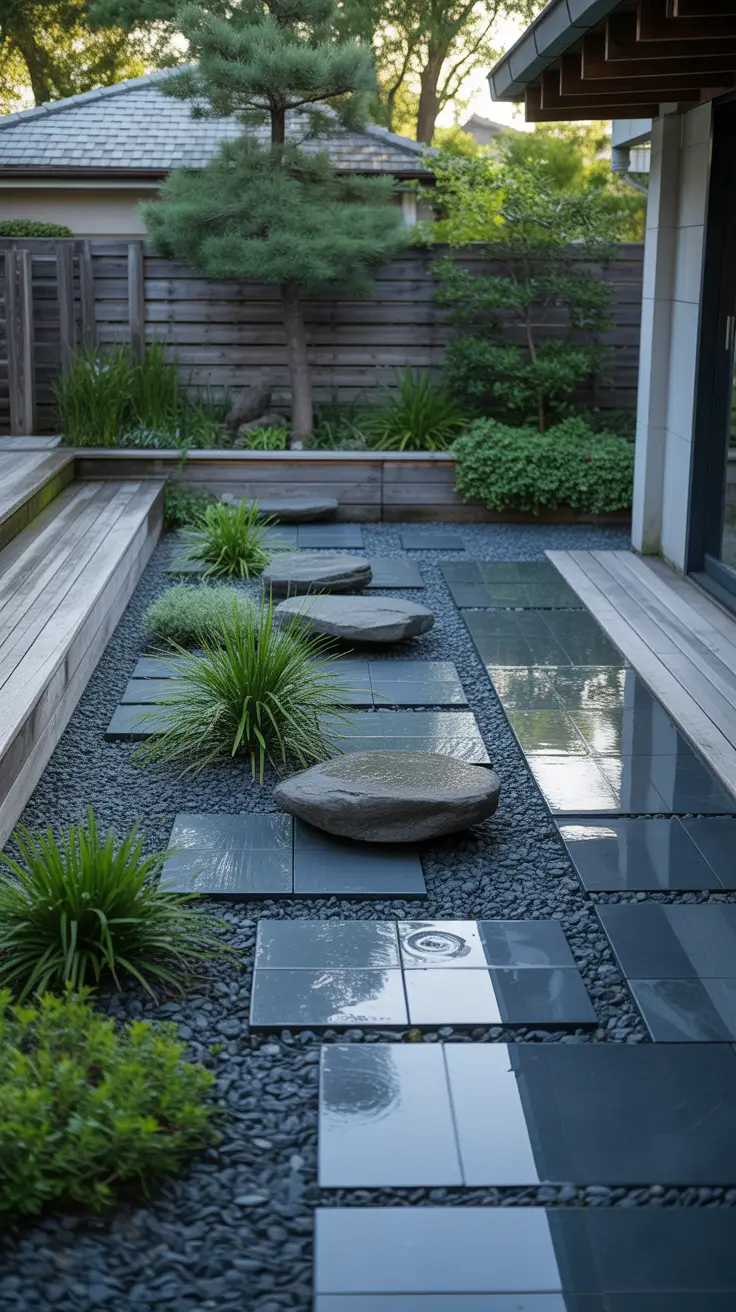
In my experience, sustainable landscape designers frequently featured in The New York Times highlight rain gardens as future-proof solutions. I appreciate how slate adds visual weight while water introduces subtle movement and sound.
To strengthen this section, I would incorporate a shallow reflective basin to amplify the sensory experience.
Water Bowl Sand Circle
I see the Water Bowl Sand Circle as a refined interpretation of Japanese Zen adapted for Backyard small spaces and Indoor settings. This design centers around a shallow stone or ceramic water bowl placed within carefully raked sand, forming concentric circles that symbolize clarity and flow. It works equally well in a Cozy Interior meditation Corner or a Small backyard where space efficiency matters.
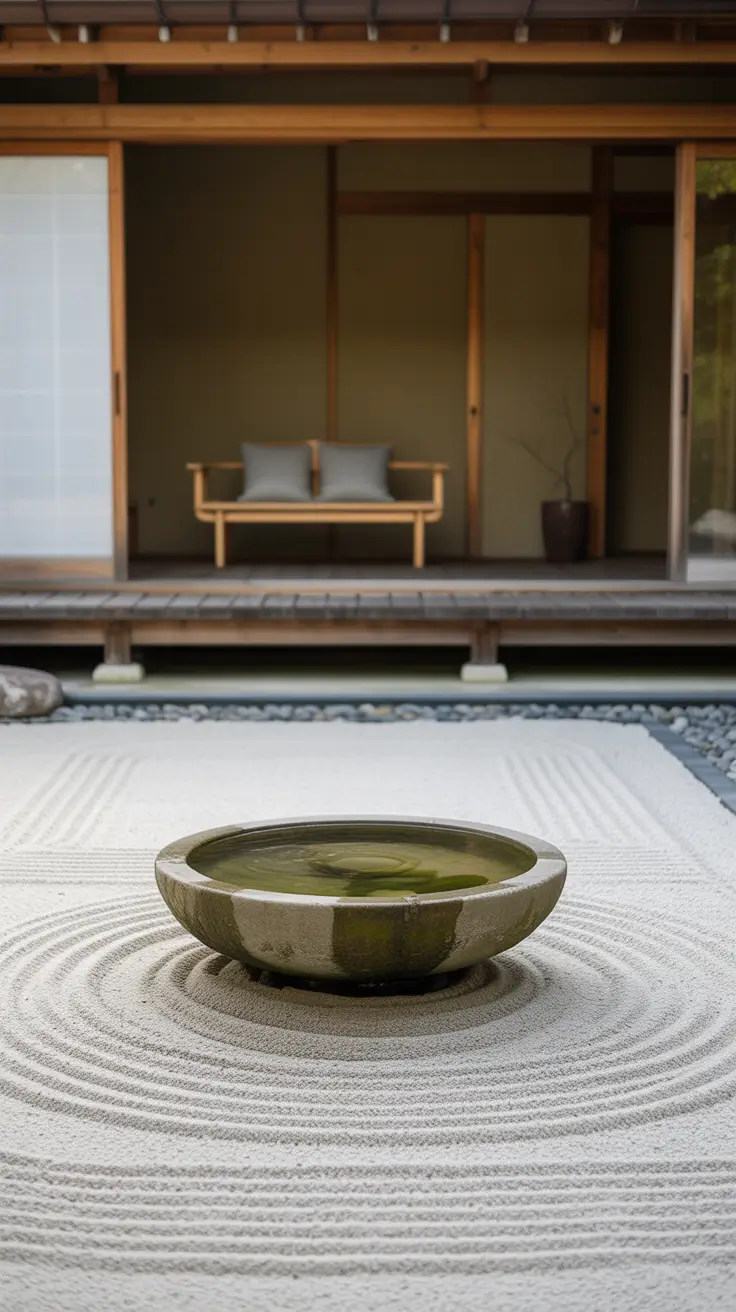
In my designs, I always include fine white or beige sand, a handcrafted water bowl, and a subtle stone base. The bowl reflects light naturally, while the sand circle adds rhythm and visual order. A Simple wooden bench or low seating nearby enhances usability, allowing the space to function as a quiet pause area rather than just decoration.
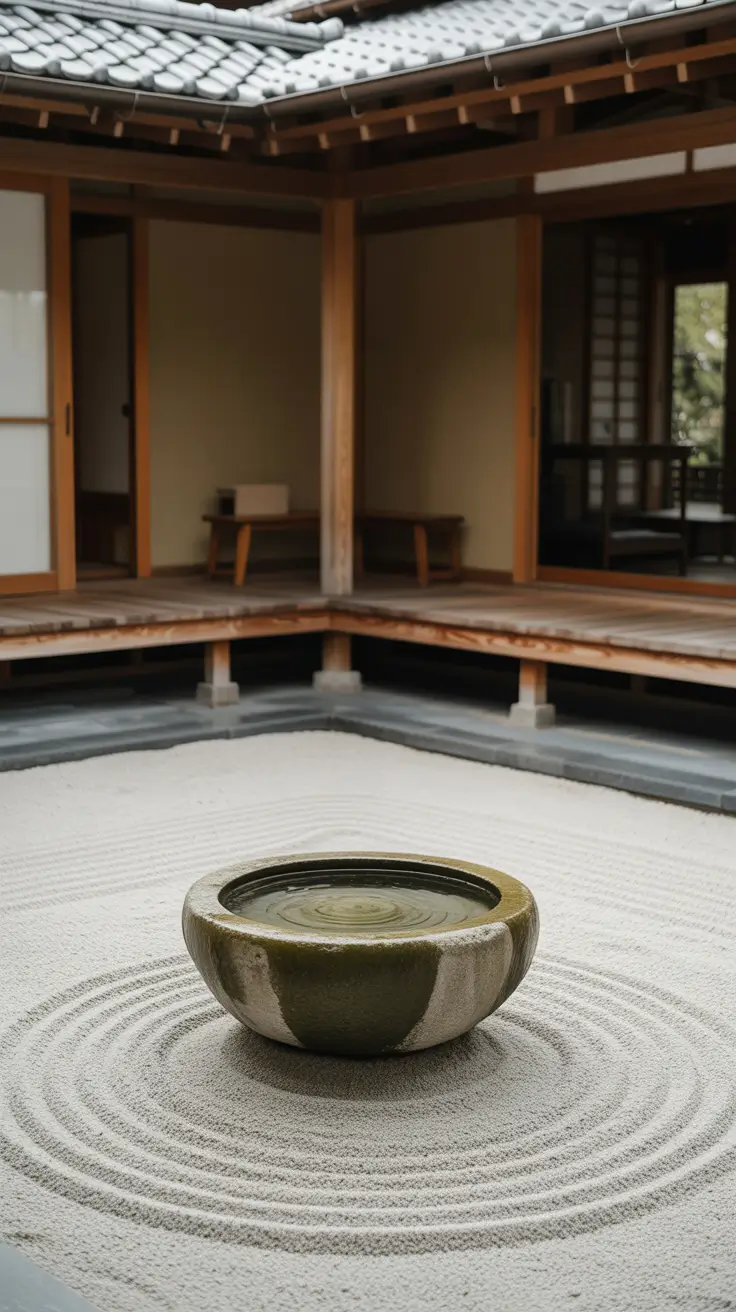
From my experience, designers featured in Architectural Digest often emphasize water as a grounding element in Zen-inspired spaces, and I agree. I have found this setup particularly effective for clients seeking an Easy transition into Zen without committing to large-scale landscaping.
What I would add here is a discreet night lighting element, such as a low solar lantern, to extend usability into the evening while preserving tranquility.
Bamboo Grove Black Pebbles
This concept is inspired by Backyard japanese style gardens and the playful minimalism seen in Acnh bamboo layouts. I often use it in a Small backyard or along a fence line where vertical emphasis creates depth. Bamboo provides natural screening, while black pebbles ground the design visually.
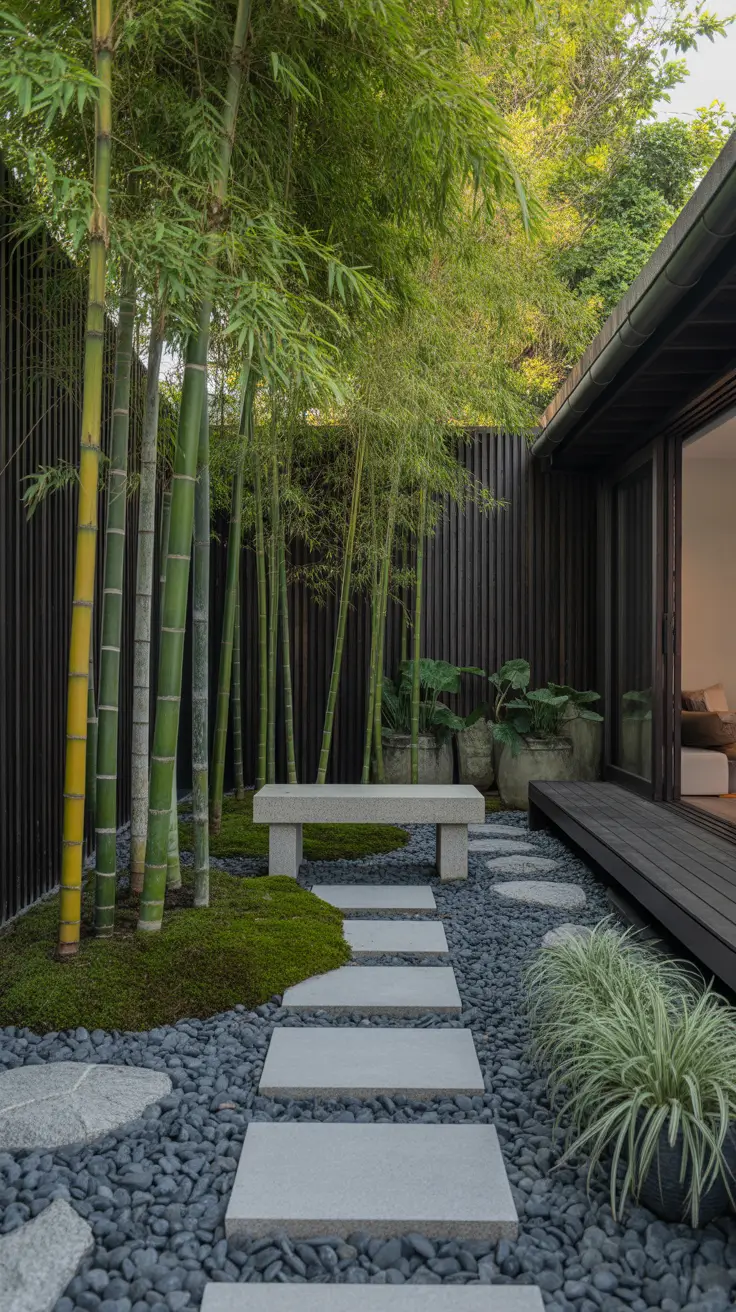
I typically specify real bamboo or high-quality faux bamboo for durability, paired with polished black pebbles and stone edging. The contrast is intentional, as it highlights the greenery and keeps maintenance Simple. A stone bench or minimalist stool fits naturally into the composition.
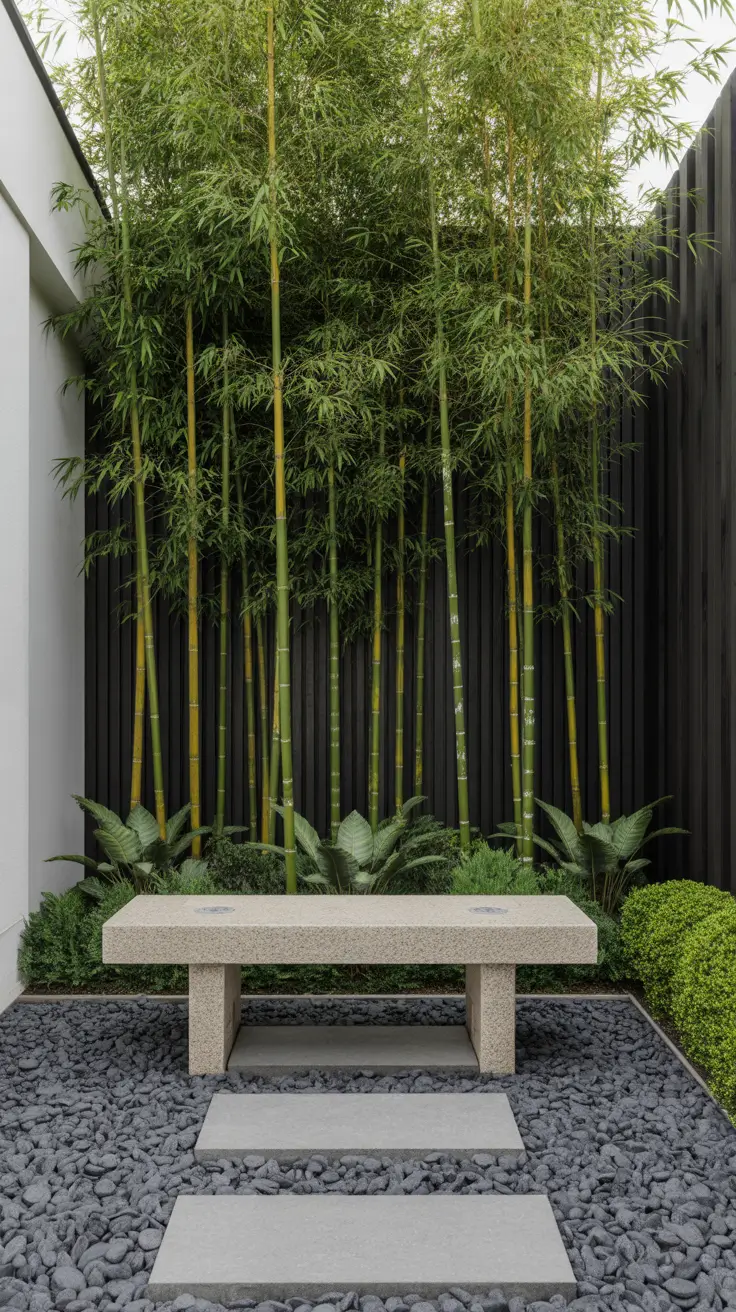
Personally, I appreciate how bamboo instantly transforms a space into something meditative yet modern. According to Better Homes and Gardens, vertical planting is one of the most effective ways to enhance Small backyard functionality, and bamboo excels at this.
To complete this section, I would include a subtle water feature or bamboo spout to introduce gentle sound without overwhelming the design.
Tea Entry Lantern Path
The Tea Entry Lantern Path is a structured yet welcoming Zen approach often used in traditional Japanese tea gardens. I adapt it for modern Backyard applications by creating a defined walking path that leads the user into a calmer mental state.
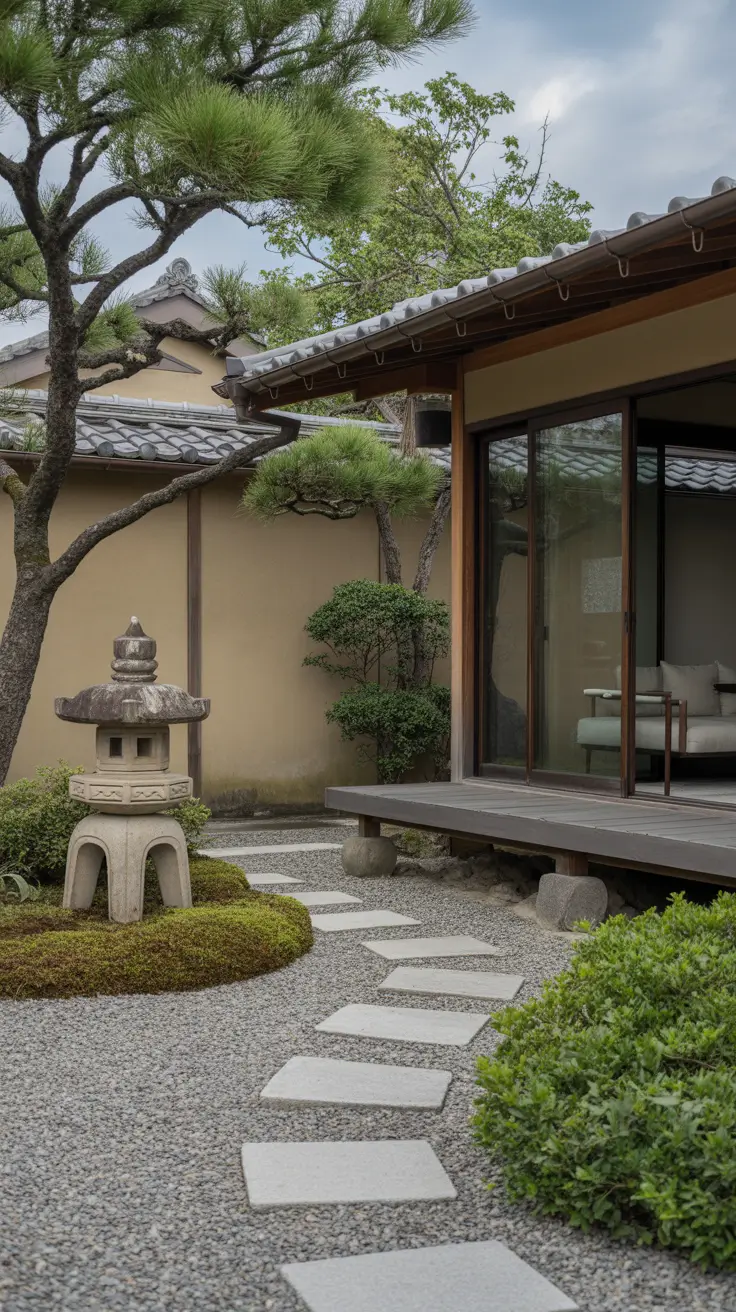
In practice, I use flat stepping stones, gravel or sand, and classic stone lanterns placed at asymmetrical intervals. Low shrubs or moss fill the gaps, keeping the design natural. This layout works beautifully in Backyard settings where movement and ritual matter.
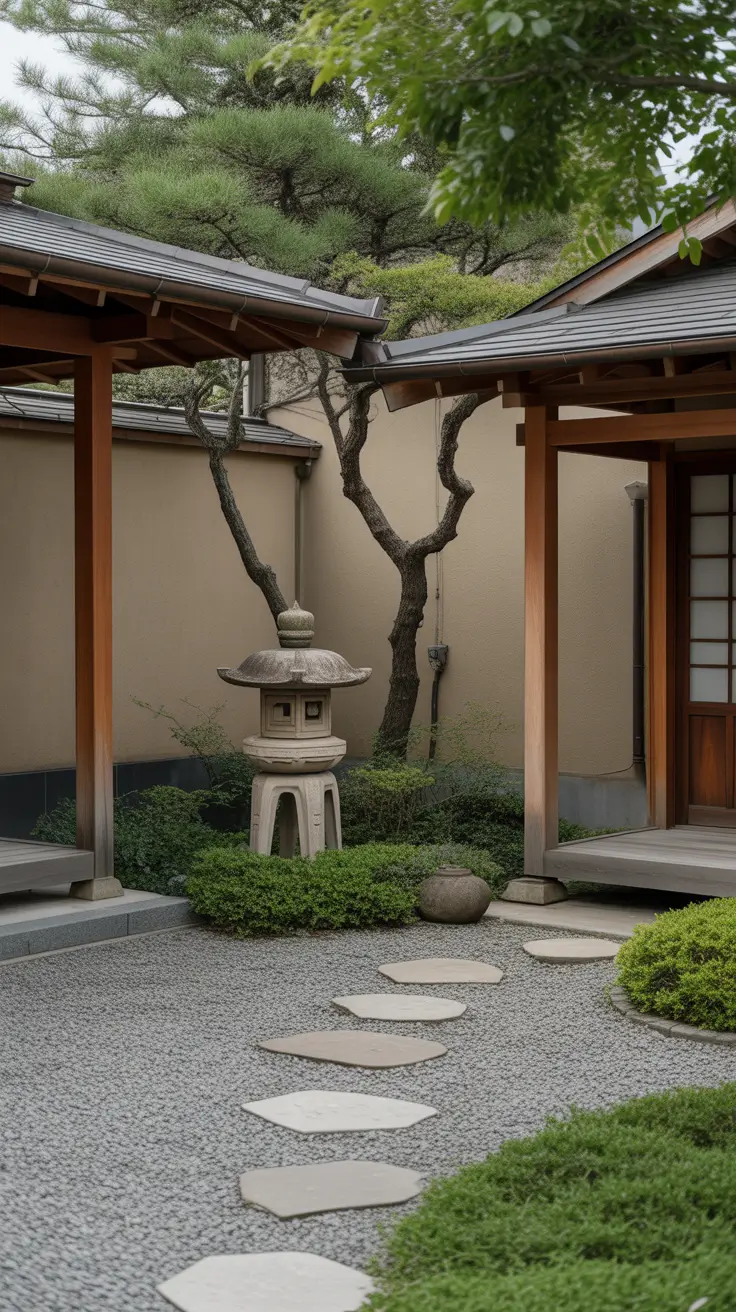
I have personally used this design to help clients slow down their outdoor experience. Landscape architects from The Spruce often highlight pathways as psychological transitions, and this approach aligns perfectly with that principle.
What could enhance this section is the addition of a small seating pause near the end of the path, reinforcing its meditative purpose.
Floating Granite Monoliths
Floating Granite Monoliths reflect the bold side of Zen Garden ideas 2026, where sculptural elements become focal points. I usually recommend this for a Small backyard that needs strong visual identity without clutter.
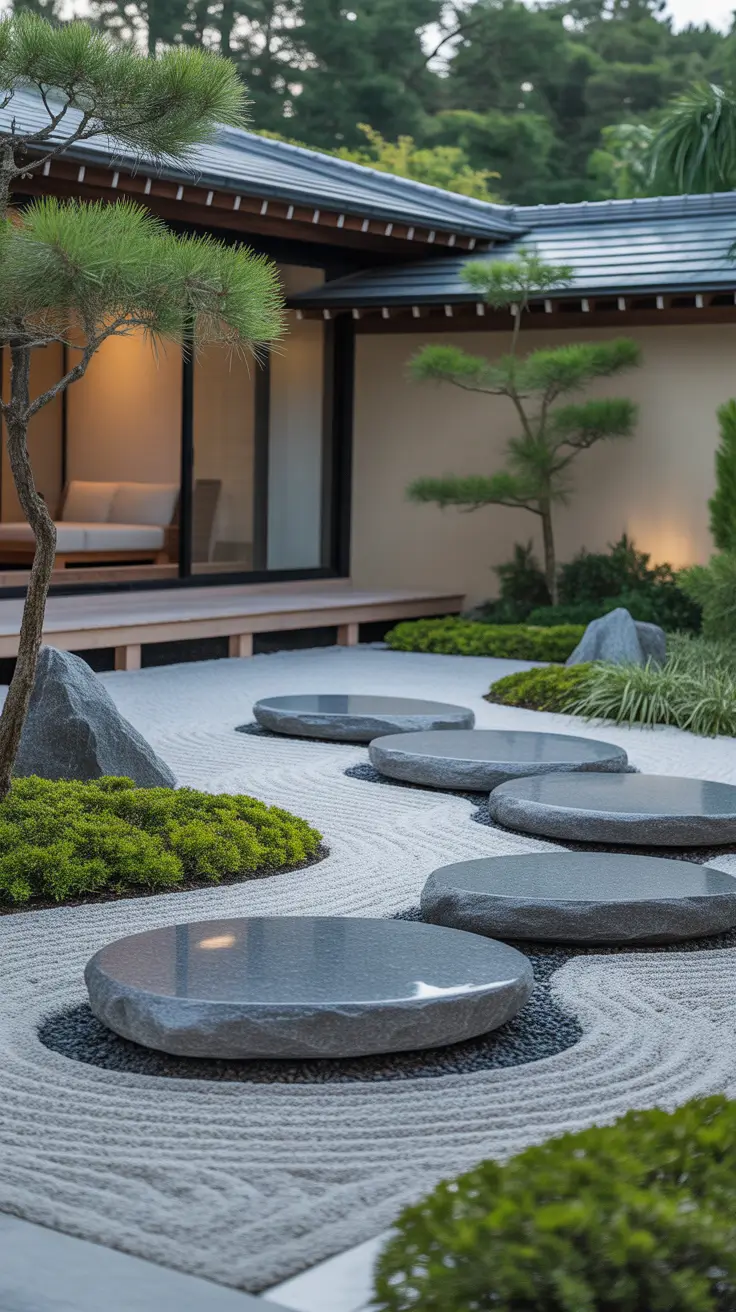
Each monolith is set within gravel or sand so it appears to float. I pair them with minimal planting and open space to let the stone speak for itself. Granite is durable, timeless, and visually calming when used sparingly.
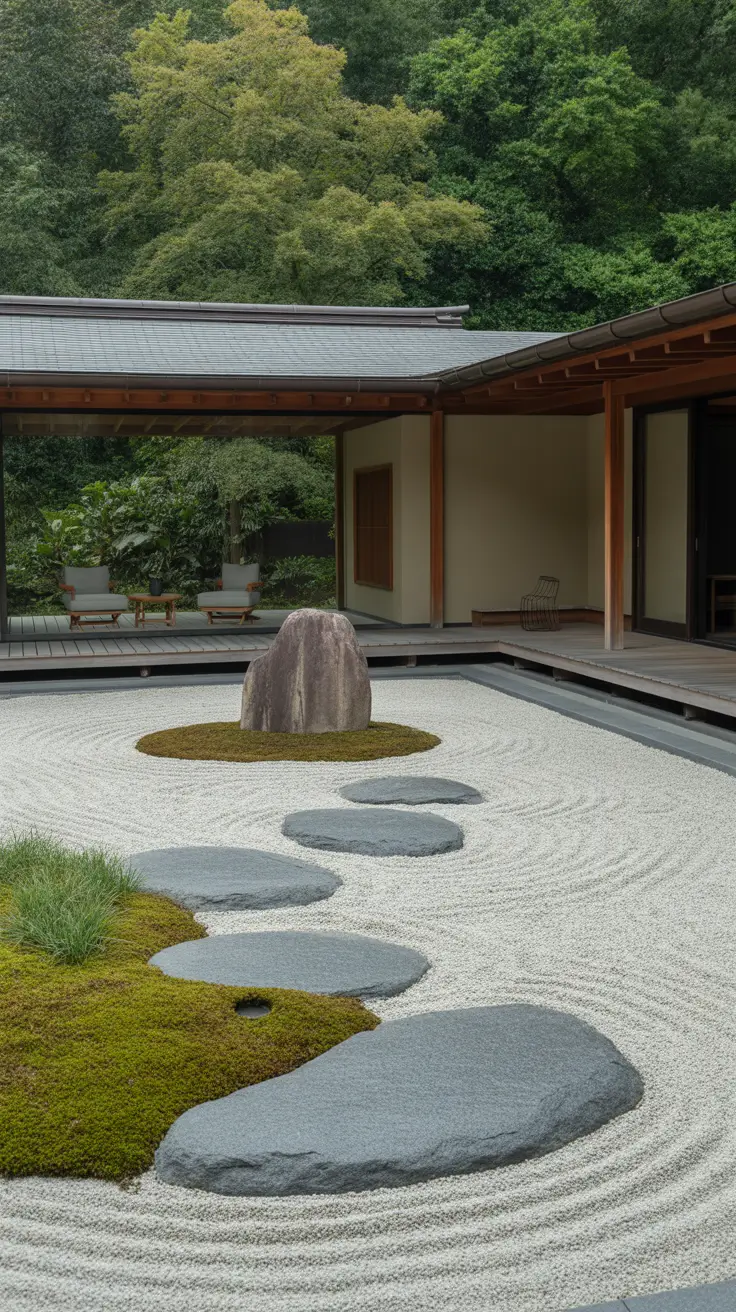
From my perspective, this design appeals to clients who want a modern Zen look rather than a traditional one. Publications like Dwell often emphasize restraint in material selection, and granite aligns well with that philosophy.
I would suggest adding subtle ground lighting to emphasize the floating effect at night.
Rock Triad Wave Field
This design references classic Zen symbolism while feeling approachable for modern users, including fans of Animal crossing aesthetics. I often use three stones arranged in a triad, surrounded by raked sand waves.
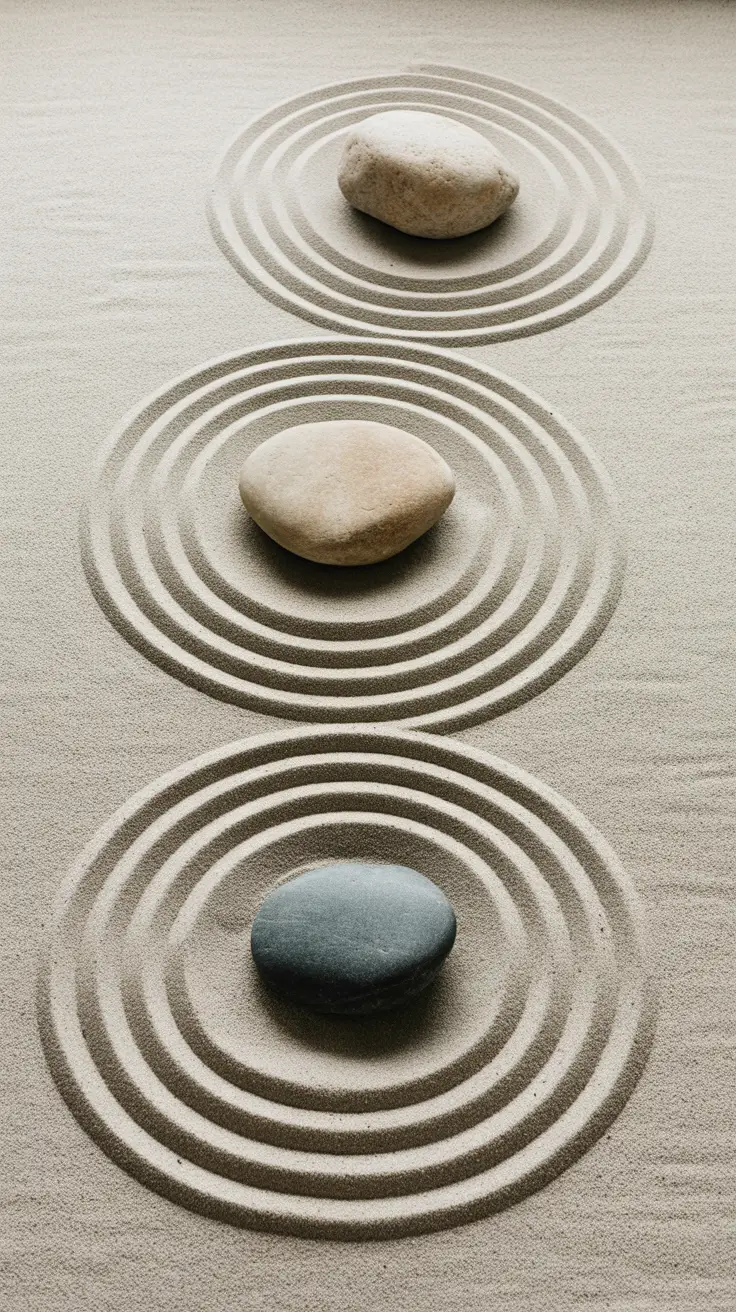
The stones vary in size and texture, creating hierarchy. I recommend using natural stone and a fine gravel that holds raking patterns well. This setup works well in a Backyard or as a Miniature Indoor feature.
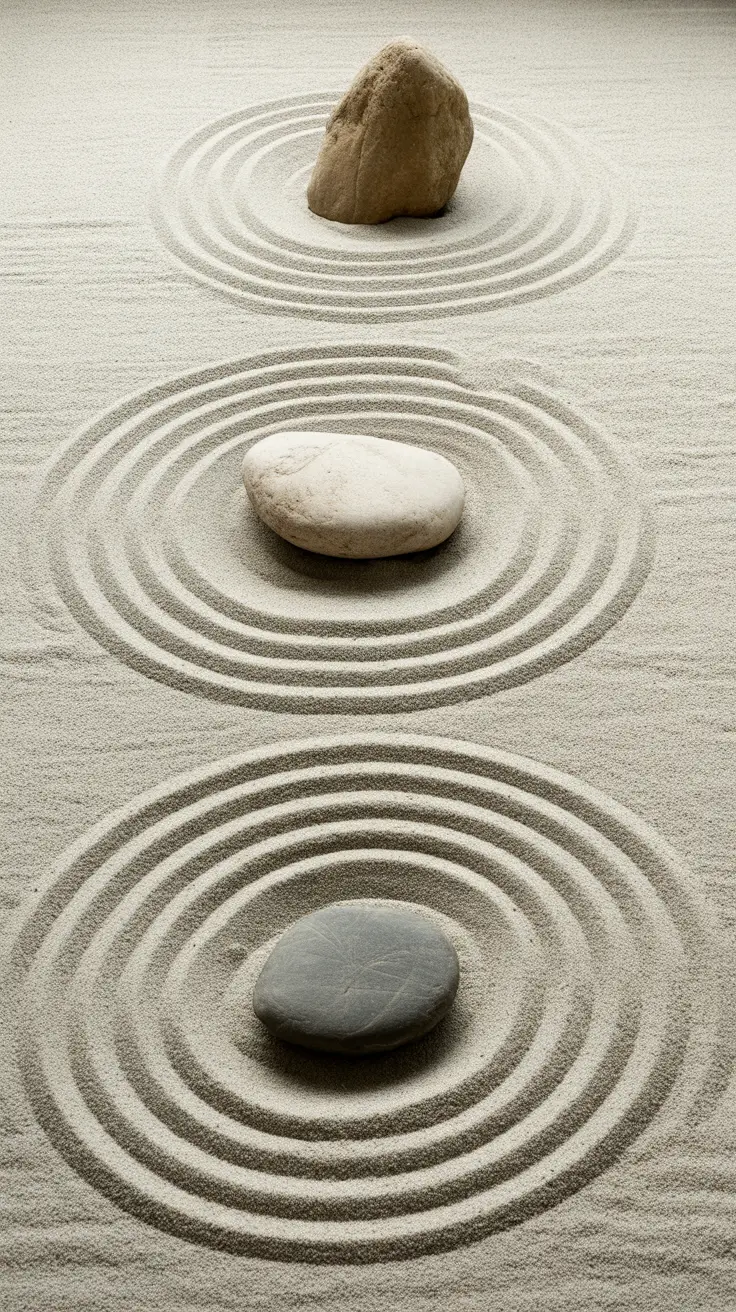
In my experience, this design resonates emotionally because it feels familiar yet timeless. Many US-based Zen garden designers emphasize odd-number groupings for balance, and I have consistently seen positive responses to this approach.
To strengthen this section, I would include a dedicated rake storage solution to keep the space tidy and intentional.
Vertical Stone Moss Wall
The Vertical Stone Moss Wall is ideal for Tiny spaces and urban environments where horizontal room is limited. I see it as a bridge between Indoor and Outdoor Zen living.
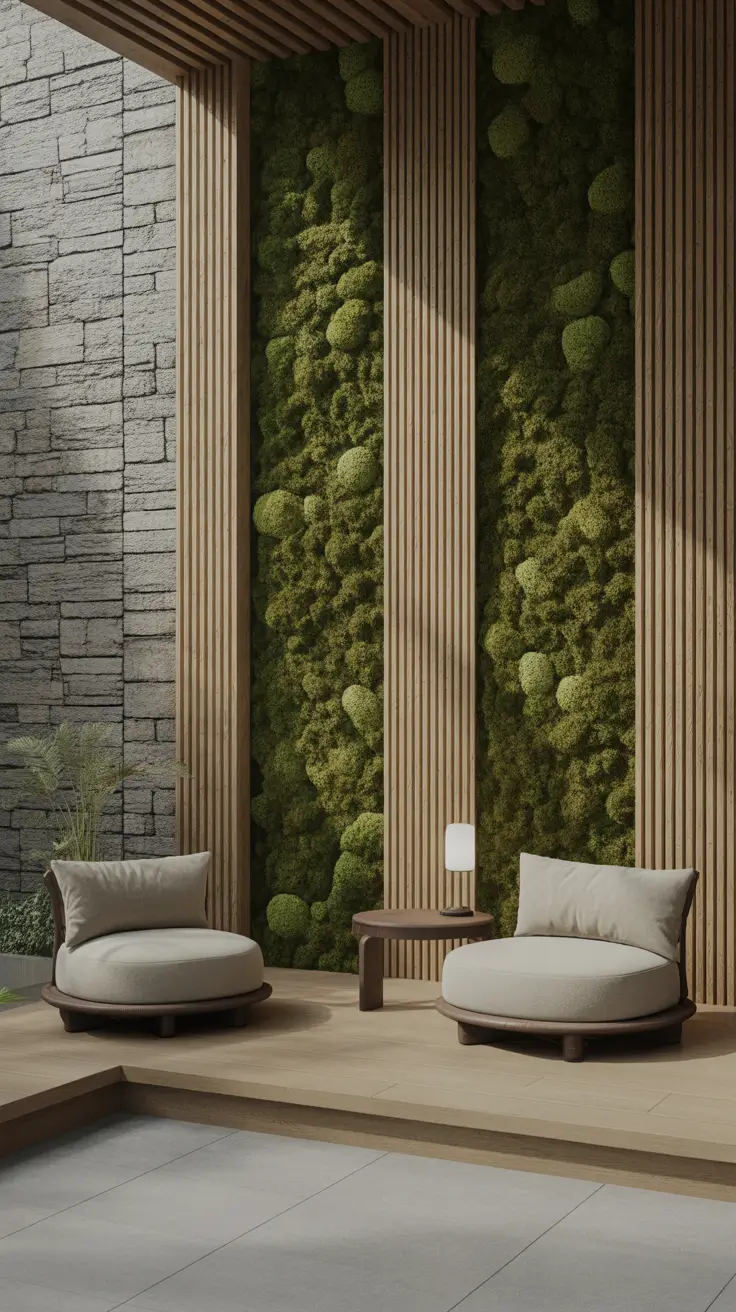
I use natural stone panels combined with preserved or live moss systems. The verticality adds drama while remaining Simple and calming. This design works well behind seating or as a focal wall in a Cozy Interior.
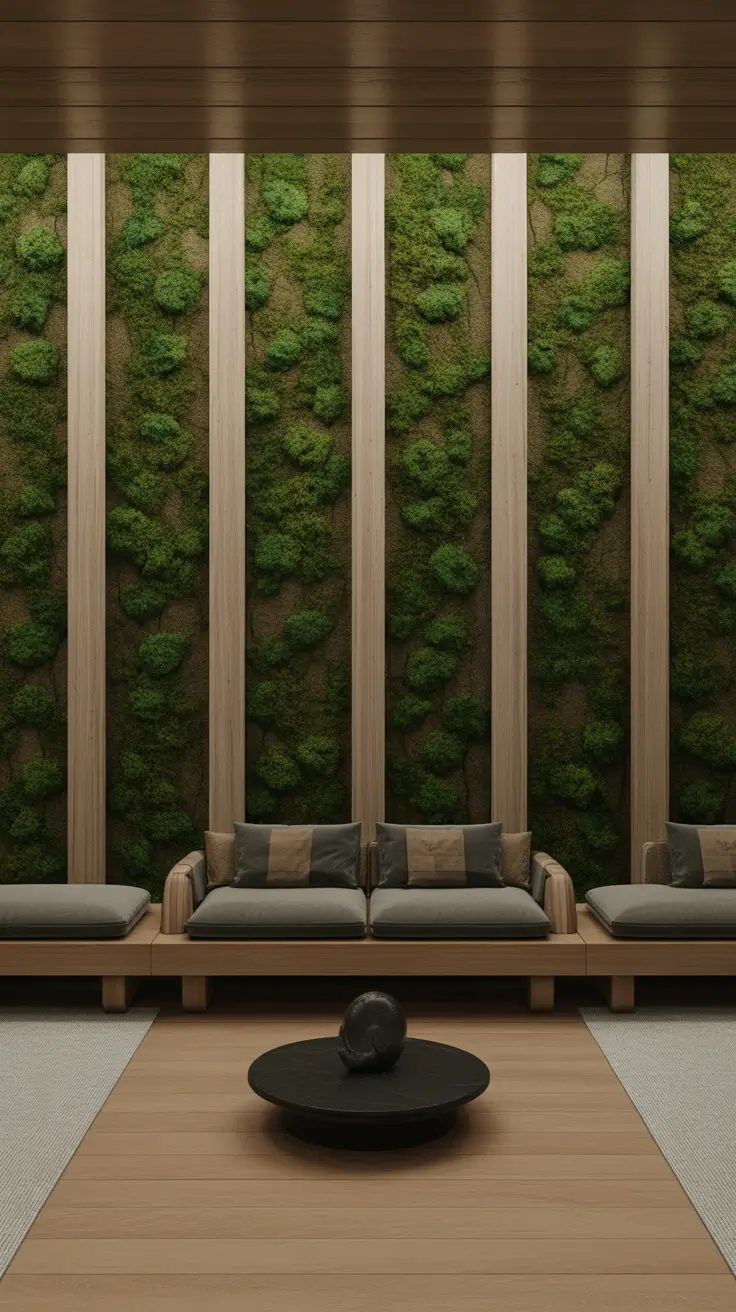
Personally, I value this option for clients who want Zen without sacrificing usable floor area. Interior designers featured in Elle Decor frequently highlight biophilic walls as stress-reducing elements, and I agree with that assessment.
What I would add here is a moisture management plan to ensure longevity, especially for Indoor installations.
Indoor Obsidian Sand Tray
This is a refined Tabletop or Corner solution inspired by Miniature Zen gardens and Acnh interiors. I often recommend it for apartments or workspaces where a full garden is not possible.
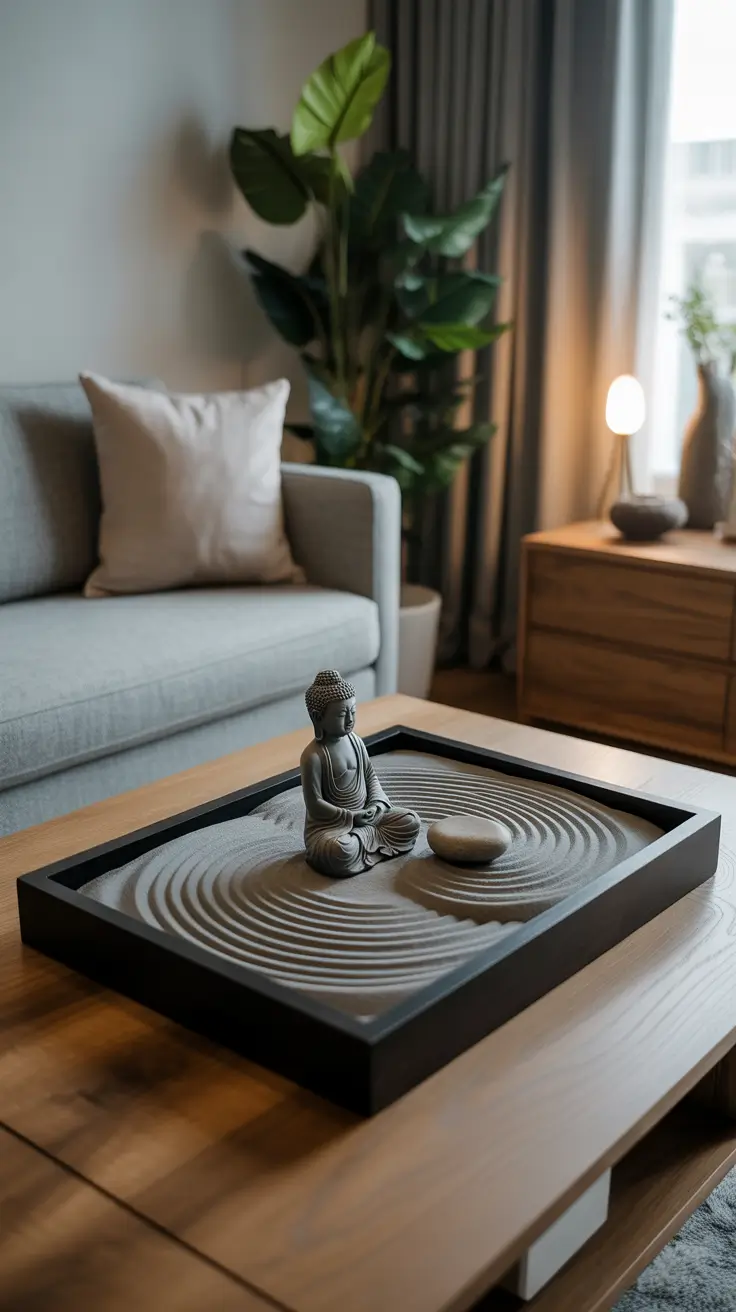
The tray includes obsidian sand, small stones, and a compact Buddha figurine. Every element is intentional, allowing users to rearrange patterns easily. It is one of the most Easy Zen solutions available.
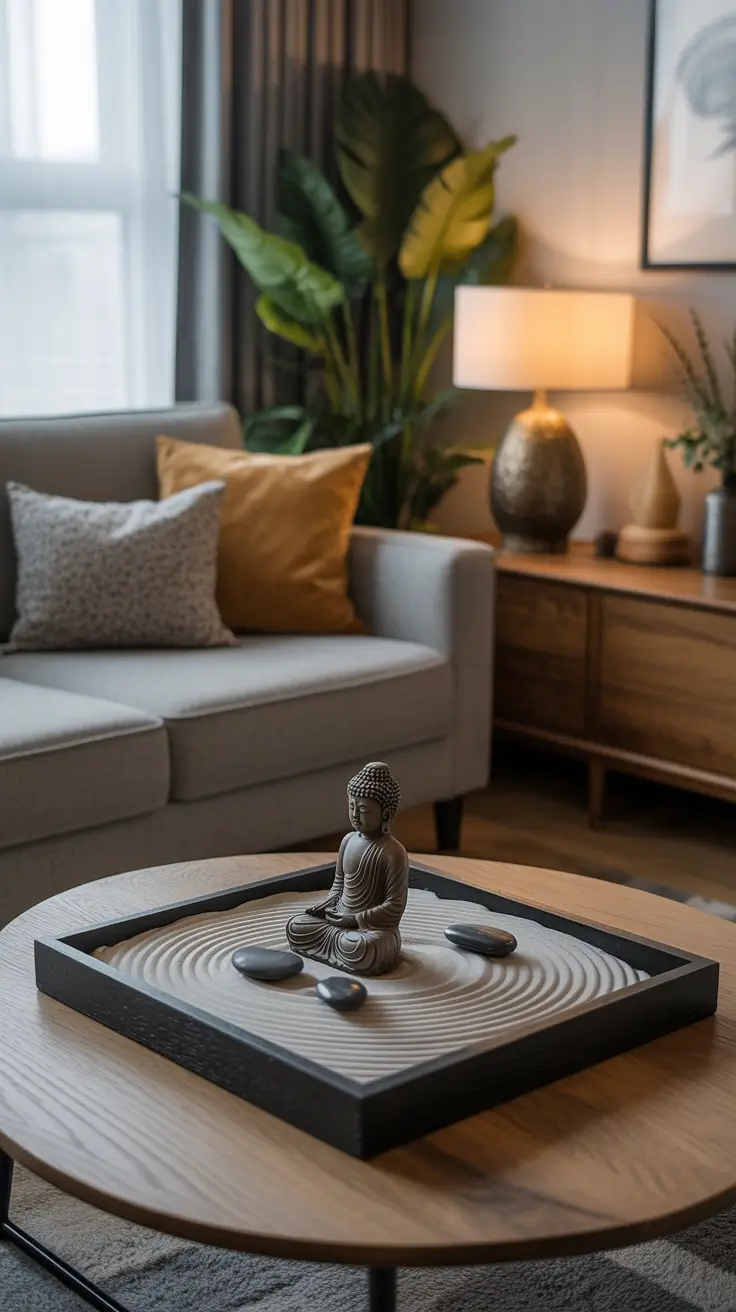
From my own use, I find this design particularly effective for daily mindfulness. Many wellness-focused designers recommend interactive decor, and this aligns perfectly with that trend.
To complete this section, I would suggest including a dedicated shelf or side table to elevate the tray visually.
Color Block Tabletop Zen
I consider Color Block Tabletop Zen one of the most forward-looking Zen Garden ideas 2026, especially for Indoor living and Tiny apartments. This concept translates traditional Zen principles into a modern, graphic format that fits perfectly on a desk, console, or side table. It works well in a Corner of a room where visual calm is needed without sacrificing contemporary style, and it resonates strongly with fans of Acnh and Animal crossing aesthetics.
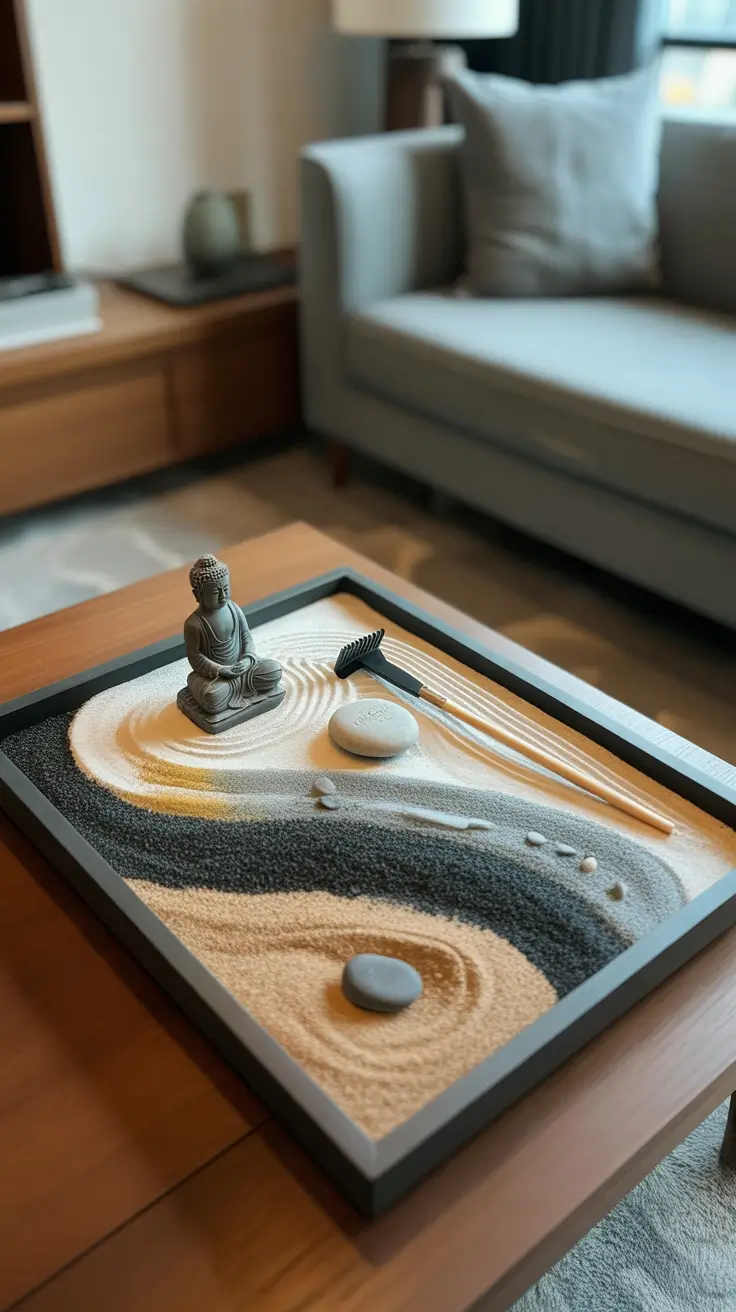
In practice, I design this setup using a shallow rectangular tray divided into subtle color zones using natural sand tones such as warm beige, charcoal, and soft stone gray. Smooth stones, a Miniature rake, and a small abstract Buddha sculpture anchor the composition. I choose color blocking intentionally, as it creates visual order while keeping the layout Simple, Easy to refresh, and highly adaptable to modern interiors.
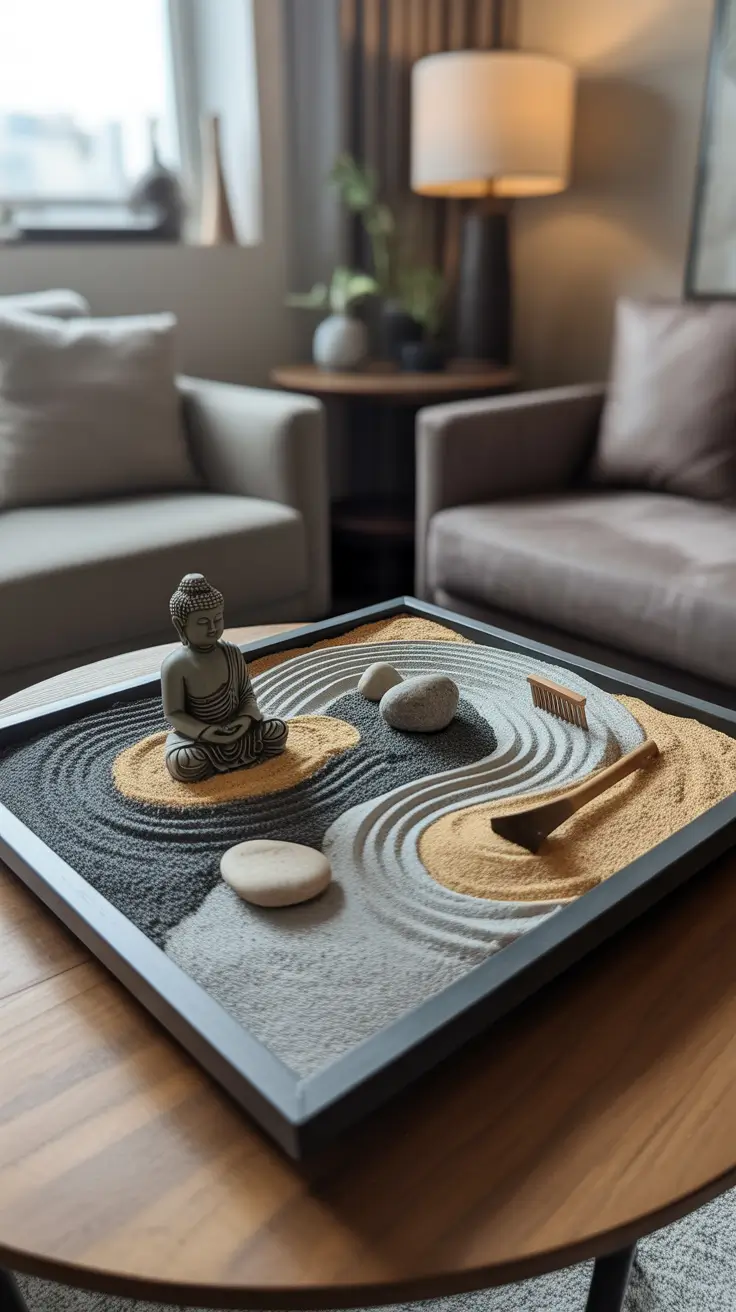
From my professional experience, this type of tabletop Zen design is ideal for people who want mindfulness integrated into daily routines. Designers featured in Domino Magazine often note that tabletop decor should be both interactive and calming, and I have seen firsthand how this setup encourages short mental breaks during work or creative tasks.
What I would add to this section is guidance on placement, specifically positioning the tabletop Zen garden near natural light or next to a reading chair to enhance its Cozy and contemplative effect without overwhelming the surrounding space.