What will stamped concrete patio ideas 2026 actually look like in real homes, not just design catalogs? How can one surface completely transform Backyards, improve Layout, and make an Outdoor space feel intentional instead of unfinished? In 2026, patios are no longer just slabs of Poured concrete. They are extensions of the home, blending Modern aesthetics, smart zoning, durable Colors, and lifestyle-driven features like Fire pit lounges, Pool decks, and shaded gathering areas. In this guide, I’ll walk through practical, stylish patio concepts that work for everything from a Small backyard to a Large entertaining space, including solutions for Backyards back porches, Front yard seating areas, and relaxed Ranch house settings.
Minimalist Grey Stamped Concrete Patio
I often recommend a minimalist Grey stamped concrete patio when homeowners want a clean, architectural foundation that works across seasons. This design focuses on simplicity, wide open Layout, and subtle texture rather than decoration. In Modern homes especially, neutral-toned concrete creates visual calm while making surrounding greenery stand out. The stamped surface mimics refined stone while remaining durable enough for busy Backyards and everyday outdoor living.
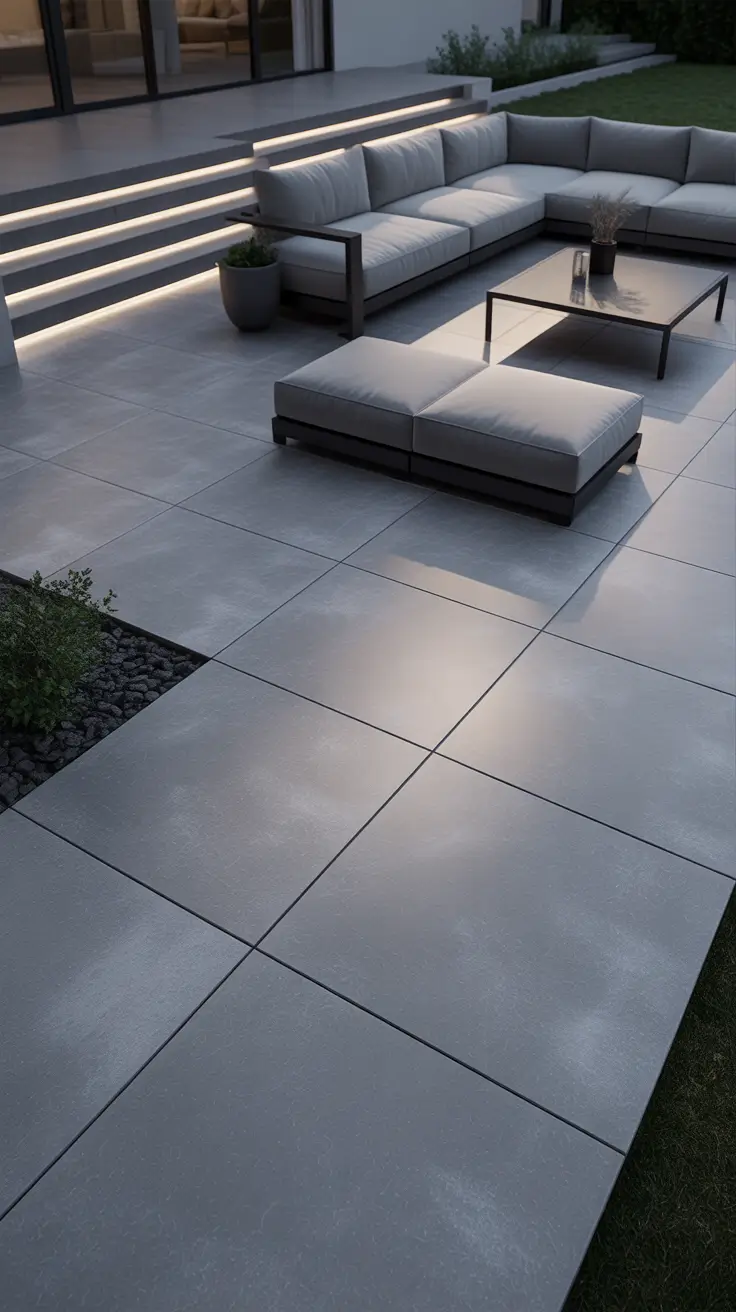
In this setup, I usually include low-profile modular seating, a slim metal coffee table, and soft outdoor textiles that warm up the cool concrete tone. A structured sofa arrangement helps define the seating zone without cluttering the space. Planters in matte black or natural Wood finishes soften edges, while integrated lighting along Steps or borders improves nighttime usability. The key is restraint, allowing texture rather than objects to lead the design.
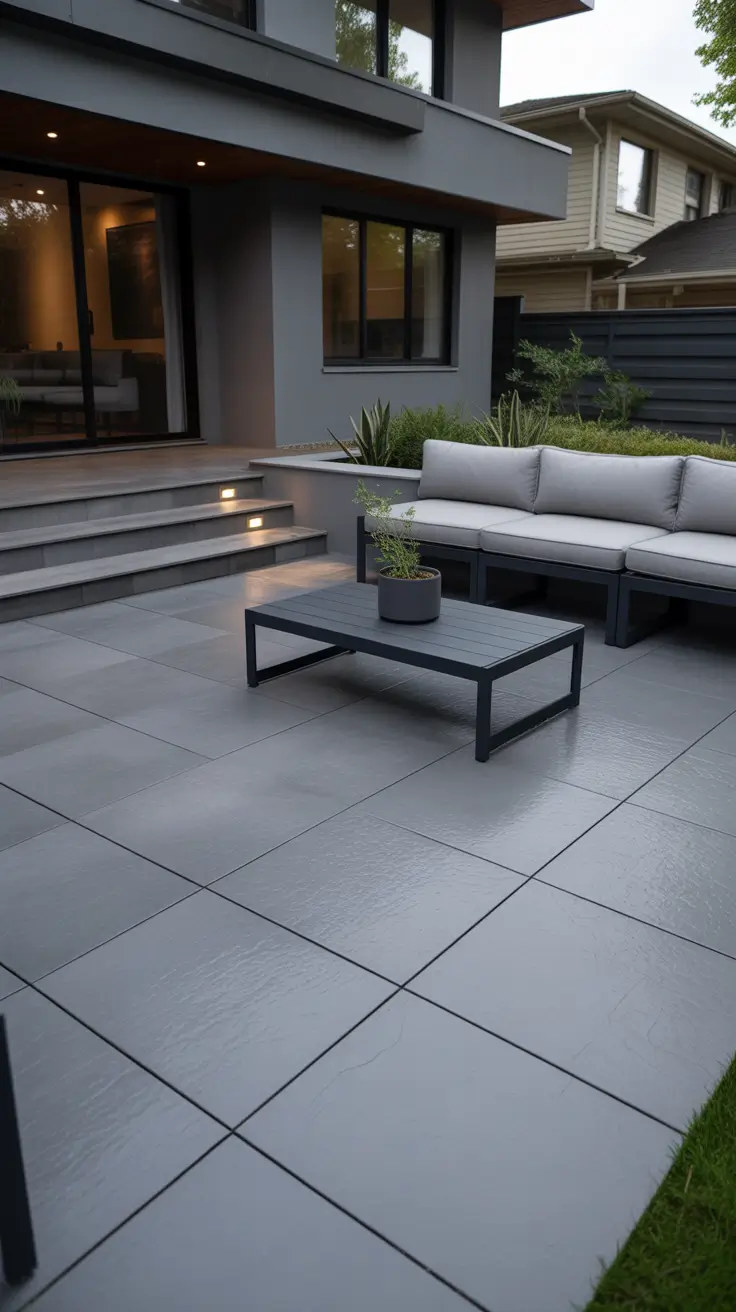
From my experience, designers frequently emphasize timeless palettes over trends. Architectural Digest often highlights neutral outdoor bases because they allow homeowners to refresh decor seasonally without replacing hardscape elements. I’ve noticed clients appreciate how grey stamped concrete adapts equally well to cozy evenings and larger gatherings.
What I would add here is layered lighting planning. Many patios miss ambient illumination, so incorporating recessed lighting, pathway lights, or hidden LED strips ensures the patio functions beautifully after sunset.
Sand Beige Small Backyard Patio
A sand beige stamped concrete patio works exceptionally well in a Small backyard, where lighter Colors visually expand space. I see this approach used frequently in compact urban Backyards, where homeowners want warmth without heaviness. Beige tones reflect sunlight, making the area feel open and welcoming even when square footage is limited.
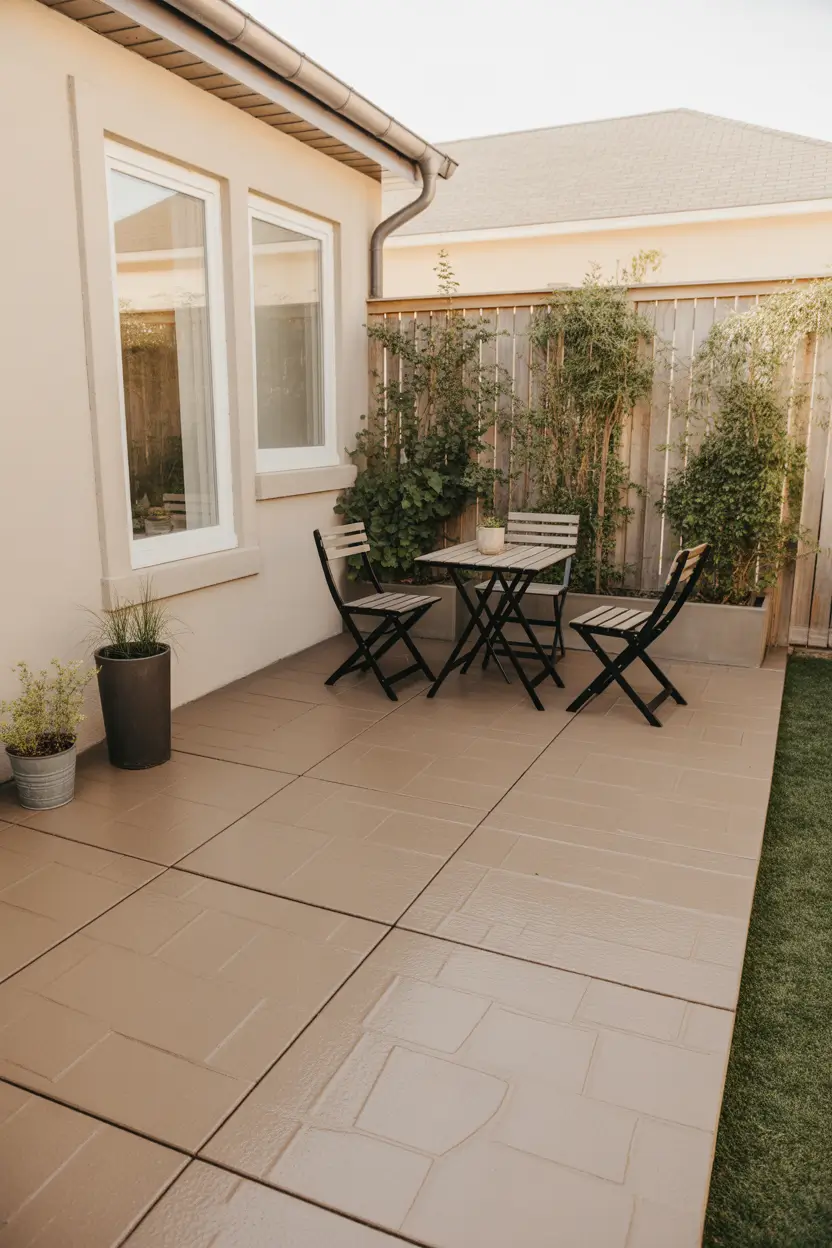
I typically arrange multifunctional furniture such as foldable dining chairs, a compact loveseat, and built-in bench seating along the perimeter. A small bistro table allows flexible use, from morning coffee to evening meals. Adding vertical planters or slim pergola posts introduces height without consuming floor space. Textured stamped finishes prevent the patio from looking flat while maintaining practicality.
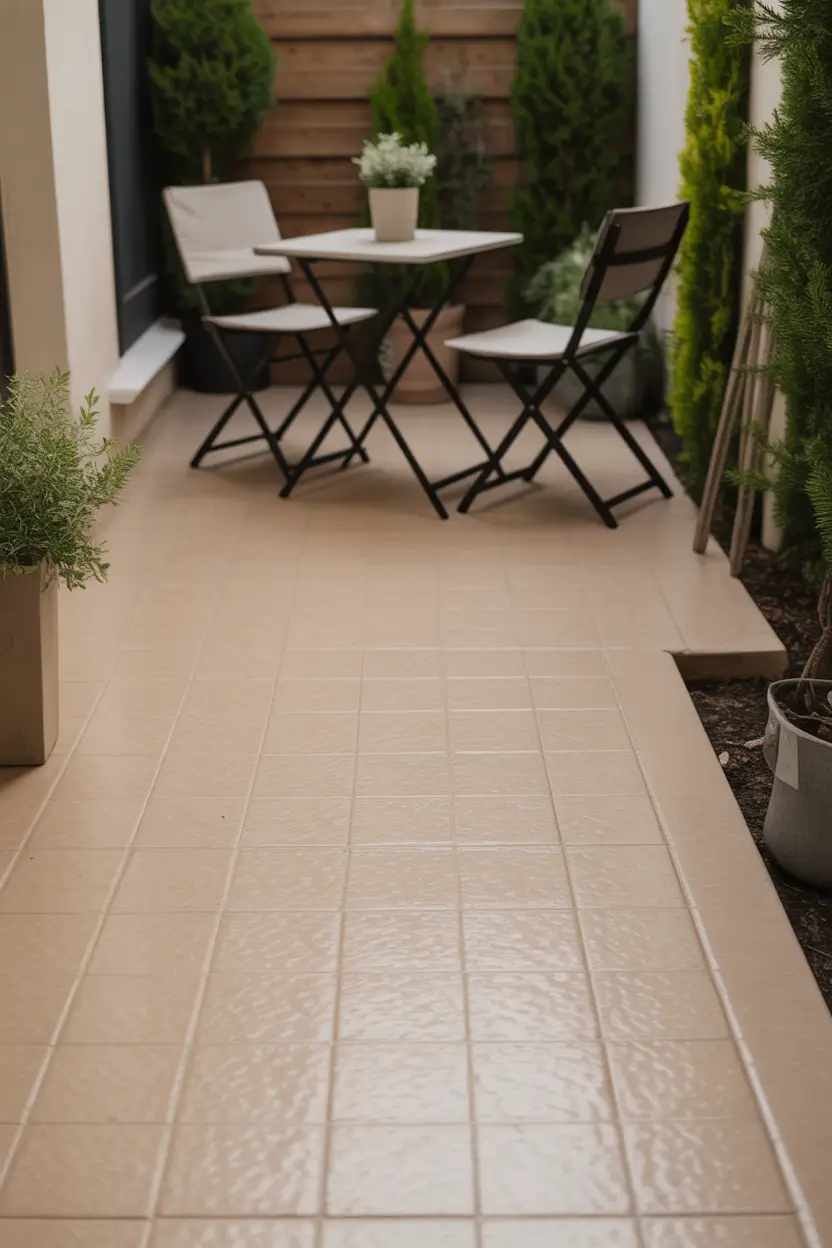
Personally, I’ve found that small patios succeed when every item earns its place. Designers featured in Better Homes and Gardens often suggest prioritizing circulation paths first, then furniture. I follow the same philosophy because movement flow determines whether a small patio feels relaxing or cramped.
What this section still needs is shade planning. Even a small retractable canopy or partial Pergola dramatically improves comfort and extends usability throughout hot months.
Charcoal Grid Layout Patio
The charcoal grid stamped patio focuses on geometric precision. I like using this Layout for homeowners who want a structured Modern aesthetic that visually organizes larger Outdoor areas. The grid pattern subtly divides functional zones without physical barriers, which works well for entertaining-focused Backyards back porches.
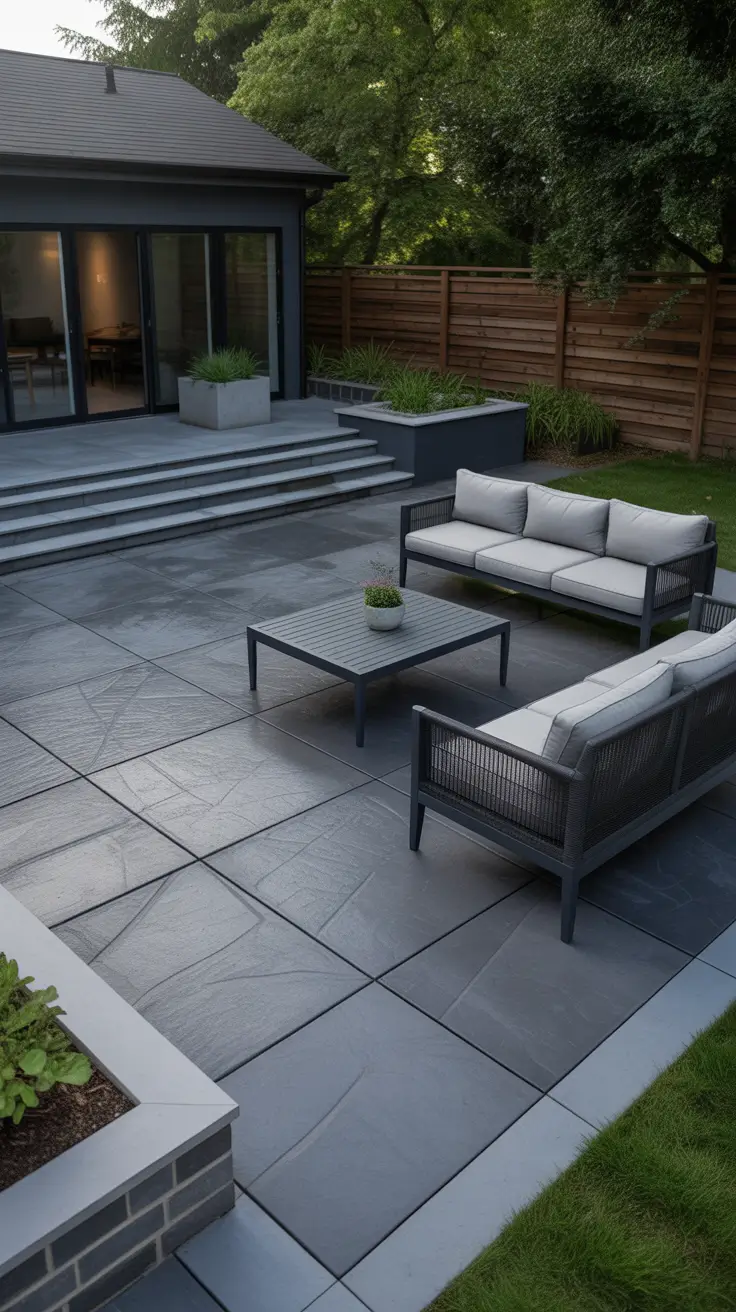
Furniture placement becomes intuitive within the grid lines. I usually align sectional seating with the stamped pattern, pairing it with square planters and linear benches. Dark charcoal tones contrast beautifully with light cushions and natural Wood accents. Integrated drainage lines can follow the grid, combining function and design seamlessly.
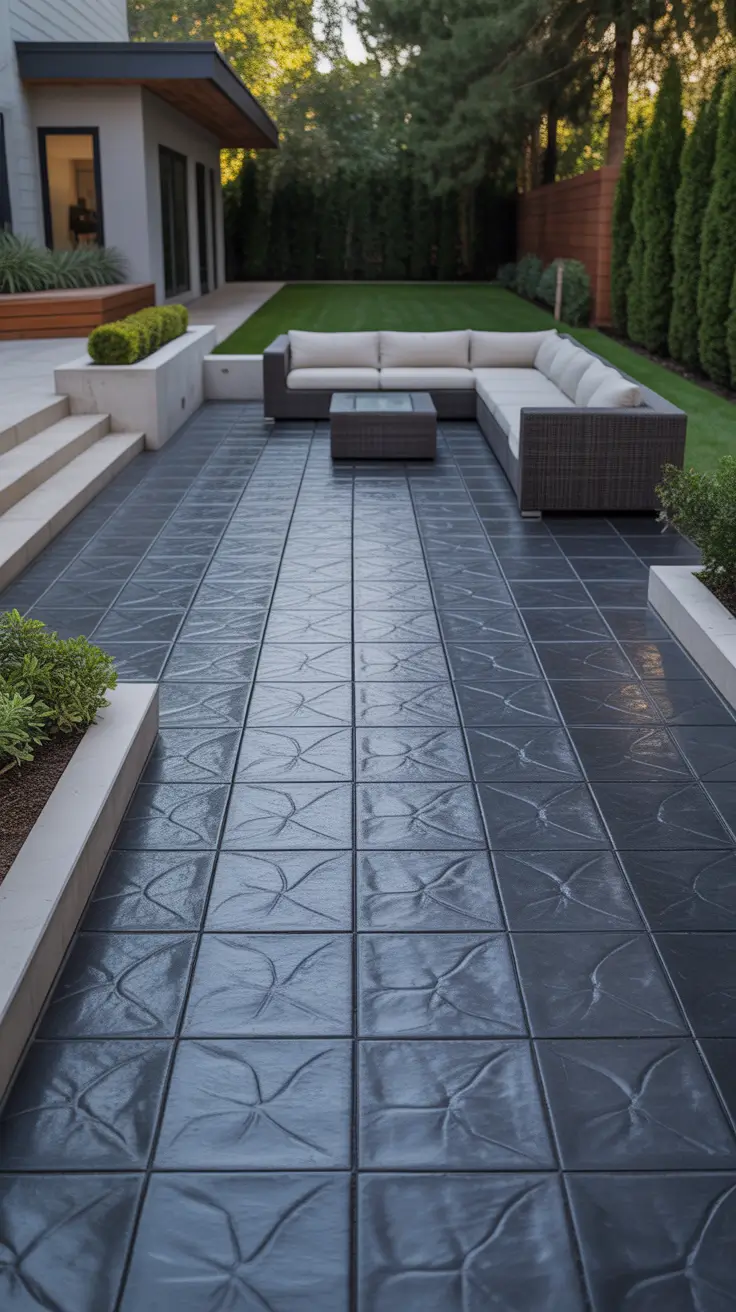
In my opinion, grid layouts are especially effective near contemporary architecture because they echo clean building lines. Many landscape architects recommend repeating architectural geometry outdoors to create cohesion, and I’ve consistently seen this strategy elevate patio design instantly.
What should be added here is soft landscaping. Without greenery, charcoal patios may feel too rigid, so ornamental grasses or layered shrubs help balance the strong geometry.
Wood Plank Style Concrete Patio
Wood plank stamped concrete offers the warmth of Wood plank flooring with the durability of concrete. I often suggest this option for homeowners who love natural textures but want less maintenance. It works beautifully in transitional homes where indoor flooring visually continues into the Outdoor living area.
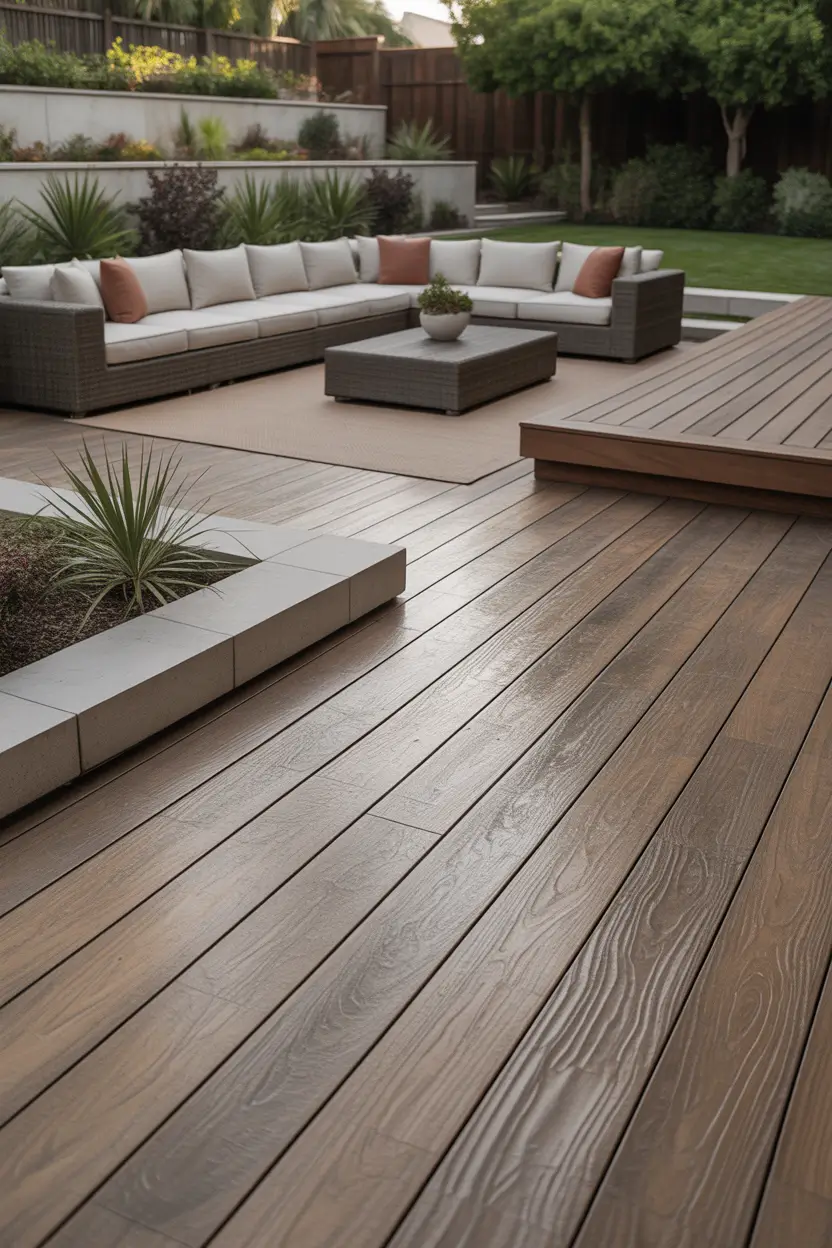
I typically combine this patio with woven lounge chairs, neutral cushions, and a dining table that reinforces the organic theme. The stamped planks can be installed in varied directions to guide movement through the space. Adding a Deck transition or slightly Raised section creates dimension while maintaining material consistency.
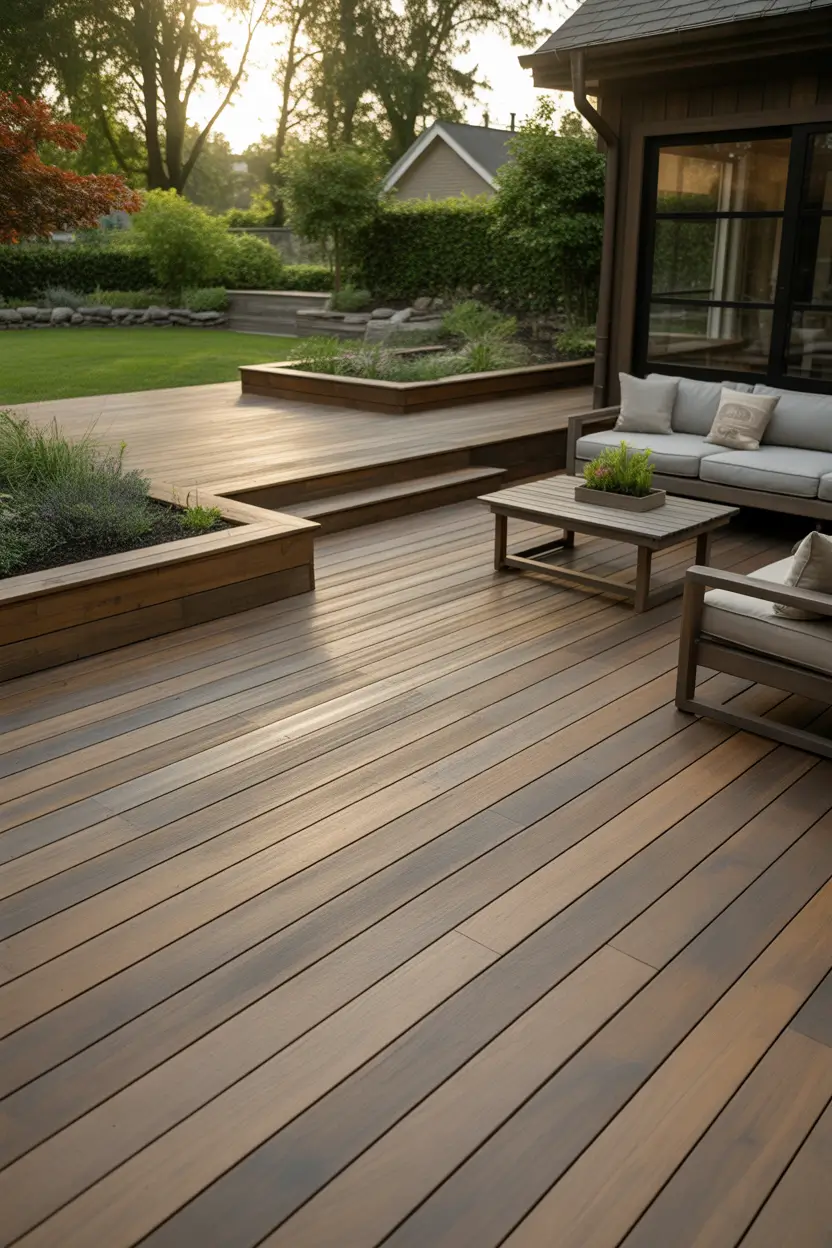
From personal observation, clients appreciate how realistic modern stamping techniques have become. Many industry publications note that advances in stamping molds and staining now replicate grain variation convincingly. I’ve seen guests mistake these patios for real timber until they walk on them.
This section would benefit from mentioning sealant choices. Matte finishes preserve realism, while glossy sealers can reduce the natural appearance homeowners typically want.
Terracotta Mediterranean Patio
A terracotta-toned stamped patio introduces warmth inspired by Mediterranean courtyards. I find this design especially fitting for sunny Front yard lounges or relaxed entertaining spaces. Earthy Colors create a welcoming atmosphere that pairs beautifully with textured walls and lush planting.
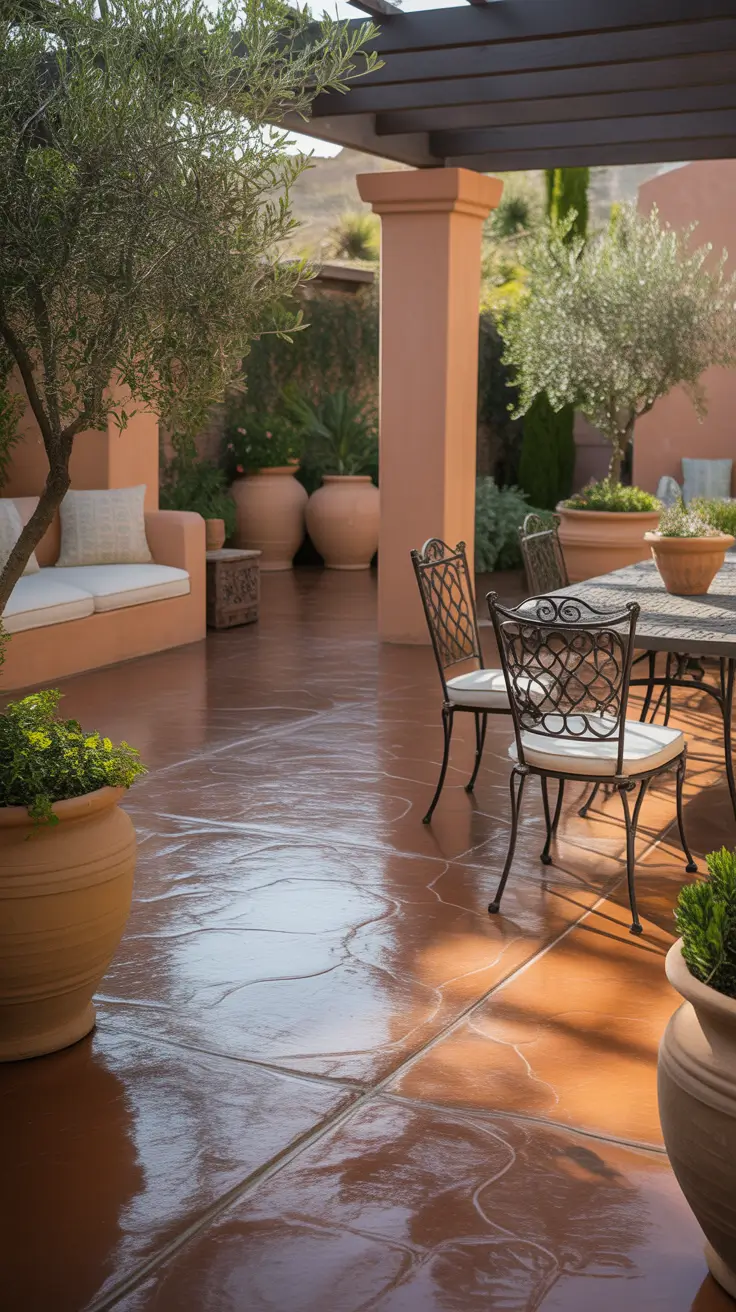
I usually incorporate wrought-iron furniture, ceramic pots, and soft linen cushions. Olive trees or drought-tolerant plants reinforce the Mediterranean aesthetic. A small fountain or tiled accent wall adds sensory interest without overwhelming the patio. The stamped pattern often mimics aged stone, giving the space character from day one.
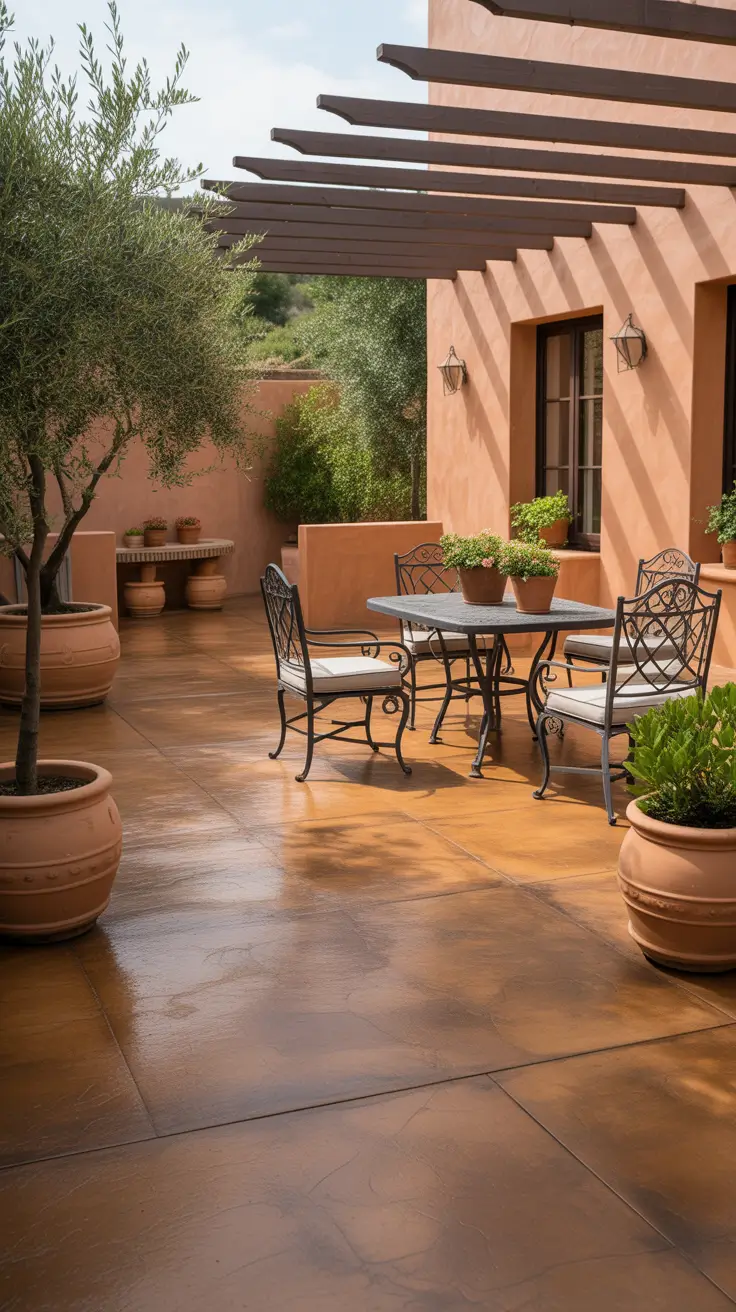
In my experience, this style encourages slower living. Designers frequently emphasize creating emotional atmosphere outdoors, not just functional seating. When done well, terracotta patios feel like vacation spaces integrated into everyday life.
What I would add is overhead shading. A vine-covered Gazebo or partial Pergola enhances authenticity while protecting surfaces from excessive sun exposure.
Cream Pool Deck Patio
Cream-colored stamped concrete is one of my favorite solutions for Pool decks because it reflects heat and keeps surfaces comfortable underfoot. This approach works particularly well around family-friendly pools where safety and durability matter as much as aesthetics. Light tones also make water reflections more vibrant.
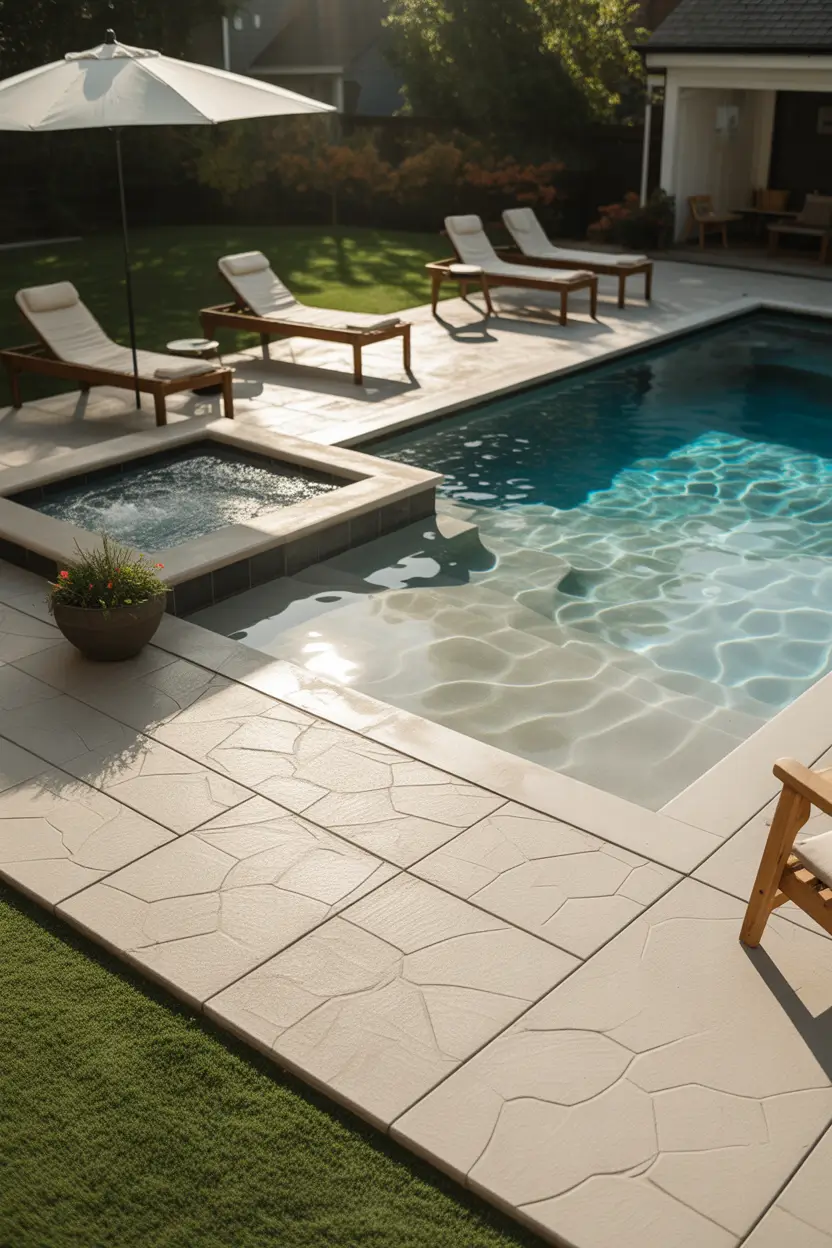
I usually recommend slip-resistant stamping patterns combined with rounded edges near the pool. Lounge chairs, umbrellas, and built-in storage benches complete the design. Neutral palettes allow pool tiles, landscaping, or a nearby Hot tub to become focal points without visual competition.
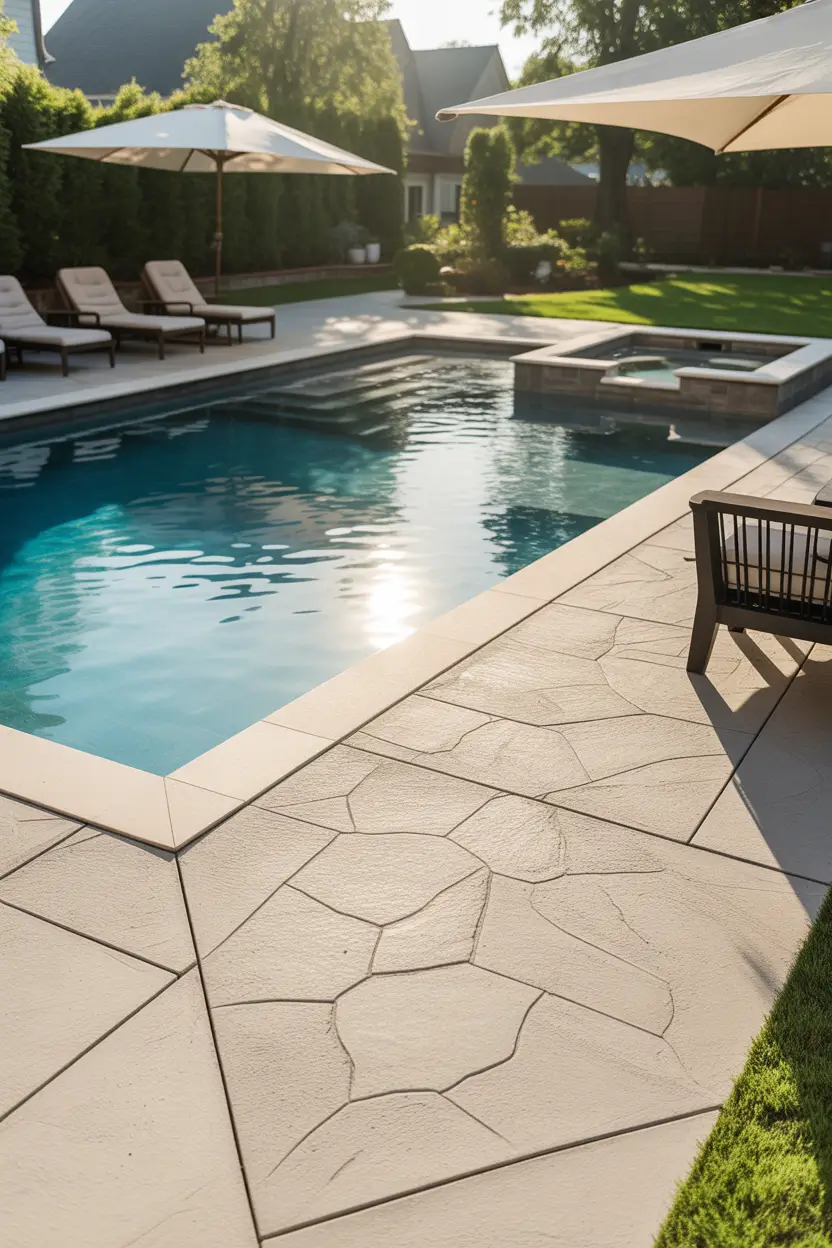
From what I’ve observed, designers consistently stress safety-first materials in pool environments. Textured stamped concrete provides grip while maintaining elegance, making it a practical alternative to traditional stone.
What should be added here is zoning. Separating lounging, dining, and circulation paths improves usability and prevents congestion during gatherings.
Taupe Ranch House Patio
Taupe stamped concrete complements the relaxed architecture of a Ranch house, where horizontal lines and natural surroundings define the style. I often use this tone to bridge indoor living rooms with expansive Backyards, creating continuity between structures and landscape.
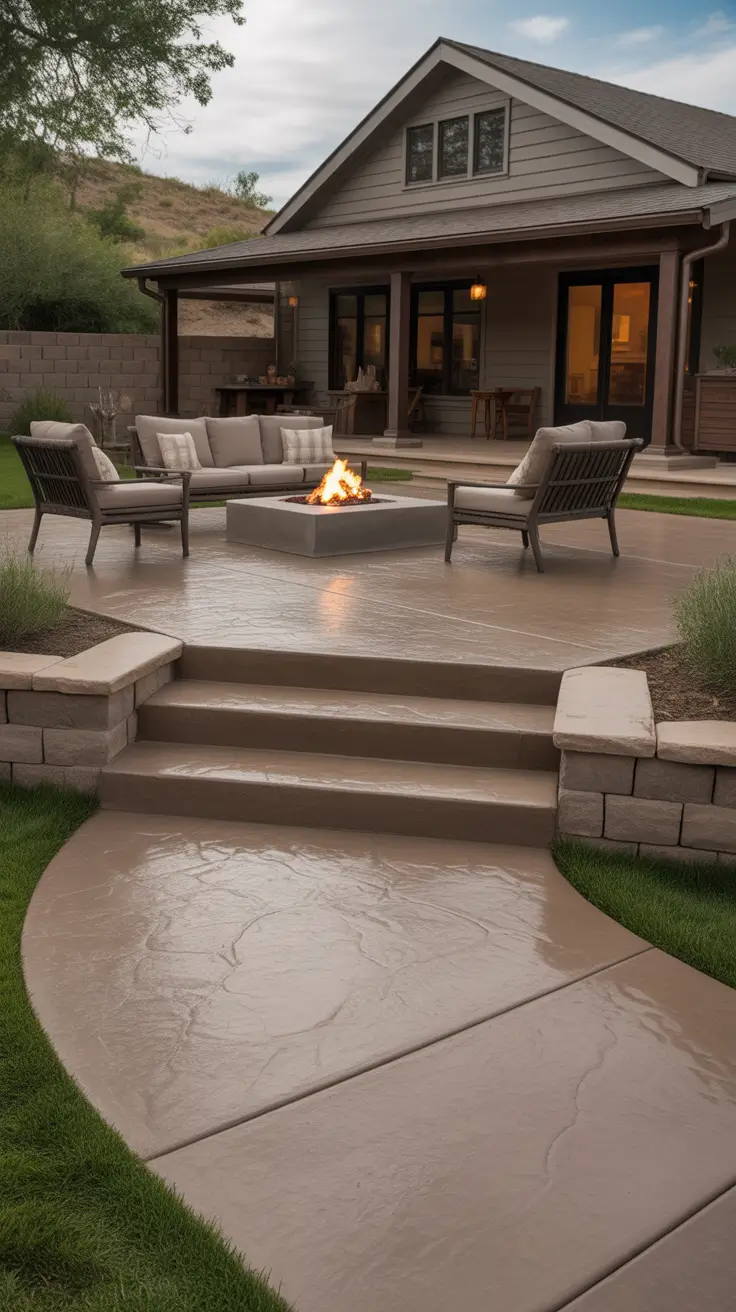
Furniture choices typically include deep seating sofas, rustic coffee tables, and weathered finishes that feel approachable rather than formal. Adding a built-in Fire pit anchors the patio and encourages year-round use. Wide Steps leading into the yard help transition between levels while reinforcing the home’s grounded aesthetic.
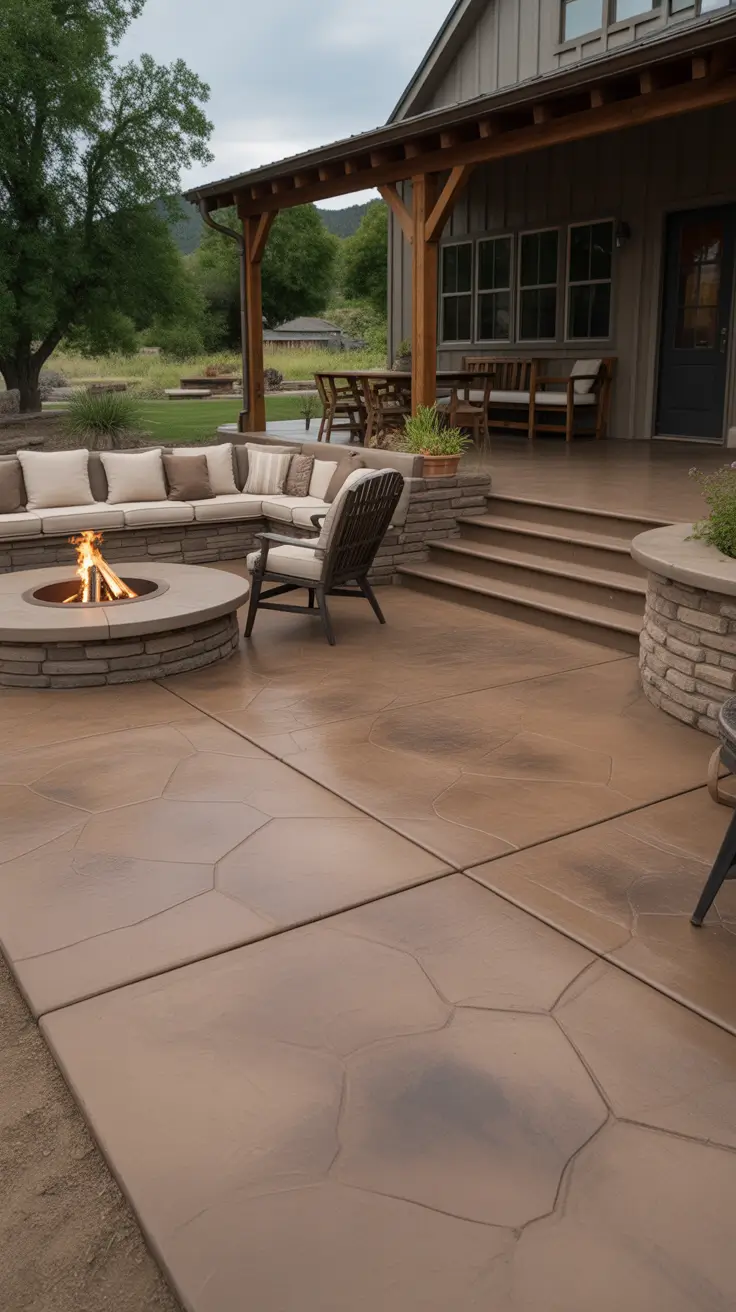
Personally, I appreciate how taupe tones balance warm and cool palettes, making decorating flexible. Many designers recommend adaptable base materials for long-term satisfaction, and this color consistently proves versatile across changing trends.
What I would add here is an adjacent Outdoor kitchen or grilling zone. Ranch-style layouts naturally support open entertaining, and extending functionality enhances everyday practicality.
Floating Step Concrete Patio
I often use floating Steps within stamped concrete patios to introduce architectural movement and improve elevation transitions across Backyards. This design works especially well when a patio connects different zones such as dining, lounging, or garden areas. Instead of heavy stair structures, floating steps appear visually lighter, making the Layout feel intentional and contemporary while maintaining practicality for everyday Outdoor use.
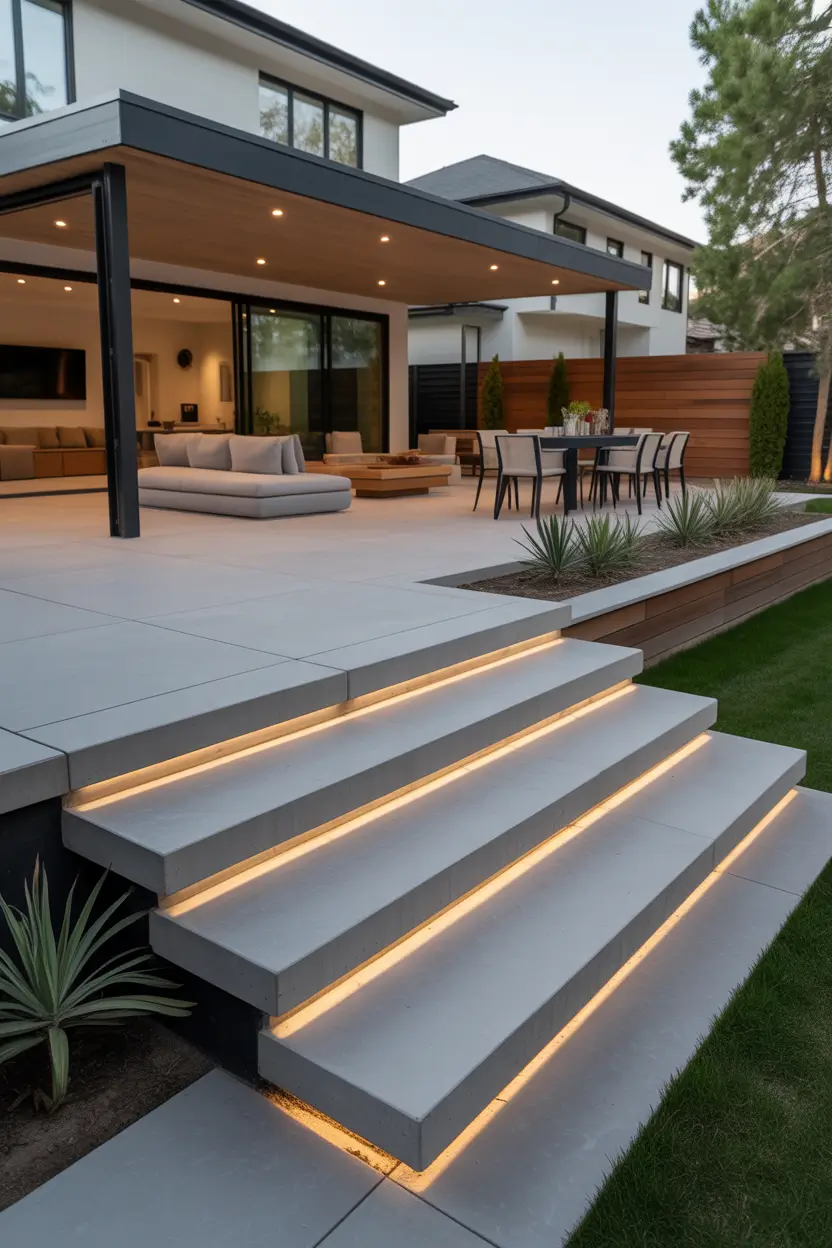
In this setup, I typically design wide concrete treads with subtle shadow gaps between levels to create the floating illusion. Low-profile LED lighting beneath each step improves safety and adds atmosphere at night. Furniture placement usually includes a lounge area at the lower level and a dining zone above, helping naturally divide functions. I also like incorporating textured planters or warm Wood accents nearby to soften the structured geometry.
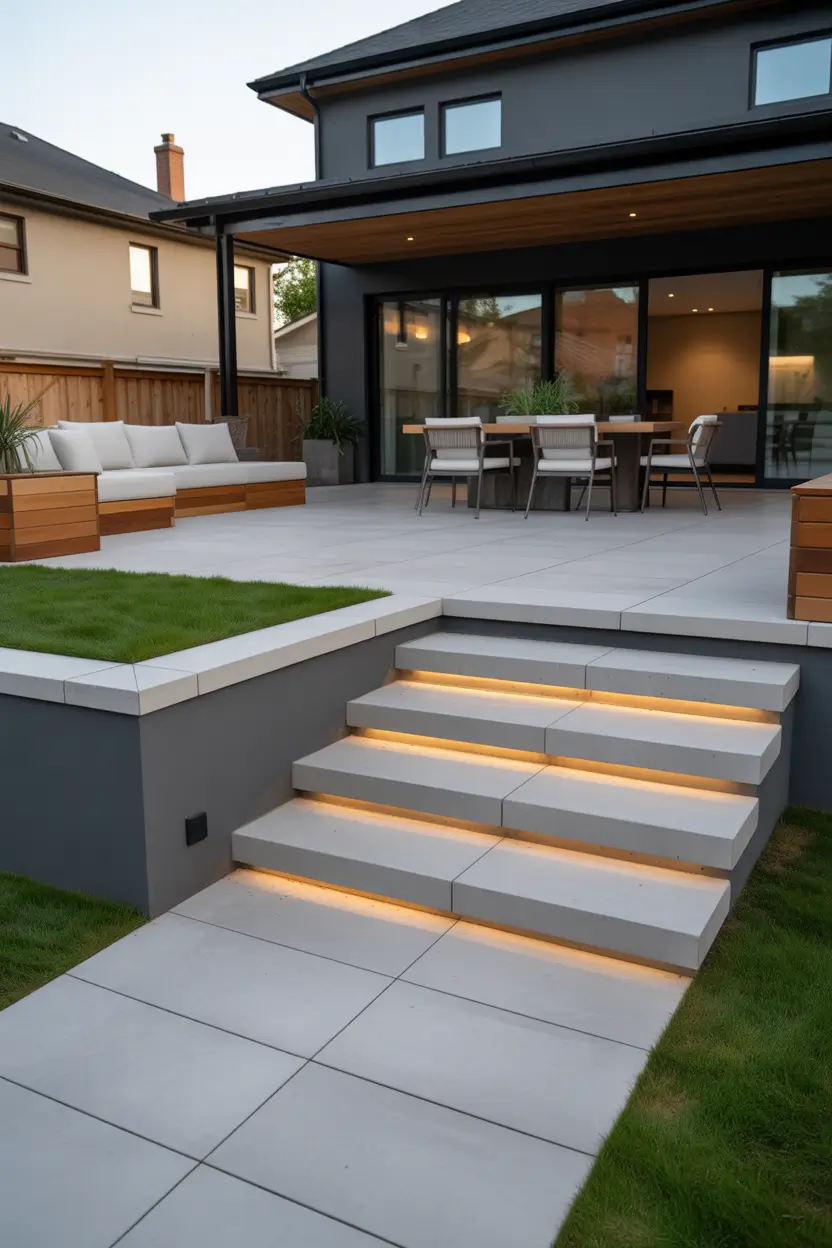
From my experience, elevation changes instantly make patios feel custom-designed. Landscape architects frequently mention that layered spaces increase perceived size even in a Small backyard, and I’ve repeatedly seen this approach transform flat, uninteresting yards into dynamic living environments.
What I would add here is handrail planning when necessary. Minimal metal railings or integrated planter borders can maintain safety without interrupting the modern aesthetic.
Round Fire Pit Patio
A Round stamped concrete patio centered around a Fire pit creates a natural gathering space that encourages conversation and relaxation. I often recommend circular layouts because they break away from rigid rectangular planning and feel more social by design. This concept works equally well in Large entertaining yards or intimate Backyards back porches.
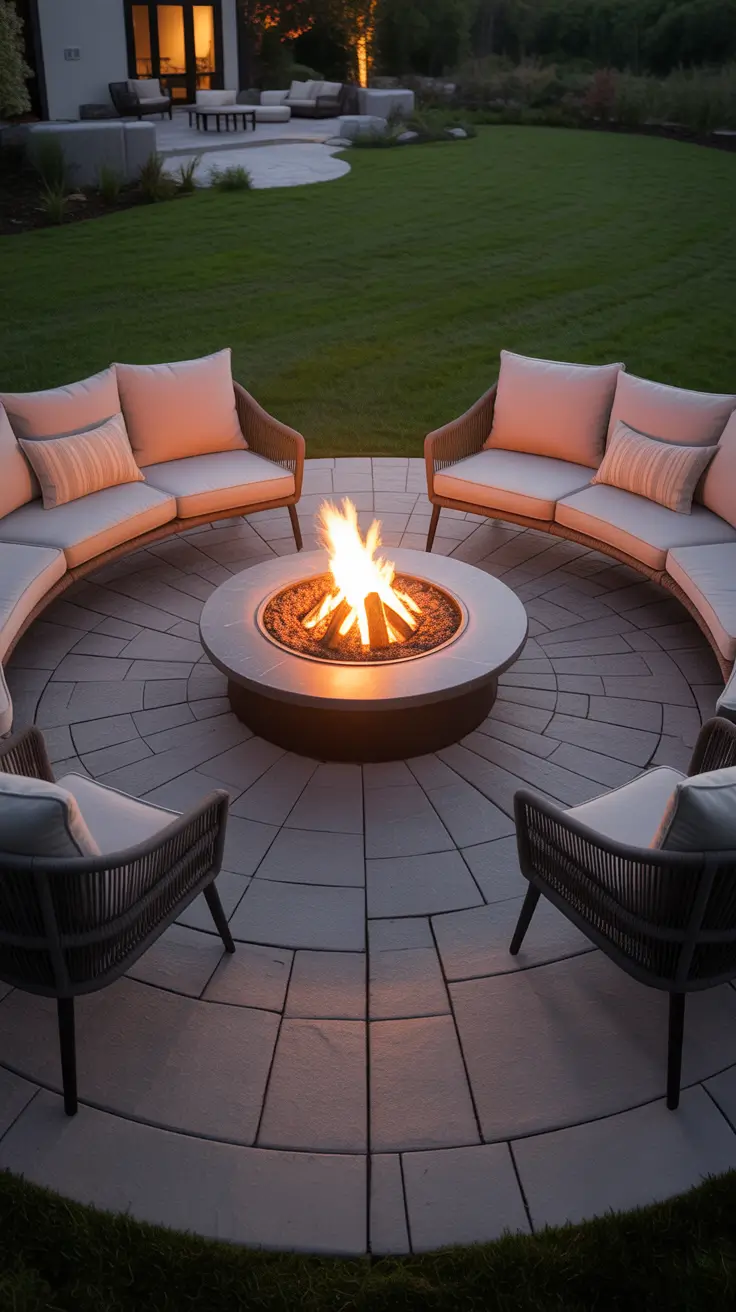
I usually position curved seating or Adirondack chairs evenly around the fire feature to reinforce symmetry. Stamped concrete patterns radiating outward enhance the circular effect, while contrasting Colors subtly define the seating zone. Adding side tables, outdoor rugs, and weather-resistant cushions makes the area comfortable for extended evenings outdoors.
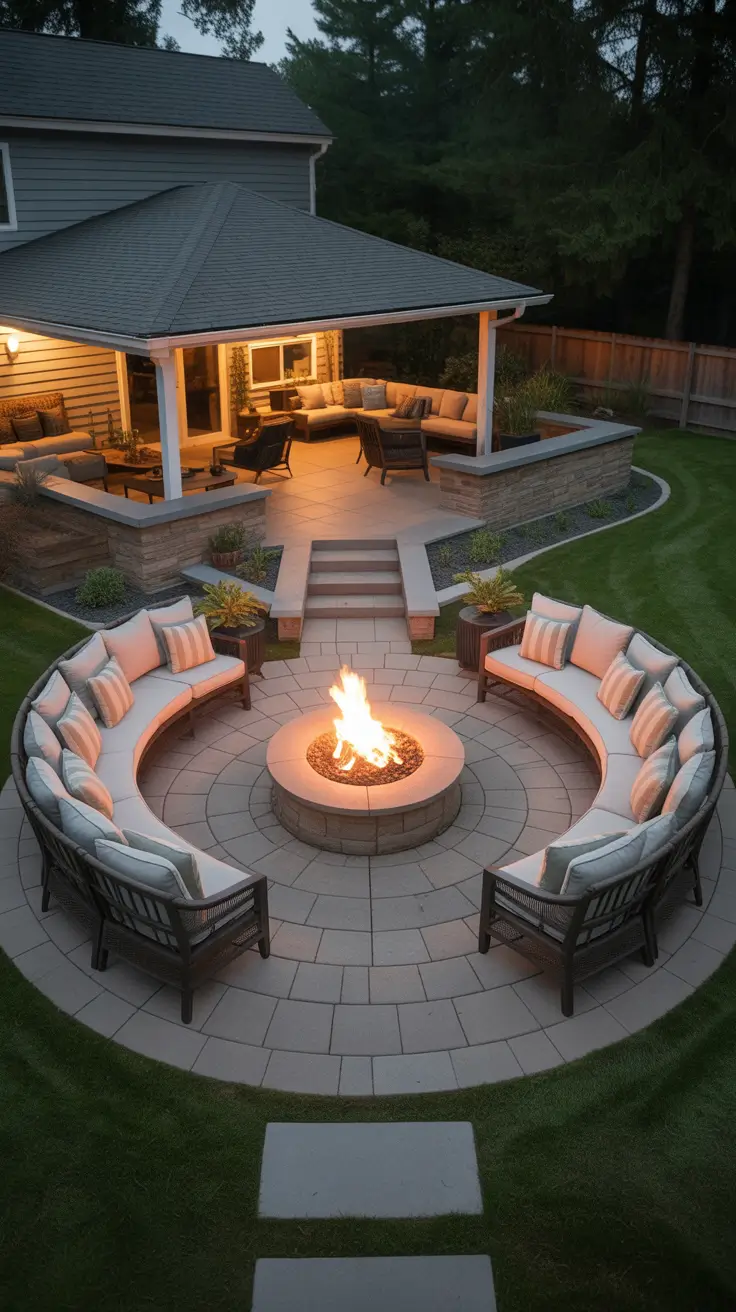
Personally, I believe fire features are one of the most impactful outdoor upgrades. Designers featured in HGTV often highlight fire pits as year-round anchors for outdoor living, and I agree because they extend usability beyond summer months. I’ve seen homeowners use these patios more frequently than traditional dining areas.
This section would benefit from mentioning wind direction and seating distance. Proper spacing ensures comfort and prevents smoke from disrupting guests.
Curved Organic Concrete Patio
Curved stamped concrete patios embrace organic forms that follow the natural landscape rather than forcing straight lines. I often suggest this approach for gardens with mature trees or irregular terrain, where soft shapes feel more harmonious. The Curved layout encourages relaxed movement and creates a welcoming flow throughout the Outdoor environment.
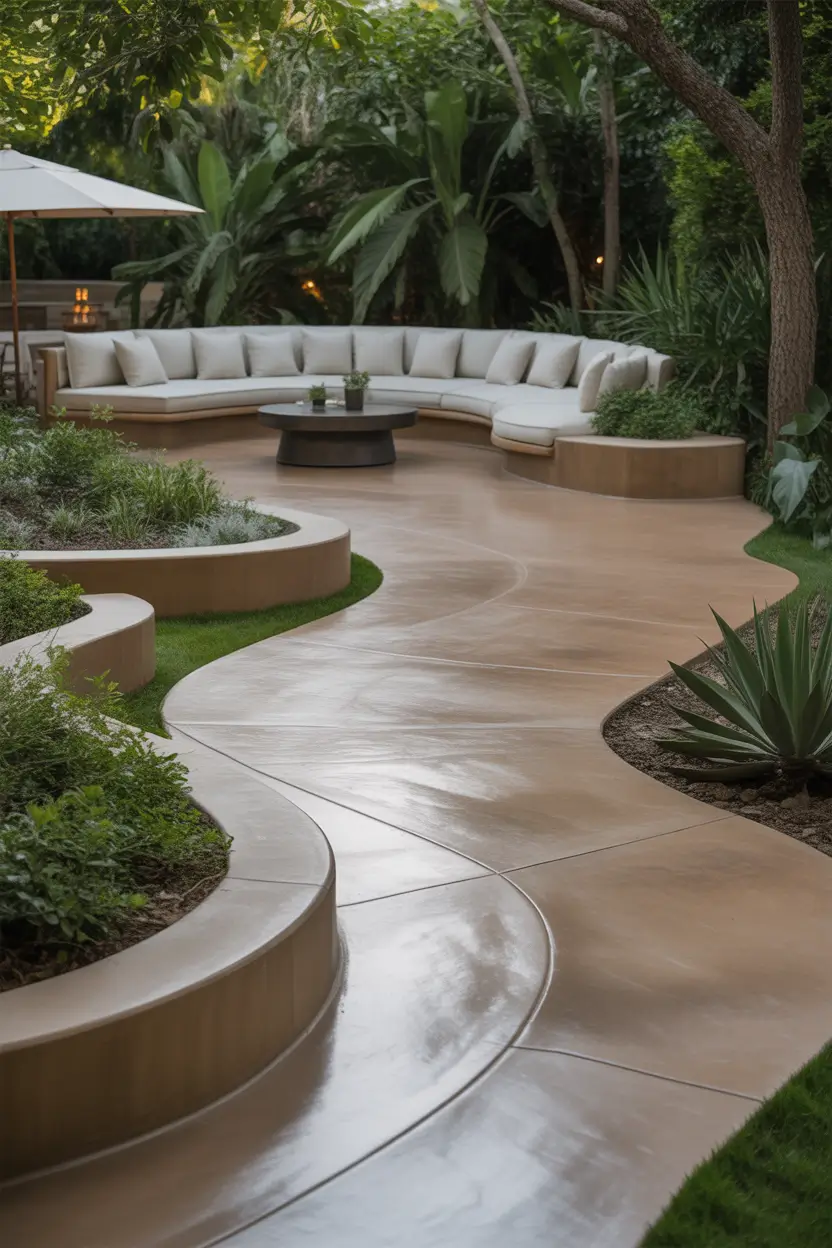
Furniture in this setting works best when layered casually. I typically include rounded lounge chairs, sculptural planters, and mixed-material tables to echo the patio’s fluid shape. Natural-toned concrete paired with greenery reduces visual hardness, making the patio feel integrated into nature rather than placed on top of it.
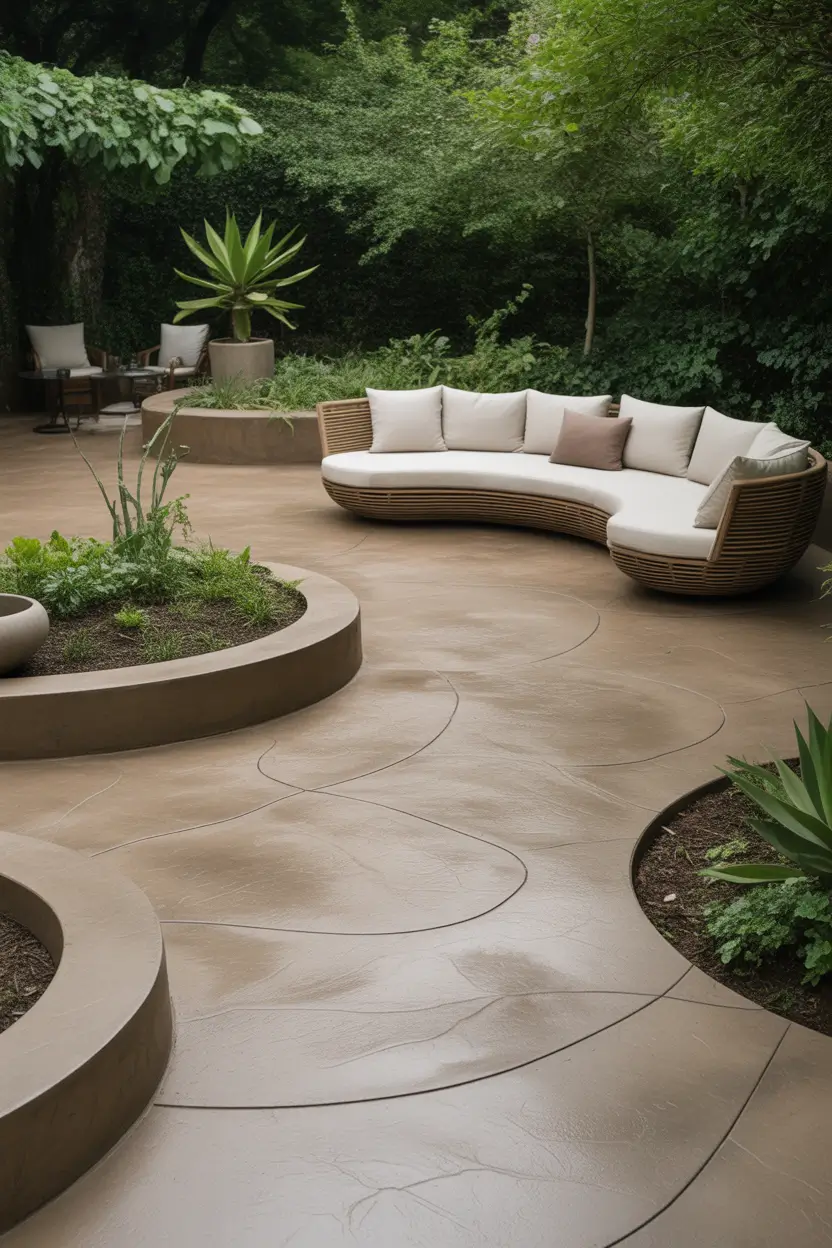
In my opinion, organic patios age beautifully because they resist trend fatigue. Many landscape designers recommend biomorphic layouts to create calming environments, and I’ve noticed clients instinctively spend more time in spaces that avoid rigid symmetry.
What I would add is pathway continuity. Extending curved stamped walkways into surrounding garden areas strengthens cohesion and improves navigation through the yard.
Raised Platform Concrete Patio
A slightly Raised stamped concrete platform helps define outdoor living zones while improving drainage and visibility across the yard. I frequently use this solution when patios connect directly to the house, especially in homes with expansive Backyards or uneven terrain.
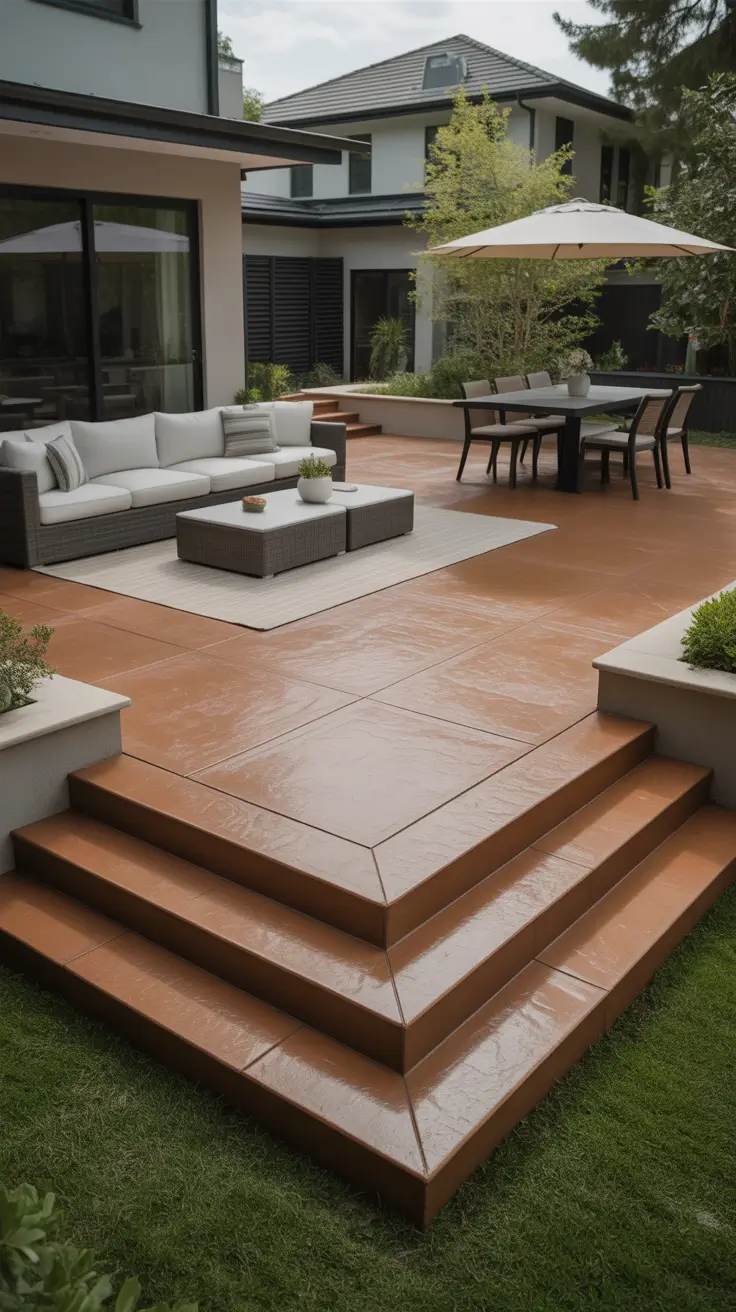
I usually design clean vertical edges combined with integrated seating walls or planter borders. Outdoor sofas, dining tables, and layered textiles help the platform feel like an extension of the interior living room. When paired with a nearby Deck or lawn, the elevation difference subtly separates activities without needing fences or partitions.
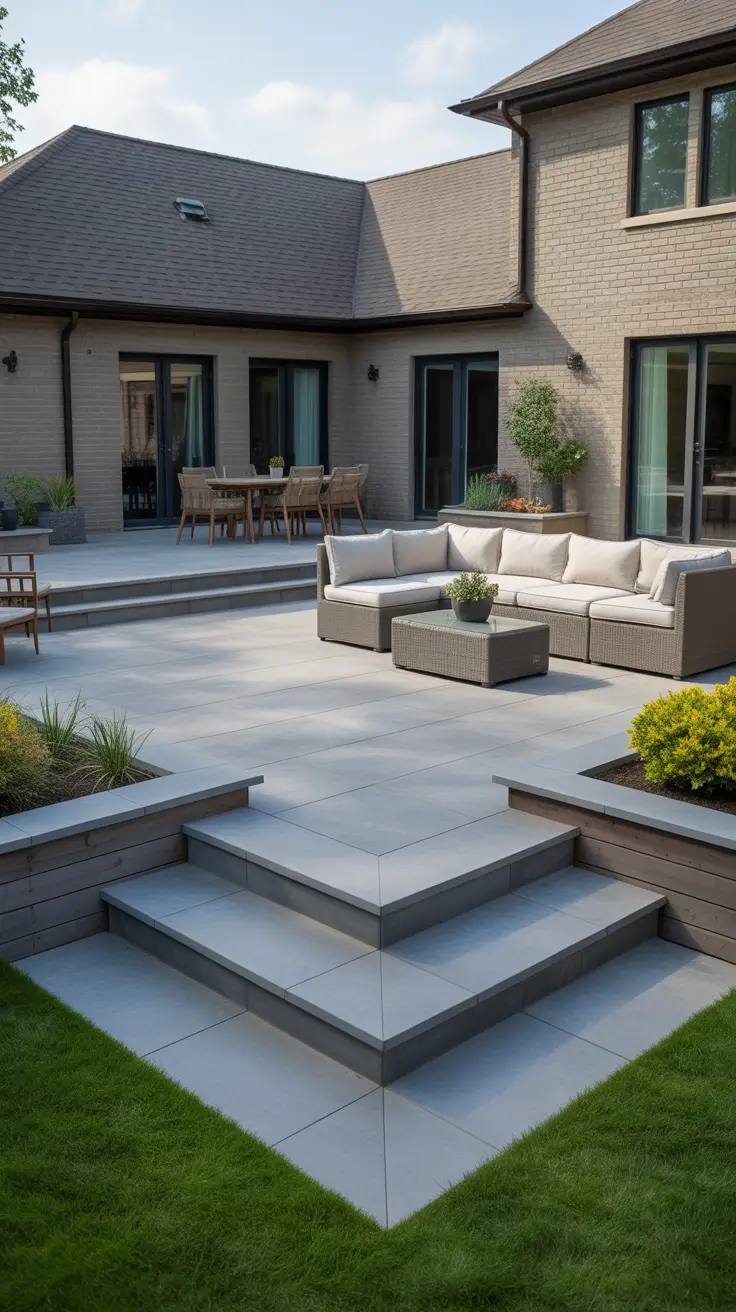
From my experience, raised patios feel more intentional and architectural. Many designers recommend elevation to establish hierarchy within outdoor spaces, and I’ve found homeowners naturally treat raised areas as primary gathering zones.
What should be added here is step proportion planning. Comfortable riser heights and wide landings make transitions feel natural and safe for all ages.
Pergola Covered Concrete Patio
Adding a Pergola above stamped concrete instantly transforms a patio into a defined outdoor room. I often recommend this solution for homeowners seeking shade without fully enclosing the space. It works beautifully for dining zones, lounging areas, or transitional spaces between Backyards and the home.
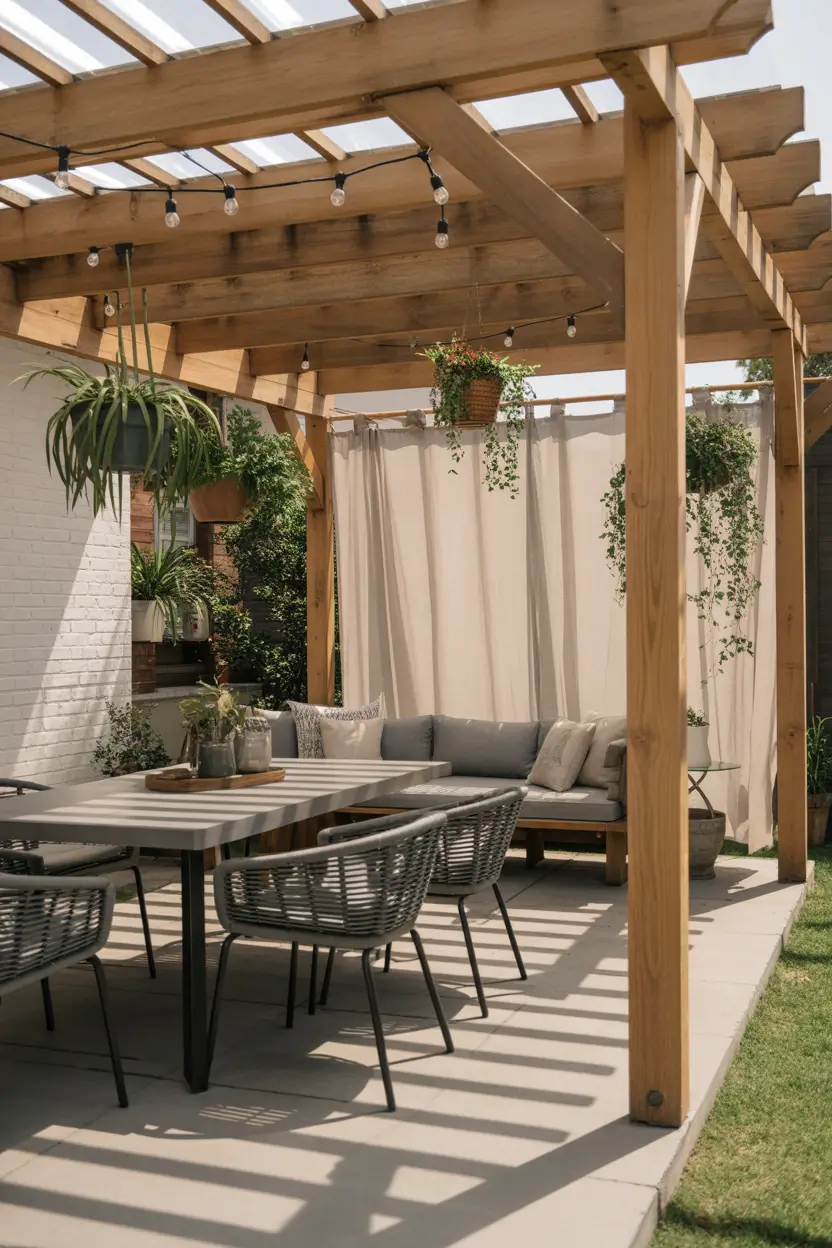
I typically combine stamped concrete flooring with wooden pergola beams or painted aluminum structures for durability. Outdoor curtains, string lighting, and hanging plants soften the structure while improving comfort. A dining table or sectional seating underneath creates a clear functional purpose, turning the patio into a daily-use living space.
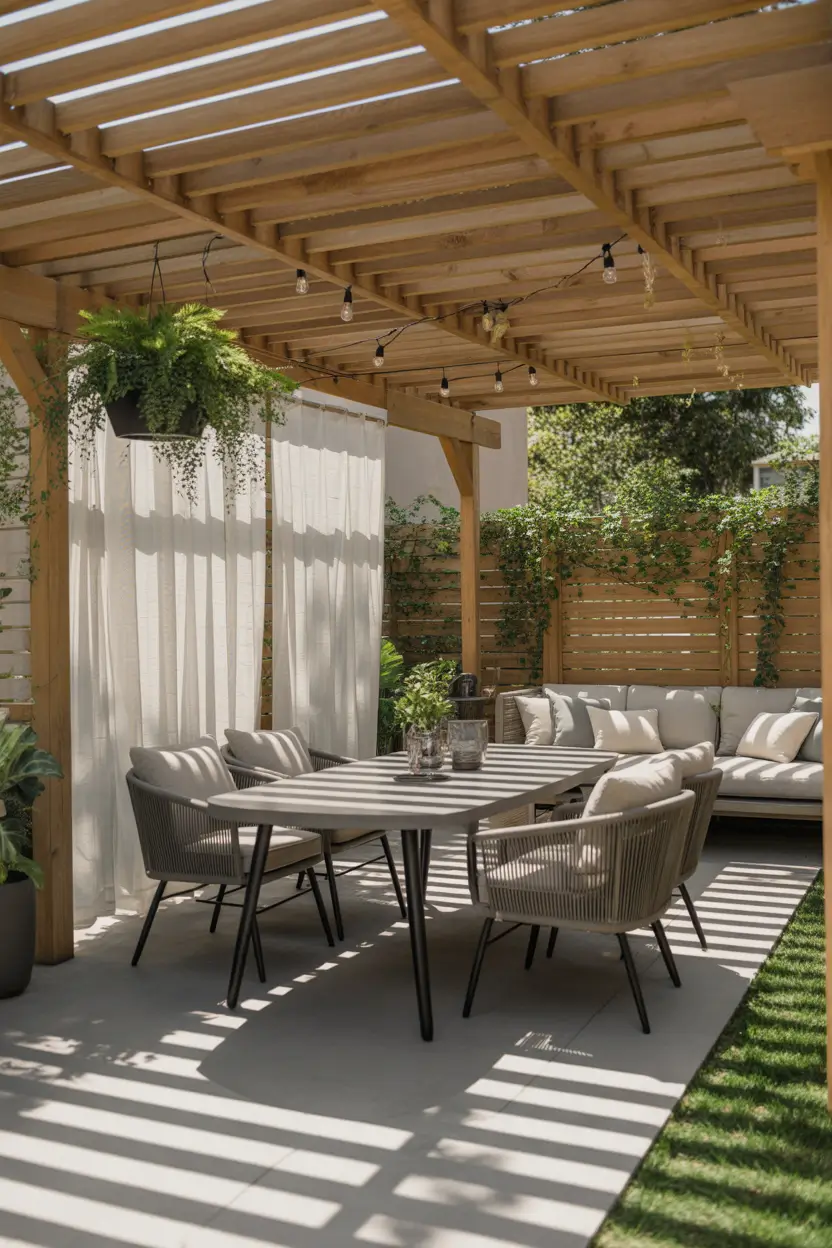
Personally, I see pergolas as one of the smartest upgrades for climate adaptability. Design publications frequently emphasize layered shade solutions, and I’ve noticed patios with overhead structure are used significantly more throughout the year.
What I would add here is seasonal adaptability. Adjustable louvers or retractable fabric panels allow homeowners to control sunlight and rain exposure efficiently.
Slate Texture Large Patio
A slate-textured stamped concrete patio is ideal for a Large entertaining area where visual richness prevents the surface from feeling empty. I often choose slate patterns because they introduce depth and variation while maintaining the strength of Poured concrete construction.
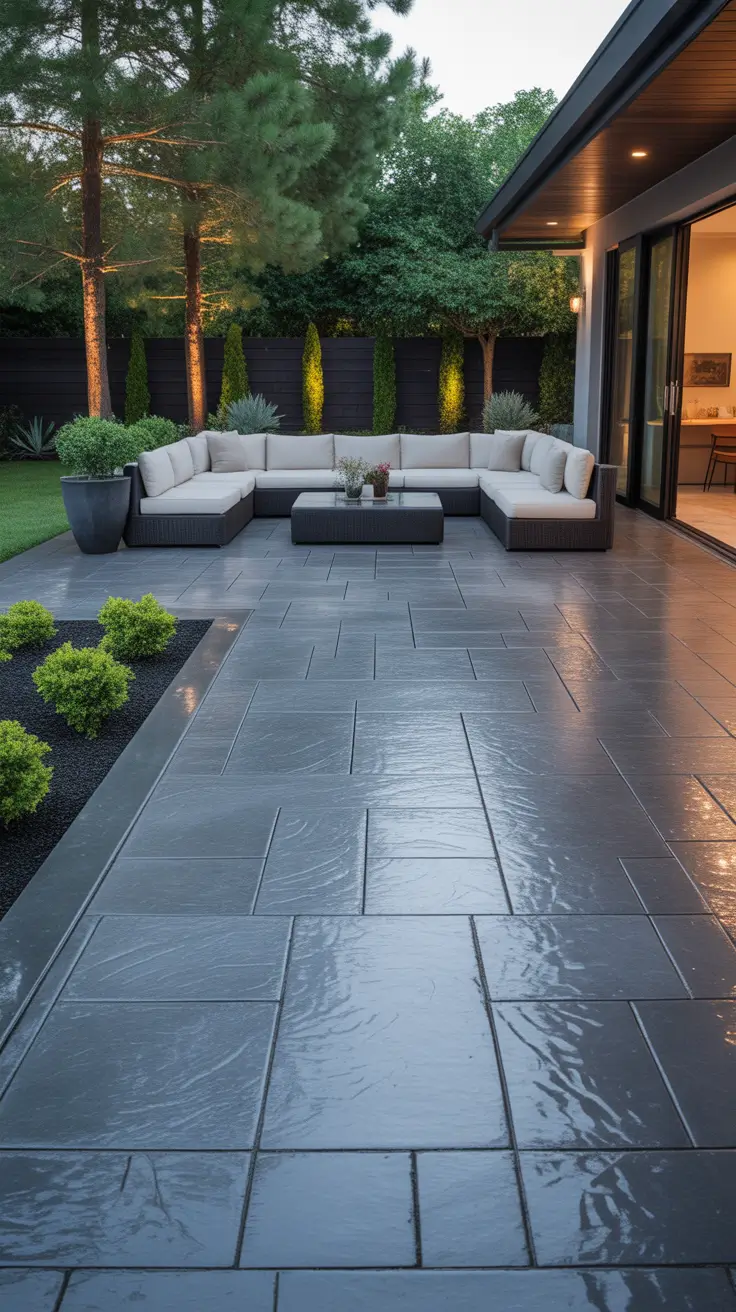
Furniture planning usually includes multiple zones: a lounge area, dining table, and secondary seating cluster. Large-scale sectionals, outdoor rugs, and statement planters help balance the wide surface area. Neutral Grey or charcoal staining enhances realism while coordinating easily with modern architecture.
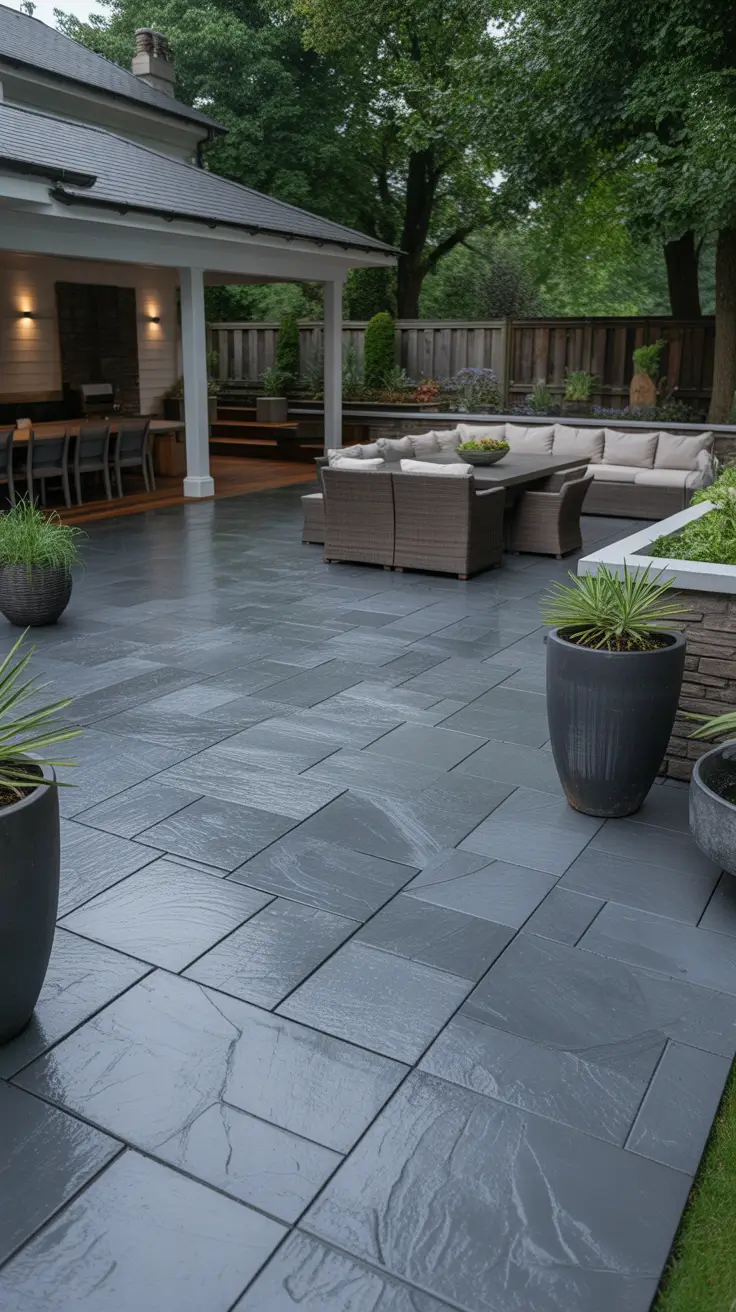
From my perspective, texture becomes essential as patios grow in size. Designers commonly advise increasing pattern complexity in larger spaces to maintain visual interest, and I’ve consistently seen slate stamping achieve that balance successfully.
This section would benefit from adding focal points such as sculptures, water features, or a secondary fire element to prevent the patio from feeling overly expansive.
Hot Tub Surround Patio
Designing a stamped concrete patio around a Hot tub requires balancing relaxation with safety and accessibility. I often recommend textured stamping patterns that provide grip while maintaining a spa-like aesthetic. This setup works especially well in private corners of Backyards or adjacent to Pool decks.
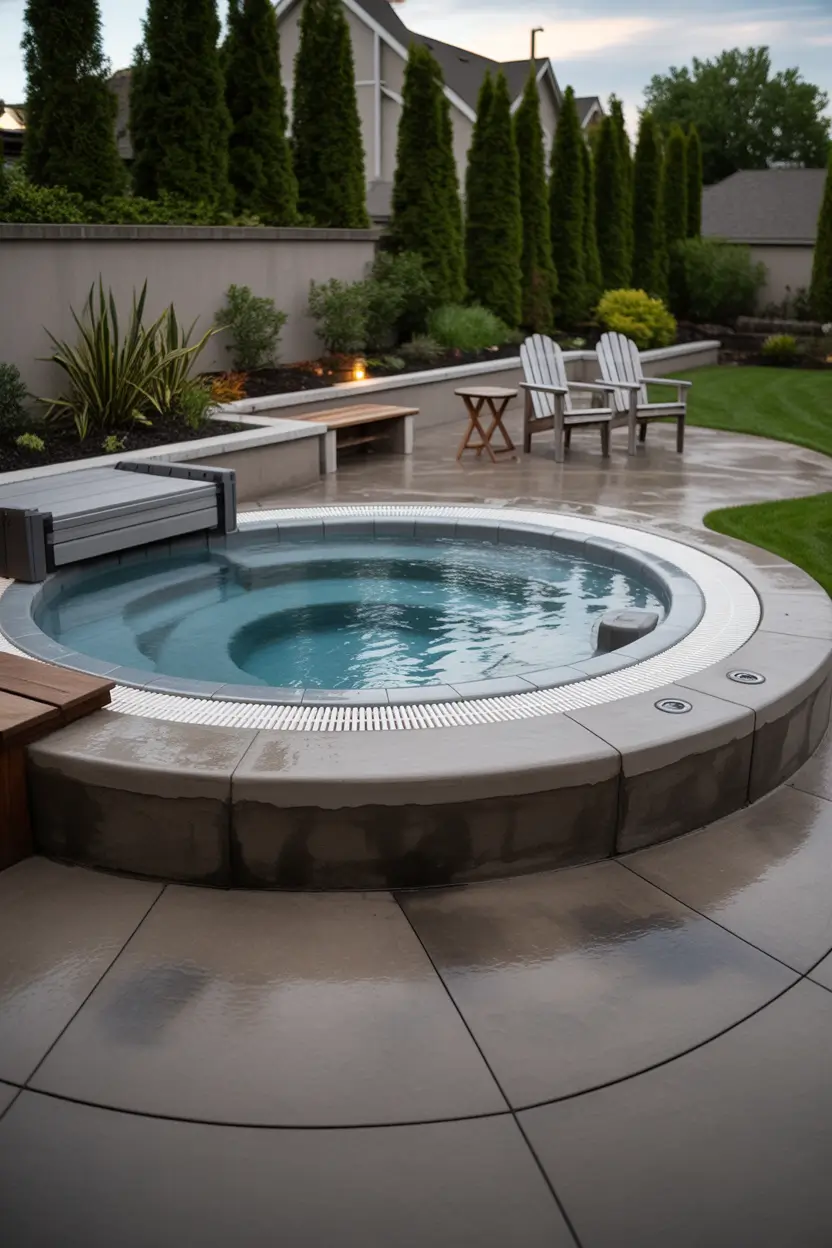
I typically include built-in benches, towel storage, and subtle lighting around the perimeter. Neutral Colors help the water become the focal point, while privacy screens or landscaping enhance comfort. Adding nearby lounge chairs creates a recovery zone where users can cool down after soaking.
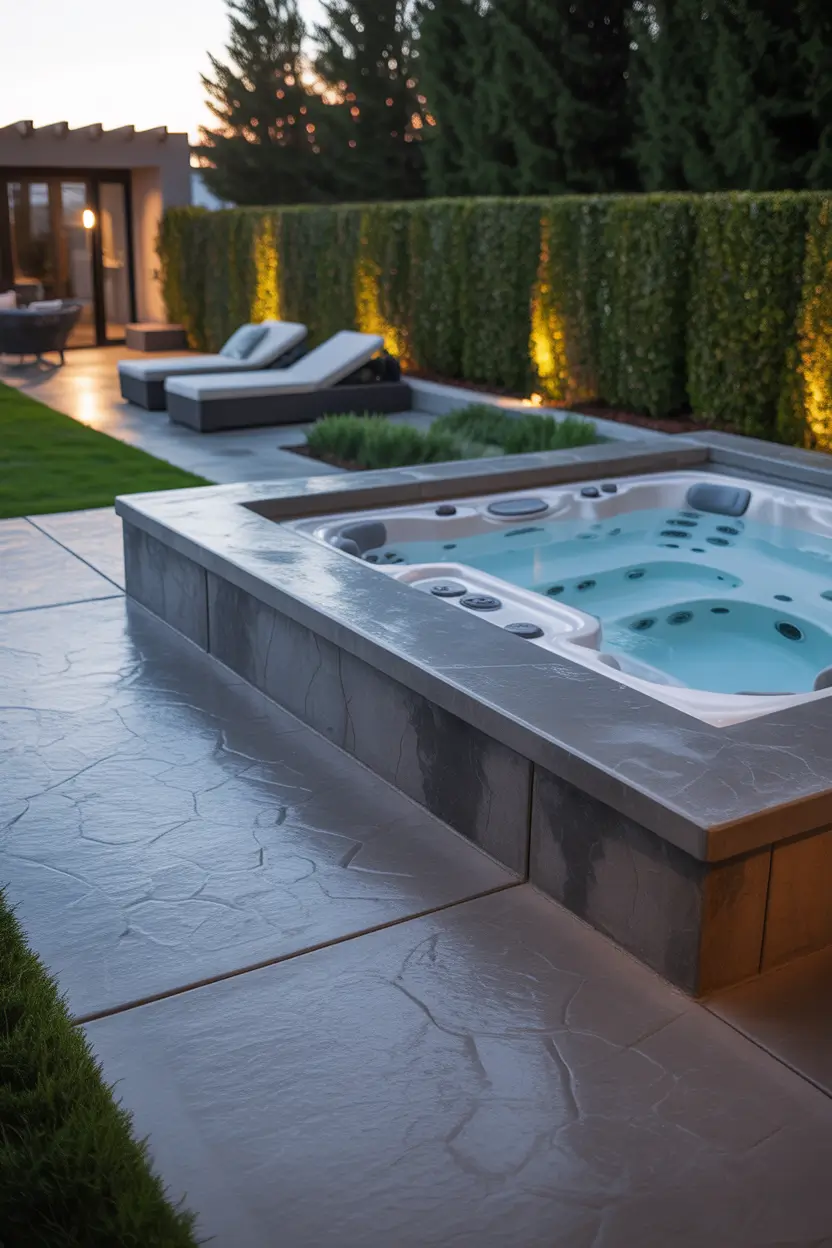
In my experience, hot tub patios succeed when circulation is carefully planned. Experts frequently emphasize leaving adequate walking space and ensuring drainage slopes away from the tub, which prevents long-term maintenance issues.
What I would add is weather protection. A partial Gazebo or pergola extension improves year-round usability and protects equipment from harsh conditions.
Back Porch Concrete Patio
I often recommend starting patio planning from the home outward, and a stamped concrete back porch creates one of the most natural transitions between indoor and outdoor living. In many Backyards back porches, a Poured concrete surface stamped to resemble Wood or stone provides durability while keeping the space visually warm. I usually focus on creating a balanced Layout that allows movement between seating, dining, and garden areas without crowding the space, especially when working with a Small backyard.
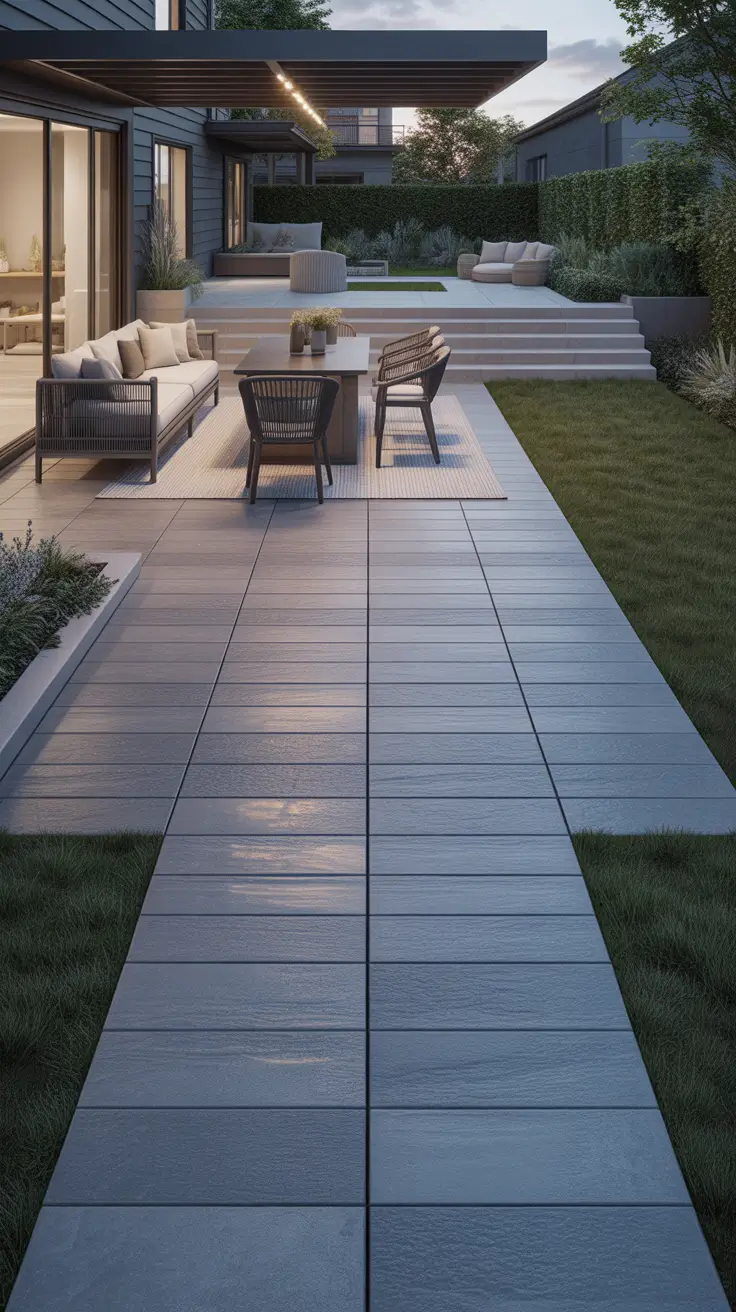
For furniture, I prefer deep outdoor sofas, woven lounge chairs, and a rectangular dining table that anchors the porch visually. A ceiling fan, layered lighting, and textured outdoor rugs soften the concrete surface and make it feel intentional rather than purely functional. Adding wide Steps leading into the yard improves accessibility while visually expanding the patio’s footprint.
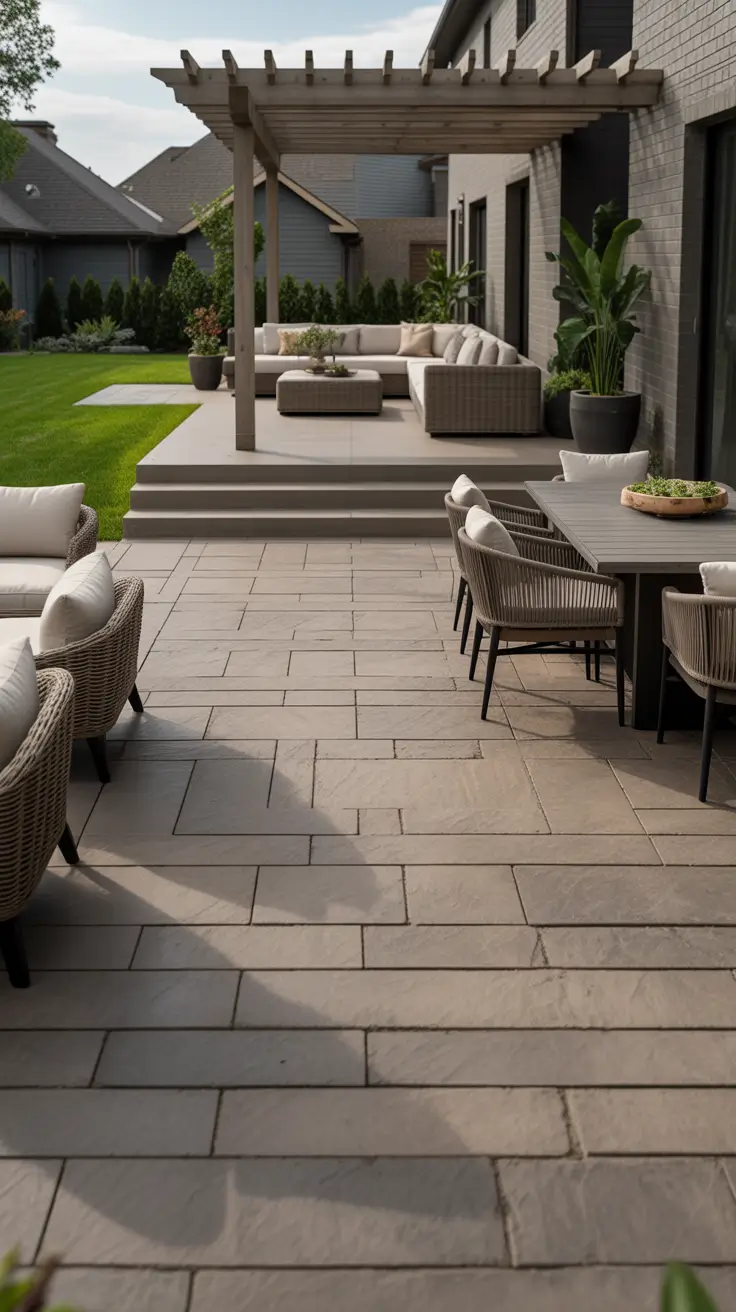
From my experience, designers featured in Architectural Digest often emphasize continuity between interior flooring and exterior materials, and stamped concrete achieves that beautifully. When I match porch tones with indoor flooring, the home instantly feels larger and more cohesive.
What I would add here is integrated lighting along the steps and subtle planter borders. These details elevate usability at night and help define the patio without adding clutter.
Outdoor Kitchen Concrete Patio
An Outdoor kitchen built on stamped concrete completely changes how a patio functions. I see homeowners moving toward fully equipped cooking zones that feel permanent yet flexible. A Large stamped surface supports grills, prep counters, and dining areas while resisting stains and weather damage, making it ideal for heavy-use Outdoor environments.
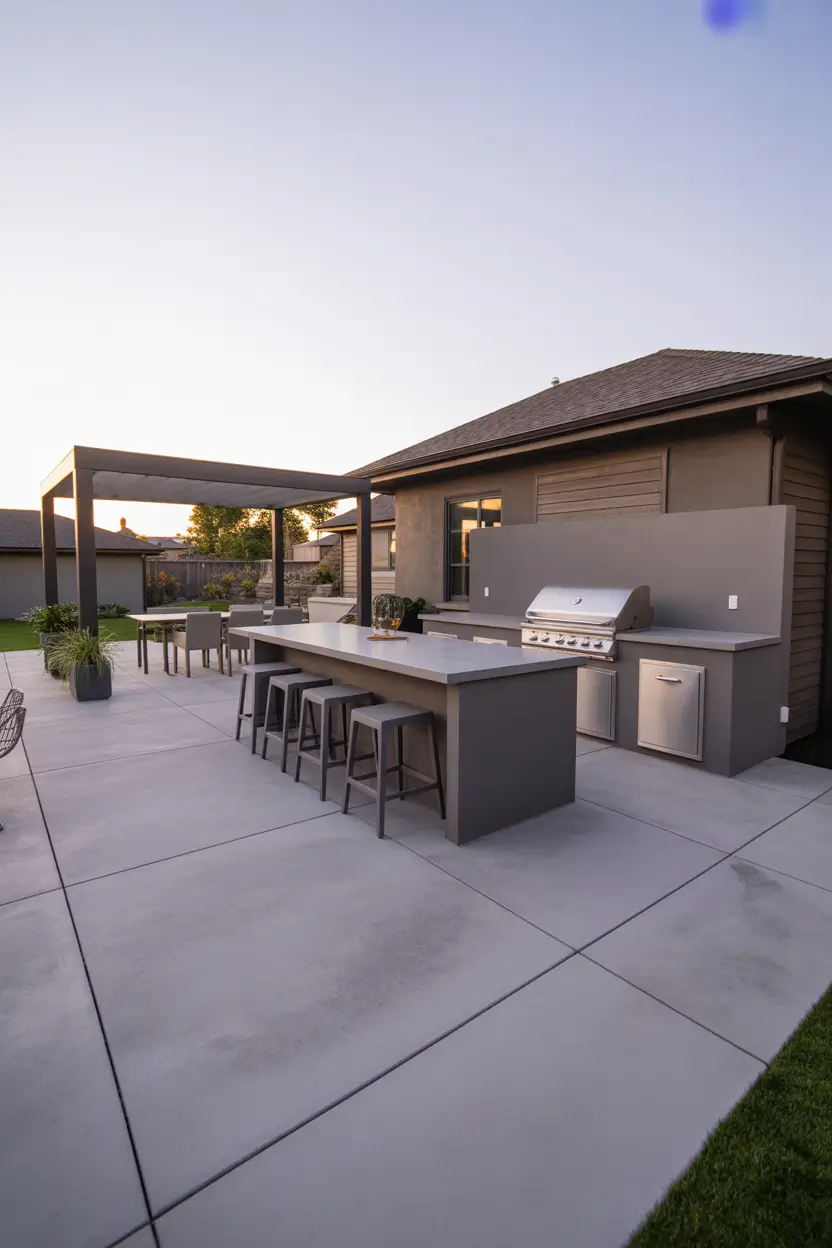
I typically include a built-in grill island, concrete or stone countertops, bar seating, and weather-resistant cabinetry. A nearby Pergola adds shade and architectural structure, while neutral Grey concrete tones keep the space visually calm despite multiple functional zones. Proper spacing between cooking and seating areas ensures safe movement and better hosting flow.
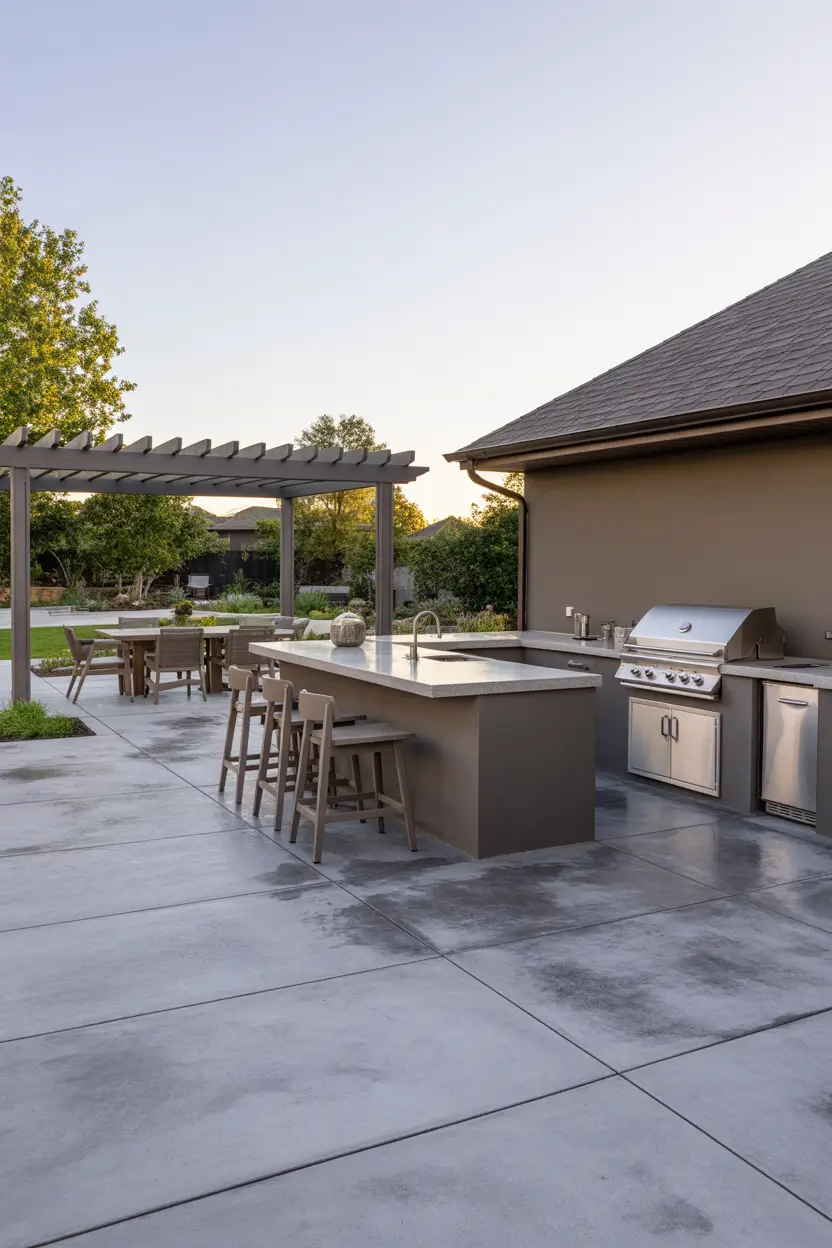
Personally, I’ve noticed that outdoor kitchens become the social center of the home. HGTV designers frequently recommend positioning cooking areas parallel to seating rather than facing away, and I fully agree because conversation becomes effortless.
What’s often missing is storage planning. I always suggest hidden cabinets for utensils, trash compartments, and electrical outlets for small appliances to make the space genuinely practical.
Cobblestone Gazebo Patio
A stamped cobblestone patio beneath a Gazebo introduces timeless charm while maintaining modern practicality. I like using this idea in both traditional homes and updated Ranch house properties because it blends classic texture with contemporary durability. The stamped pattern mimics aged stone without uneven surfaces, making it comfortable for everyday use.
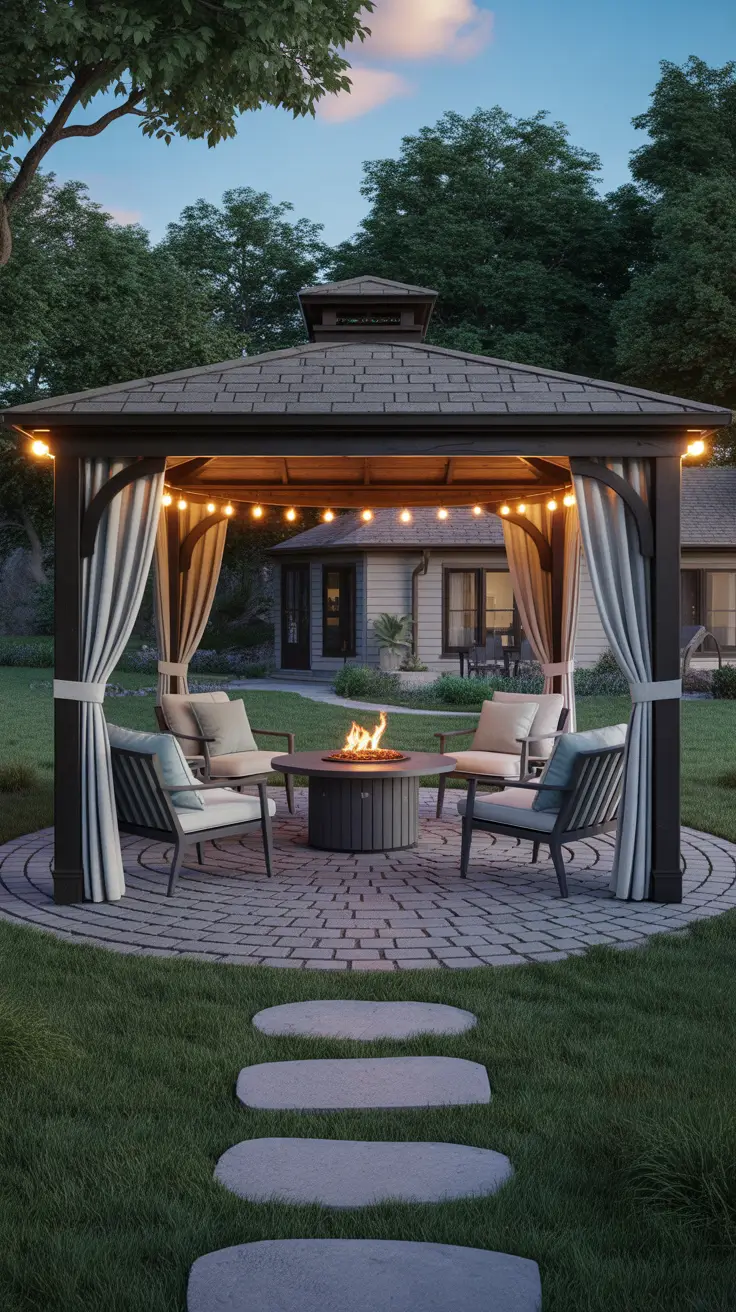
Furniture should feel relaxed but structured. I lean toward cushioned seating arranged in a Round conversation layout, paired with a central coffee table or compact Fire pit. Soft outdoor curtains and warm lighting transform the gazebo into a destination rather than just a shelter.
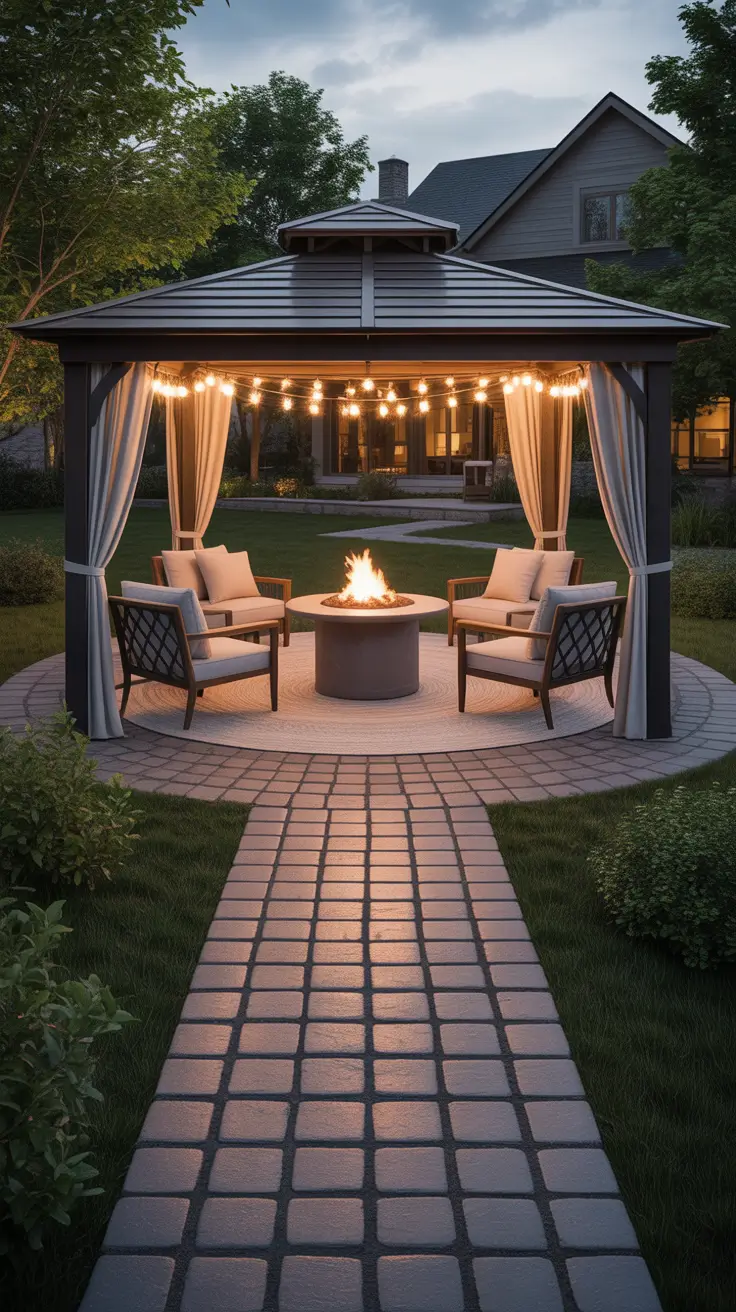
In my opinion, gazebo patios work best when surrounded by landscaping that feels intentional. Designers from Better Homes & Gardens often highlight layered greenery as essential for defining outdoor rooms, and I’ve seen how plants instantly soften concrete textures.
To strengthen this concept, I would include pathway connections leading from the main patio using matching stamped patterns to unify the entire yard.
Deck Transition Concrete Patio
One of the smartest stamped concrete patio ideas 2026 involves blending a raised Deck with a concrete entertaining zone below. I often design these transitional spaces to solve elevation challenges while creating visual depth. A Raised wooden deck paired with stamped concrete below provides contrast between natural and architectural materials.
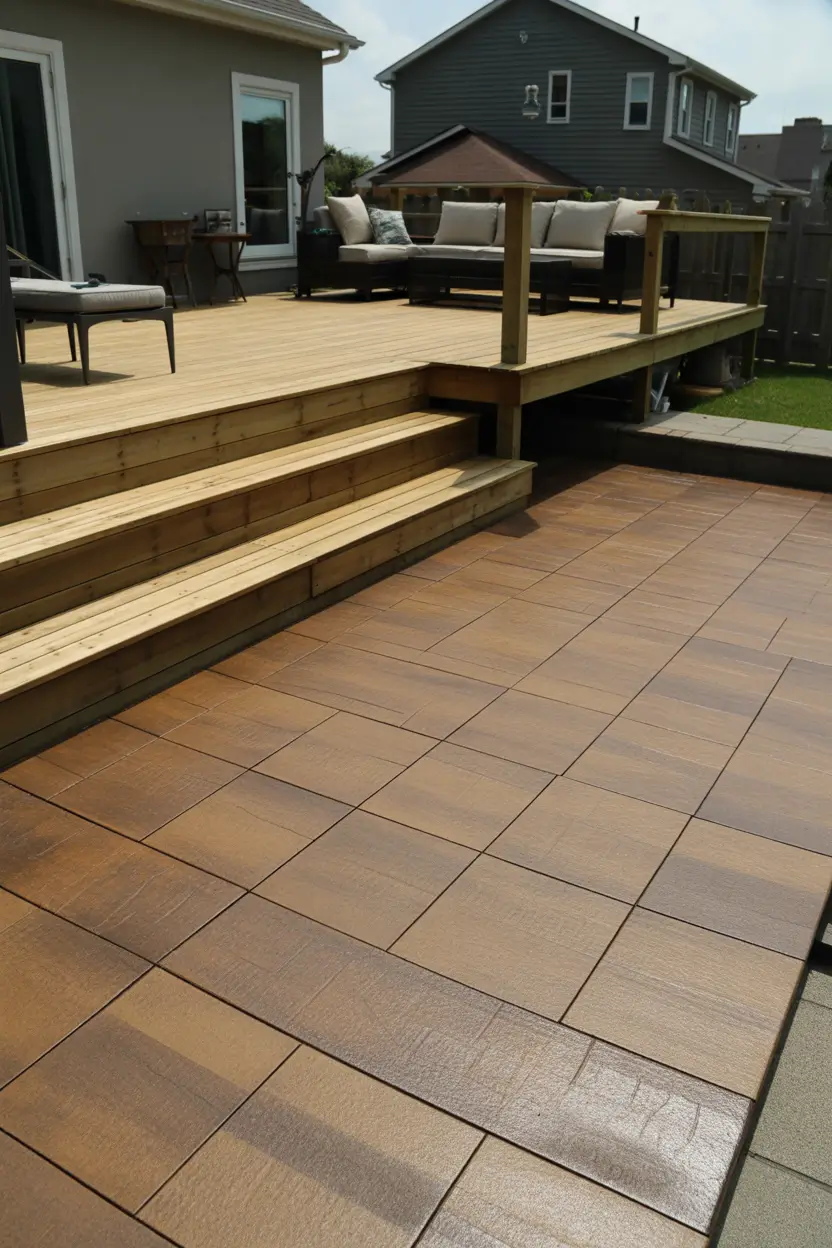
I usually select a Wood plank stamped finish for the concrete so the materials relate visually even though one is timber and the other is concrete. Wide Steps connecting the two levels encourage natural flow and make the patio feel expansive rather than segmented.
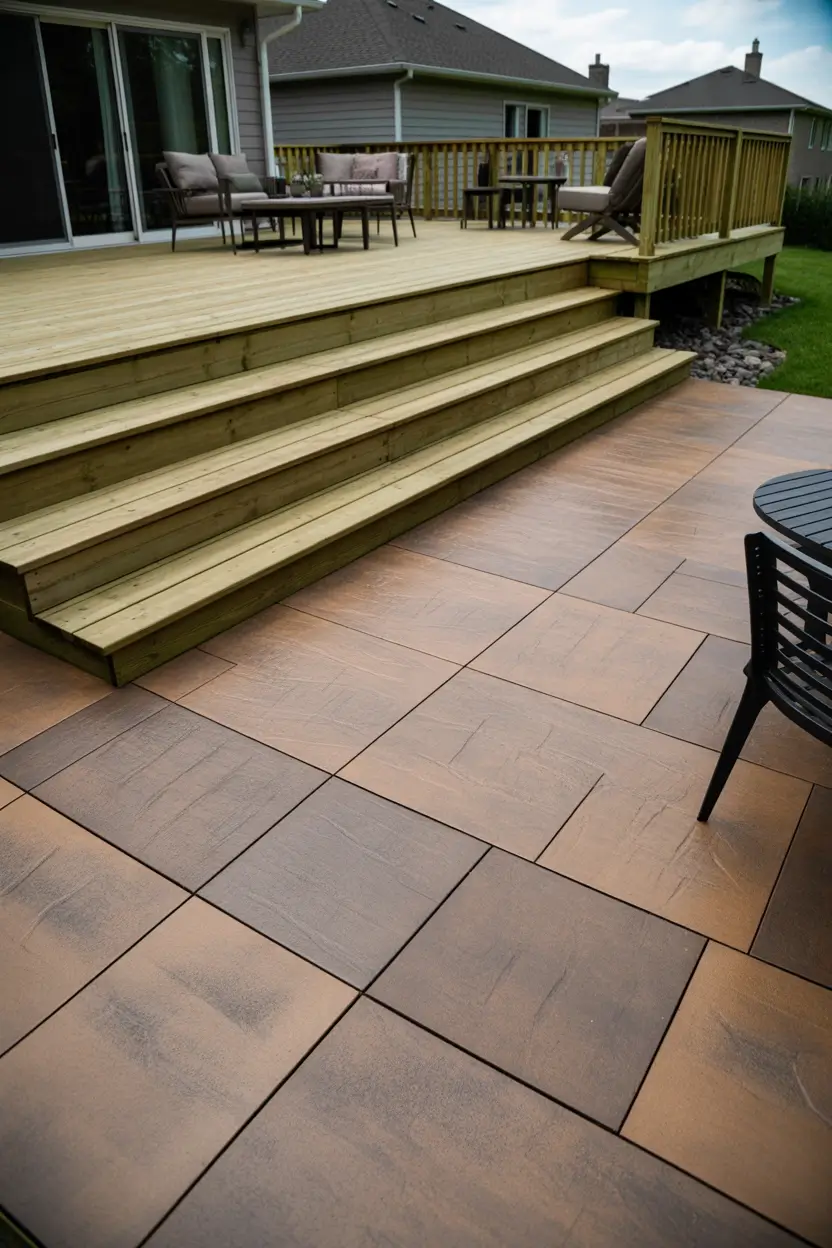
From personal observation, homeowners underestimate how important transitions are. Landscape architects frequently note that level changes create emotional movement through a space, and I’ve found this especially true in family Backyards where multiple activities happen simultaneously.
Adding built-in bench seating along the transition edge would enhance usability while also acting as subtle safety guidance between levels.
Dark Graphite Modern Patio
A dark graphite stamped patio represents the shift toward bold Modern outdoor design. I love using deep Grey tones because they ground the space visually and make greenery and furniture stand out dramatically. This approach works especially well around Pool decks or contemporary homes with minimalist architecture.
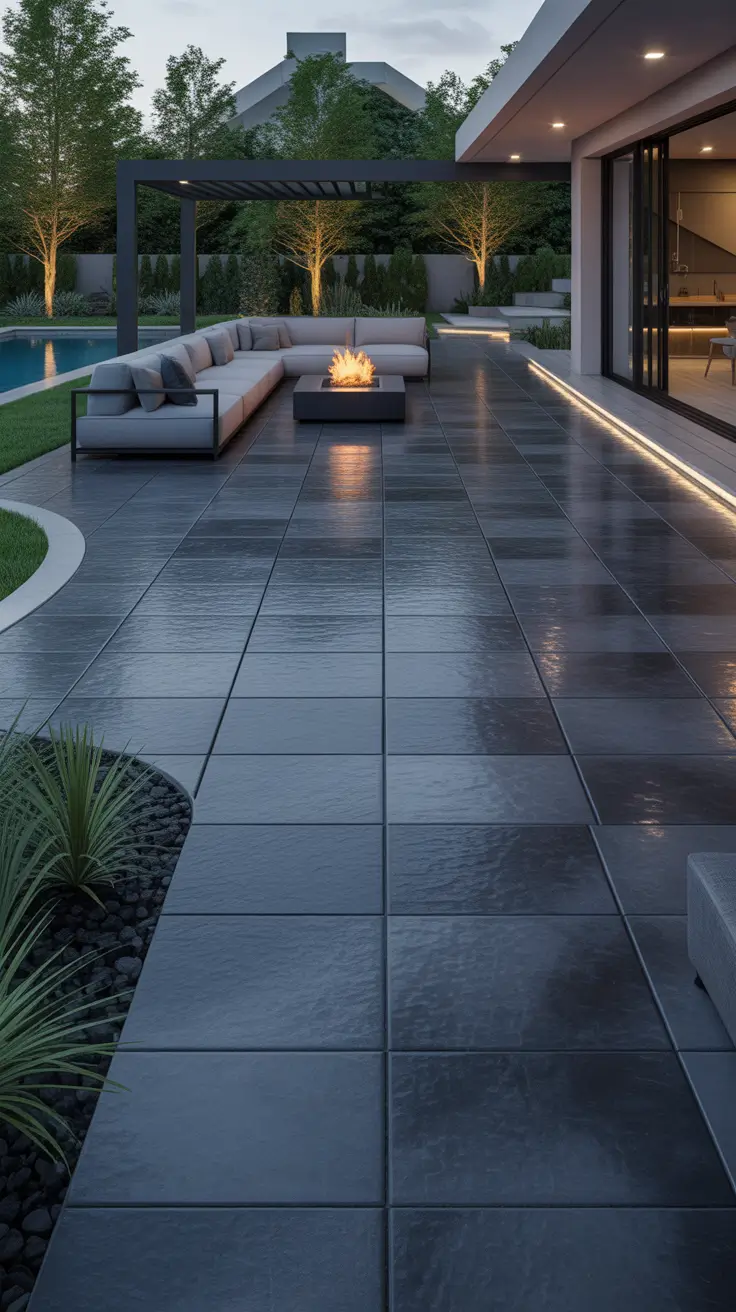
Furniture should stay streamlined: low-profile sectional seating, metal-framed loungers, and geometric planters. I often incorporate a linear Fire pit and subtle LED lighting embedded into the concrete joints to emphasize clean lines. Smooth Curved edges soften the darker palette and prevent the design from feeling too rigid.
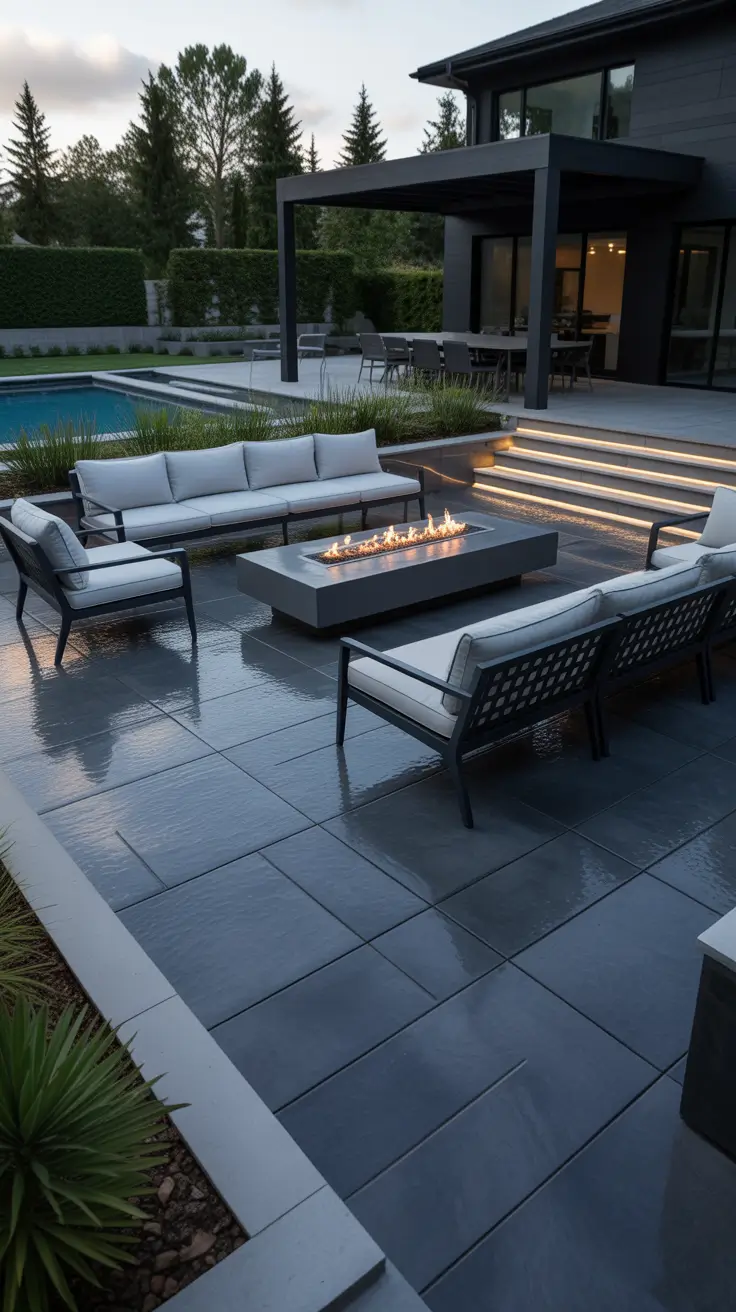
Personally, I’ve found darker patios surprisingly forgiving with maintenance. Design experts at Dwell Magazine frequently highlight darker outdoor surfaces for their ability to hide wear while maintaining sophistication, and I’ve seen clients appreciate that practicality long-term.
What I would still add is shade structure planning, such as a sleek pergola or retractable canopy, to balance heat absorption from darker surfaces.
Front Yard Courtyard Patio
Stamped concrete is no longer limited to backyards; a Front yard courtyard patio creates an inviting first impression. I often design these spaces as semi-private outdoor rooms, especially in urban settings where backyard space is limited. A carefully planned Layout transforms unused lawn areas into welcoming gathering zones.
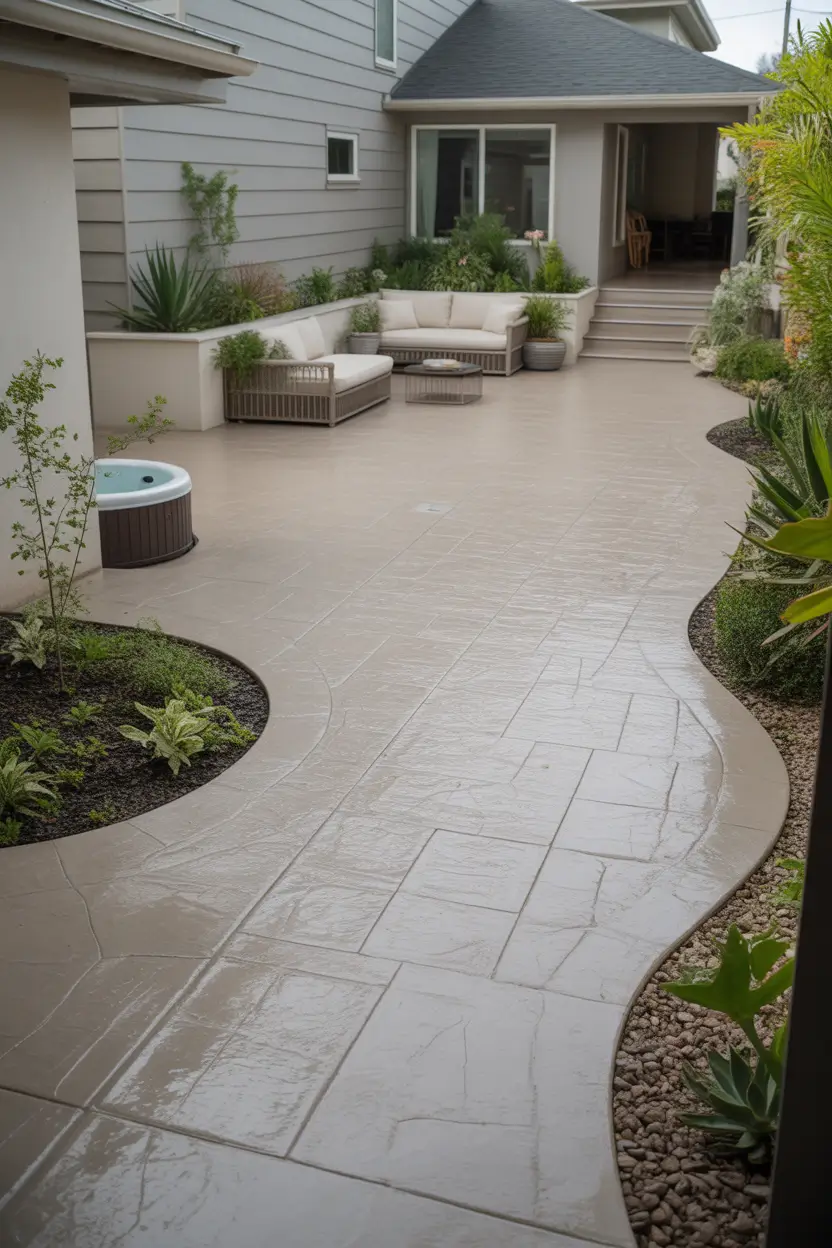
I prefer compact seating arrangements, planters, and sometimes a small water feature or Hot tub depending on privacy levels. Using lighter Colors keeps the area open and approachable, while curved walkways guide visitors naturally toward the entrance.
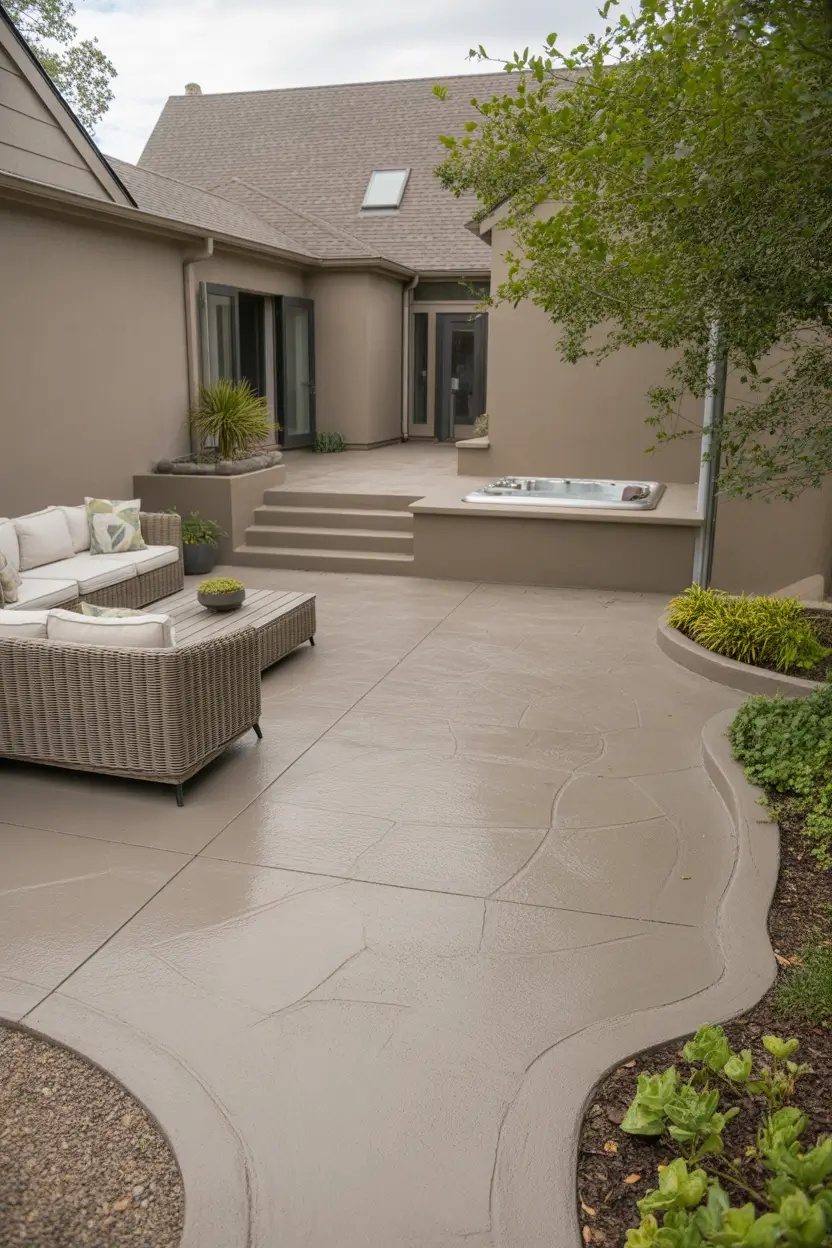
In my experience, front courtyards encourage daily outdoor use rather than occasional entertaining. Southern Living designers often mention that visibility increases how frequently spaces are enjoyed, and I’ve noticed homeowners spend more casual time outdoors when patios sit at the front of the home.
Adding low walls or hedges would improve enclosure and comfort without blocking openness.
Two Tone Concrete Patio
Two-tone stamped concrete patios are becoming one of the most creative trends in stamped concrete patio ideas 2026. By combining contrasting Colors, I can visually divide dining, lounging, and relaxation zones without adding physical barriers. This strategy works especially well in Large patios where organization matters.
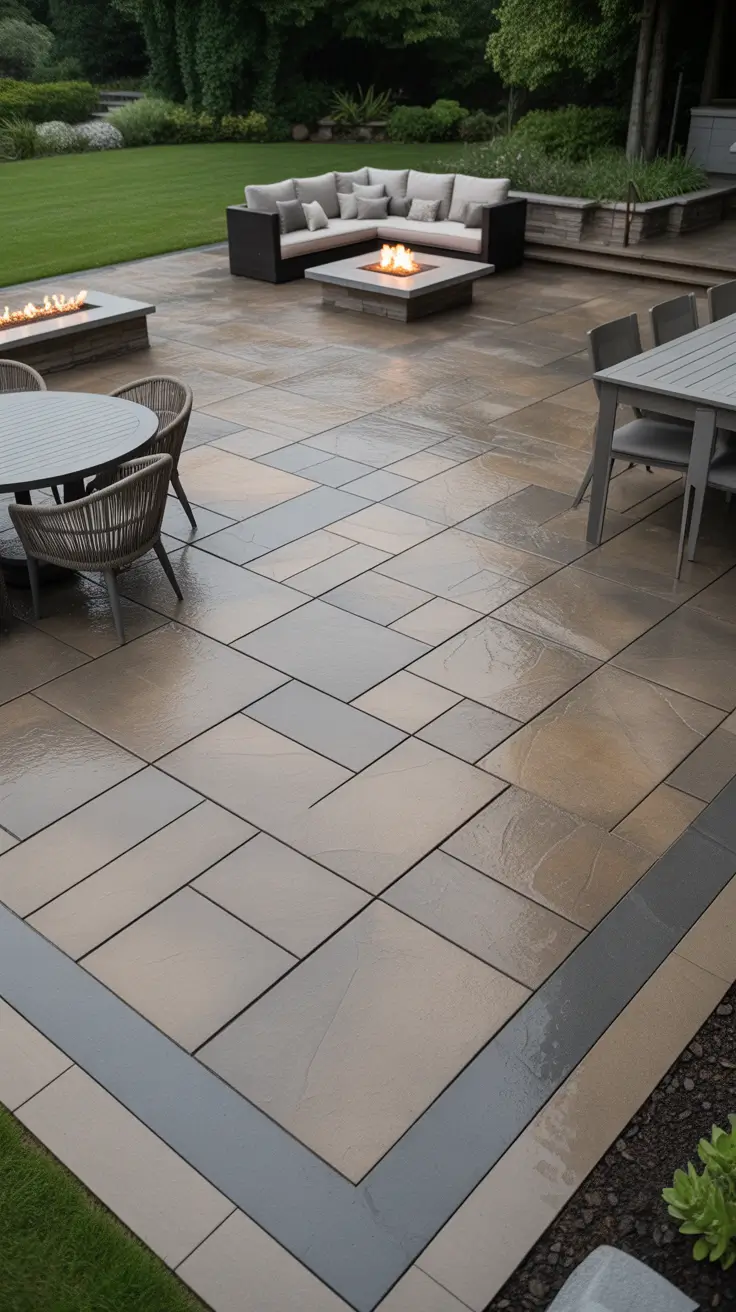
I typically pair warm stone tones with cooler Grey borders or geometric inserts. A central Round dining area can contrast with a lounge zone surrounding a Fire pit, while stamped textures differentiate pathways from seating spaces. This layered approach creates structure while keeping the patio cohesive.
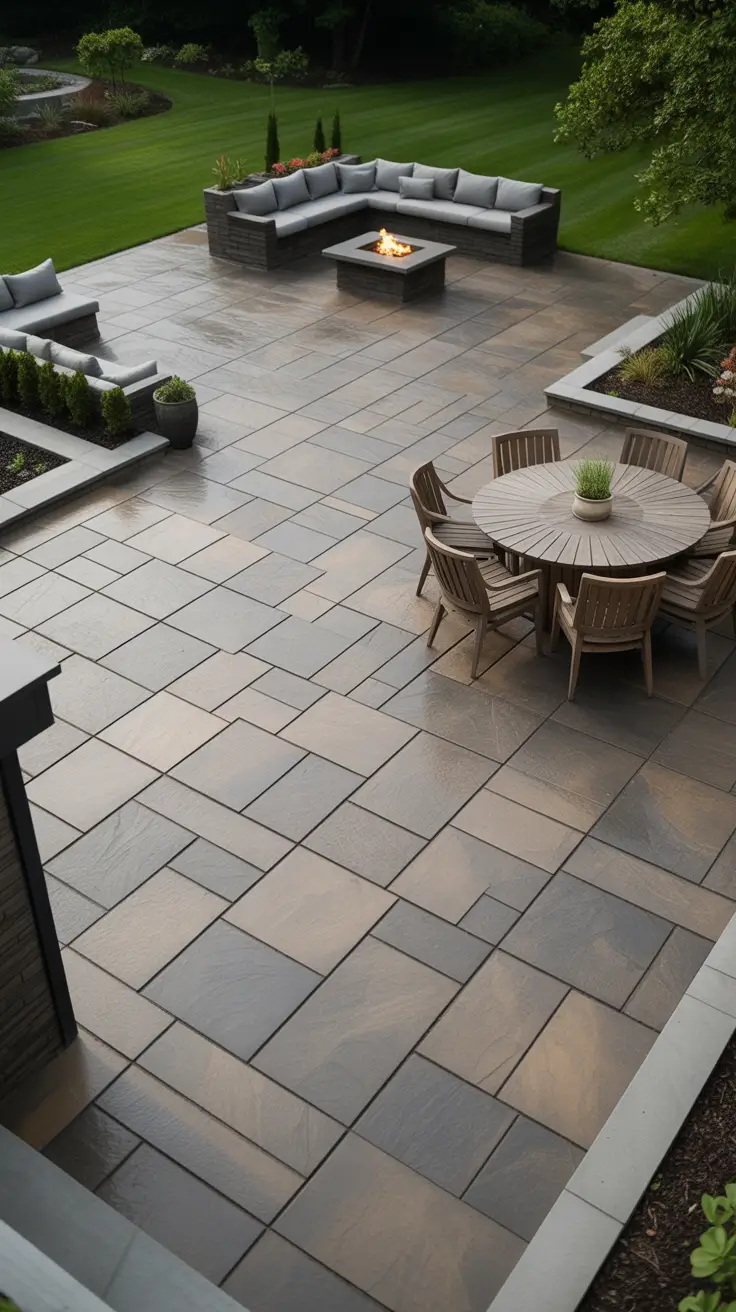
Personally, I love how two-tone designs guide movement subconsciously. Many landscape designers recommend visual zoning instead of walls, and I’ve found clients immediately understand how to use the space without explanation.
To complete the design, I would incorporate coordinated cushions, planters, and lighting that echo both tones, ensuring the patio feels curated rather than divided.