Outdoor Area Ideas for Kids 2026: Modern Backyard Play Zones, Water Fun, and Nature-Inspired Designs

Are you looking for outdoor area ideas for kids 2026 that feel modern, realistic, and actually doable in real homes? Do you want more Play, more creativity, and a space that works even in a Small space or on A budget? In this article, I’ll walk you through practical, stylish outdoor zone concepts that combine Simple easy layouts, smart materials, and family-friendly details such as Water play, sensory features, and nature-based design so your Backyard or Garden becomes a true play destination.
Sand-Tone Montessori Play Garden
I design this space as a calm, nature-focused Play garden inspired by Montessori principles, using sand-toned neutrals and soft textures to keep the outdoor area peaceful and organized. The goal is independent play, so I plan clear “activity stations” instead of one crowded Playground, which works beautifully for both a full Garden and a Small space patio. The style is Nature-inspired, with a balanced layout that feels warm, modern, and uncluttered. In my experience, this kind of design helps kids focus longer and play more intentionally because everything has a purpose and a place.
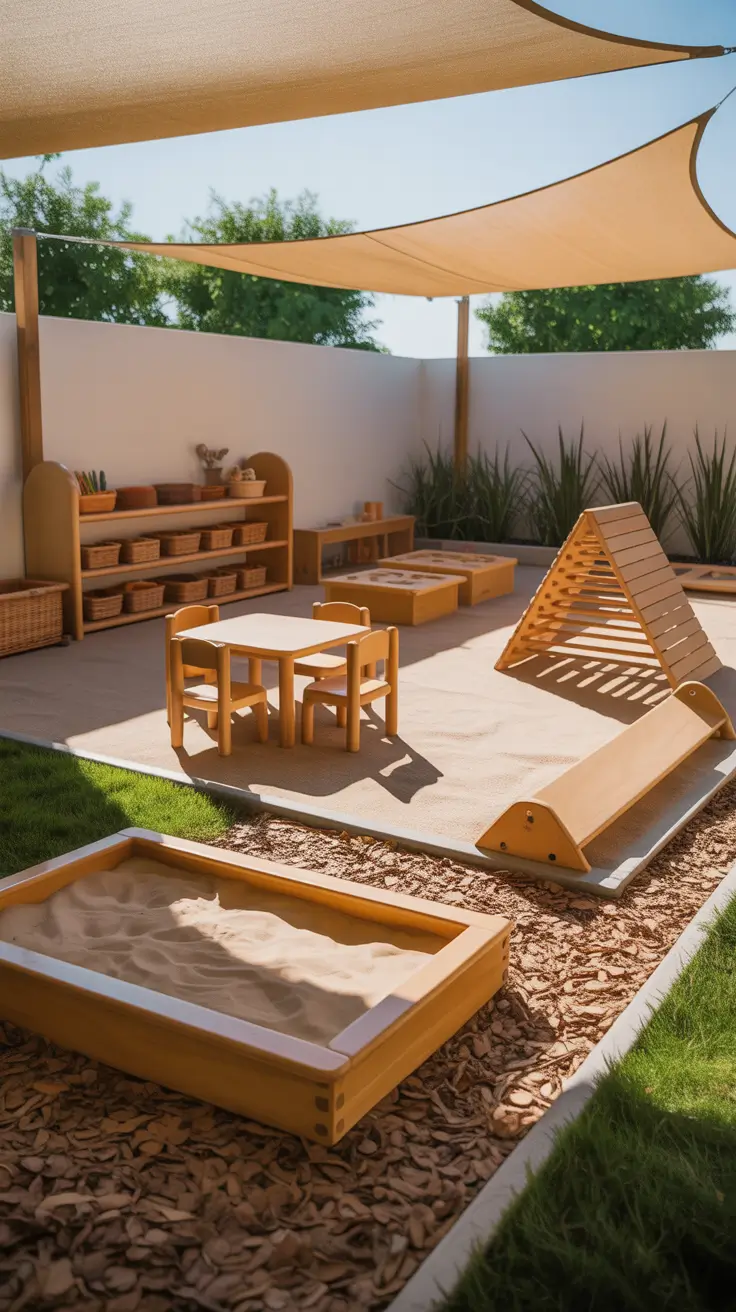
For the key elements, I include low natural-wood shelves for outdoor toys, a simple sand activity tray, and a small climbing triangle or balance beam built from Playground design natural wood materials. I also like adding a shaded sitting area with a canvas canopy, a child-sized table for sorting and building, and woven baskets to store tools. The ground layer can be compacted sand or a Playground design rubber mulch border to define zones safely while keeping the palette cohesive. If the family needs Cheap diy, I often recommend repurposed Pallets for planters or seating, sealed for weather resistance.
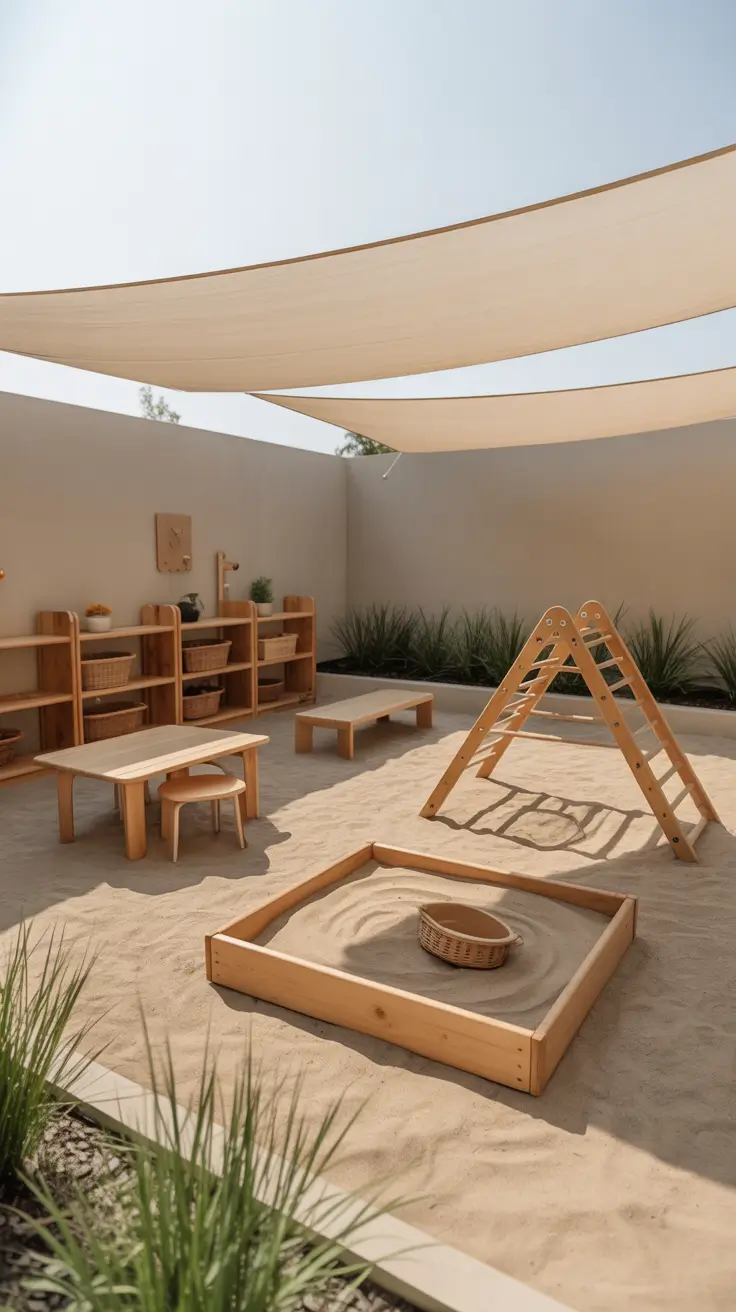
From my professional perspective, Montessori-aligned outdoor play works best when the environment is orderly and the materials are “real.” In the US, many child-development specialists emphasize that natural materials and purposeful tasks build independence, and I’ve seen the same in practical outdoor design: children treat the space with more respect when it looks intentional. I personally recommend starting with two stations only, then expanding over time as your child’s interests develop. This approach also makes it easier to stay on A budget without sacrificing style.
To complete this section, I would add a small weatherproof chalkboard for daily activities, a herb planter for sensory “smell work,” and a defined barefoot zone with smooth stones and wood chips for gentle tactile learning.
Primary Color Modular Play Zone
For families who want high-energy Play and quick flexibility, I design a modular outdoor zone using bold primary colors and movable structures that can be rearranged weekly. This is one of the best outdoor area ideas for kids 2026 because it adapts to changing ages, weather, and space size. The overall style is modern and graphic, but the layout stays very Simple: one central play platform, storage at the perimeter, and clear circulation so kids can run safely. I often recommend this concept for compact patios and suburban Backyard areas where you want a strong visual impact without permanent construction.
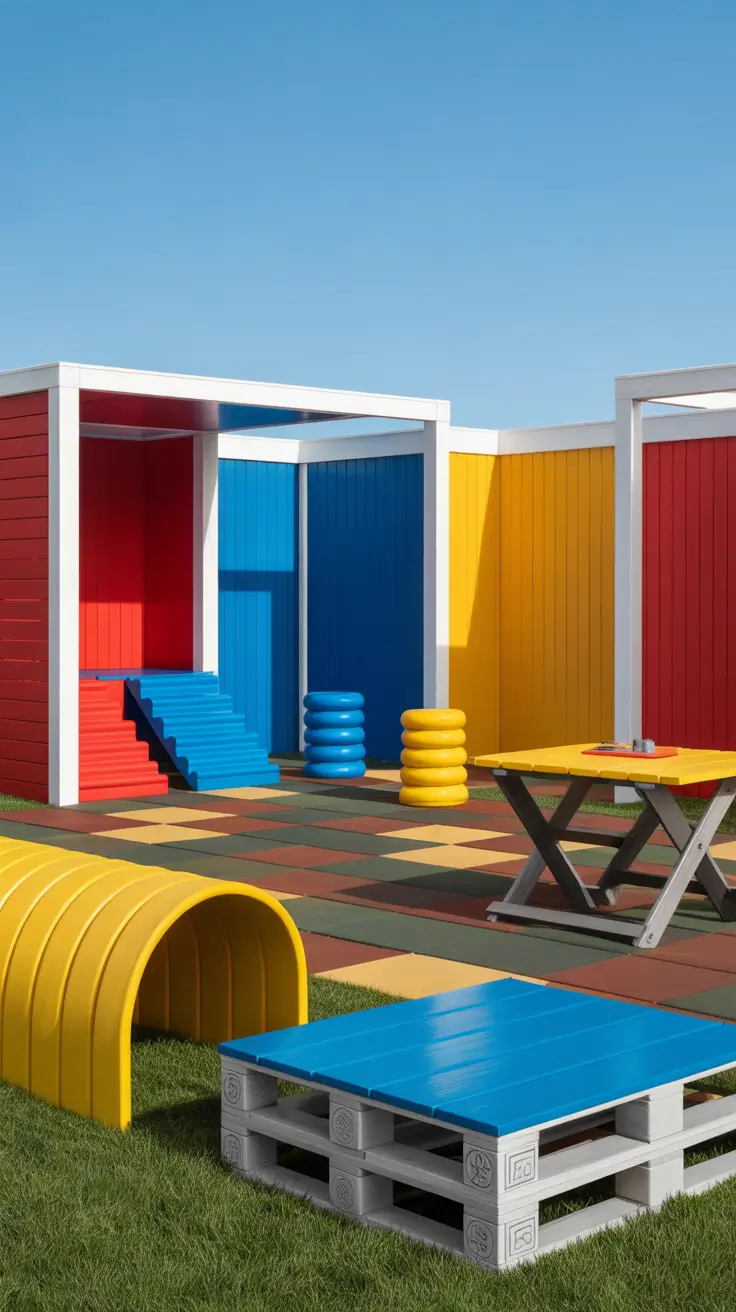
The foundation of the space is a modular foam or outdoor deck tile system, combined with lightweight climbing blocks, stackable stools, and a weatherproof play tunnel. I include a low platform stage for movement games, a clip-on basketball hoop, and a foldable activity table for crafts. For safety and structure, I often incorporate Playground design rubber tiles under the active zone, especially if the family expects frequent jumping or climbing. If a client needs Cheap diy, I suggest using painted Pallets as a modular bench with hidden storage bins underneath.
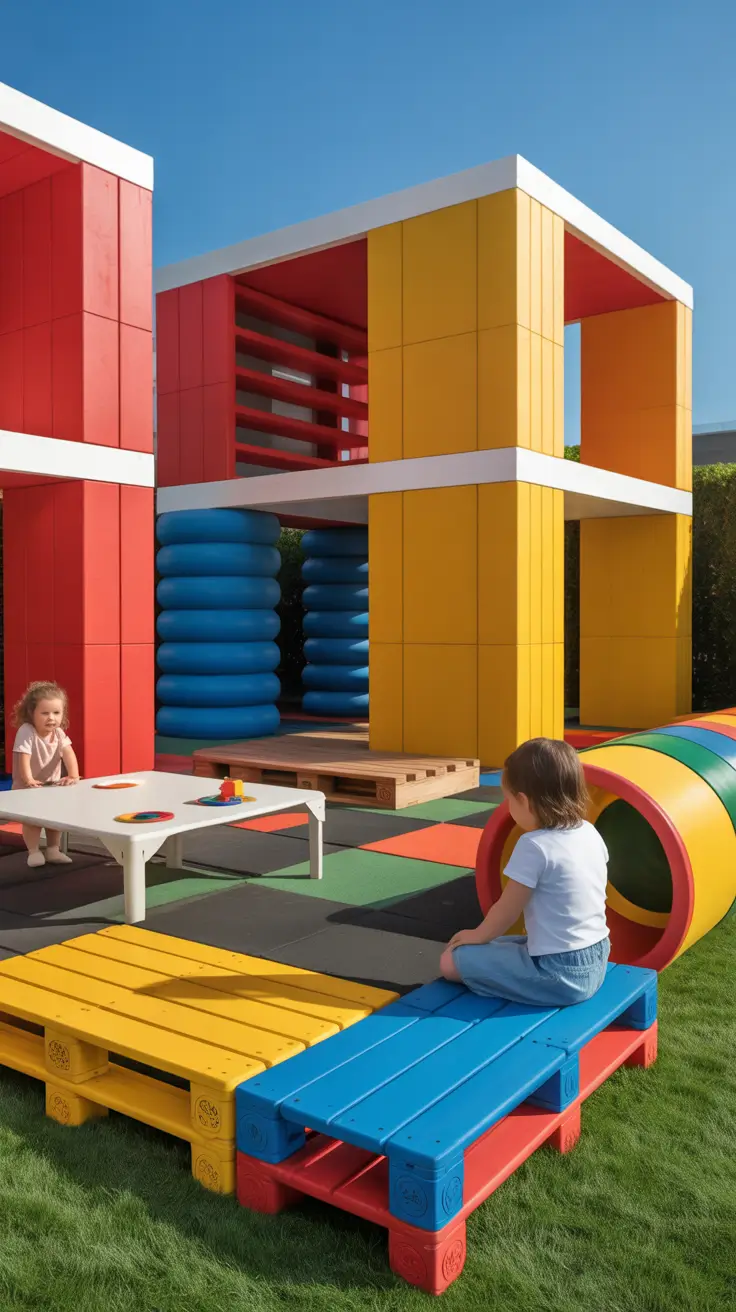
In my experience, modular zones prevent boredom because they encourage kids to “build the playground” as part of play itself. I’ve also noticed parents love this approach because it’s easy to reset the area in minutes, especially after parties or messy activities. My advice is to keep the color palette limited to red, blue, yellow, and white so the space feels intentional rather than chaotic. This ensures the zone looks modern and photogenic, even when toys are out.
To strengthen this section, I would add a mounted outdoor cubby wall for quick cleanup, plus a compact shade sail to reduce heat and extend playtime during the hottest months.
Sage Green Sensory Pathway
A sage green sensory pathway is one of the most calming and practical Playground design plan options for families who want outdoor play without bulky equipment. I design it as a winding path through the yard or garden that encourages curiosity and slow exploration, which is ideal for toddlers and early school-age children. This concept fits beautifully in a Small space because it uses linear design, and the palette feels modern and timeless. The vibe is minimal yet deeply engaging, especially when paired with a Sensory garden layout.
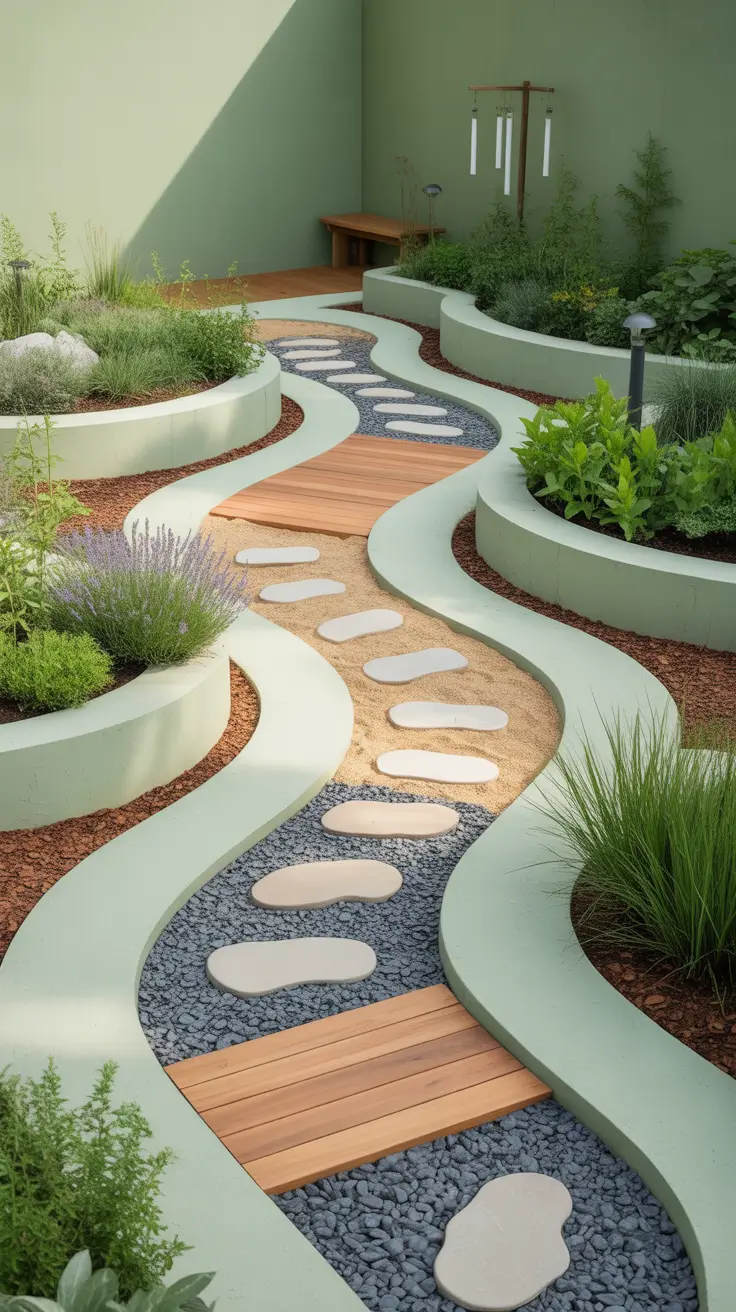
The pathway includes a sequence of tactile surfaces: smooth stepping stones, natural wood planks, textured pavers, and small sections of sand or pebbles. I like adding raised planters with lavender, mint, and ornamental grasses for scent and touch, plus simple outdoor bells or chimes to introduce sound. For safety and softness, I use borders of Playground design rubber mulch in the transitions and keep the heights low to prevent falls. The seating is simple: a small bench tucked into greenery, and a woven outdoor mat for quiet sensory breaks.
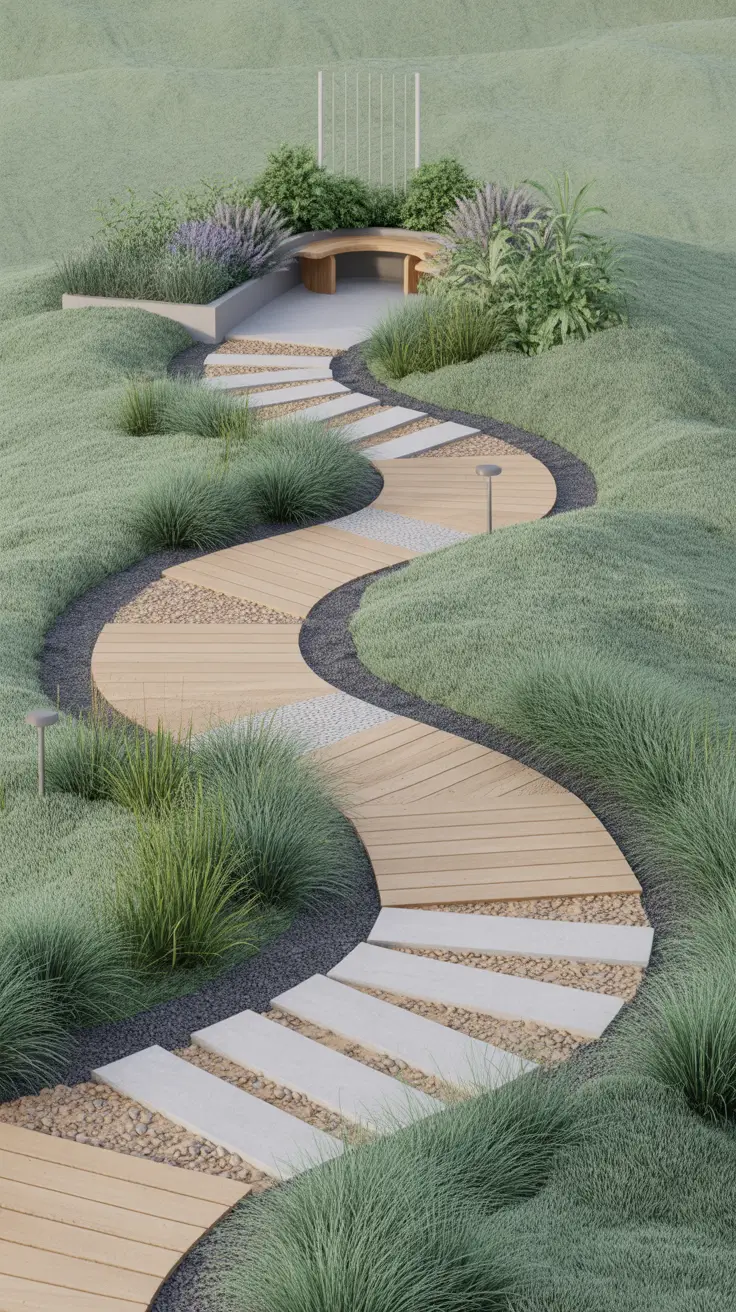
In my professional experience, sensory pathways work best when they feel like part of the landscape rather than a separate “kid zone.” Many landscape designers recommend layering plant textures and choosing durable, non-toxic materials, and I completely agree because it keeps the space low maintenance and safe. I also recommend rotating small sensory elements seasonally, such as adding pinecones in fall or water trays in summer. That keeps the experience fresh without redesigning the yard.
To make this section even stronger, I would add subtle solar lighting along the edge for evening use, and a small weatherproof storage box with “sensory tools” like magnifiers, buckets, and nature cards.
Coastal Blue Water Play Deck
If families want a summer-focused outdoor zone that feels like a resort, I design a coastal blue water play deck with a clean, modern finish. This is one of the most in-demand outdoor area ideas for kids 2026 because it supports Water play without turning the entire yard into a muddy mess. The key is to treat it like a real outdoor room: structured, stylish, easy to clean, and built with drainage in mind. It fits both large backyards and compact patios if the layout is planned carefully.
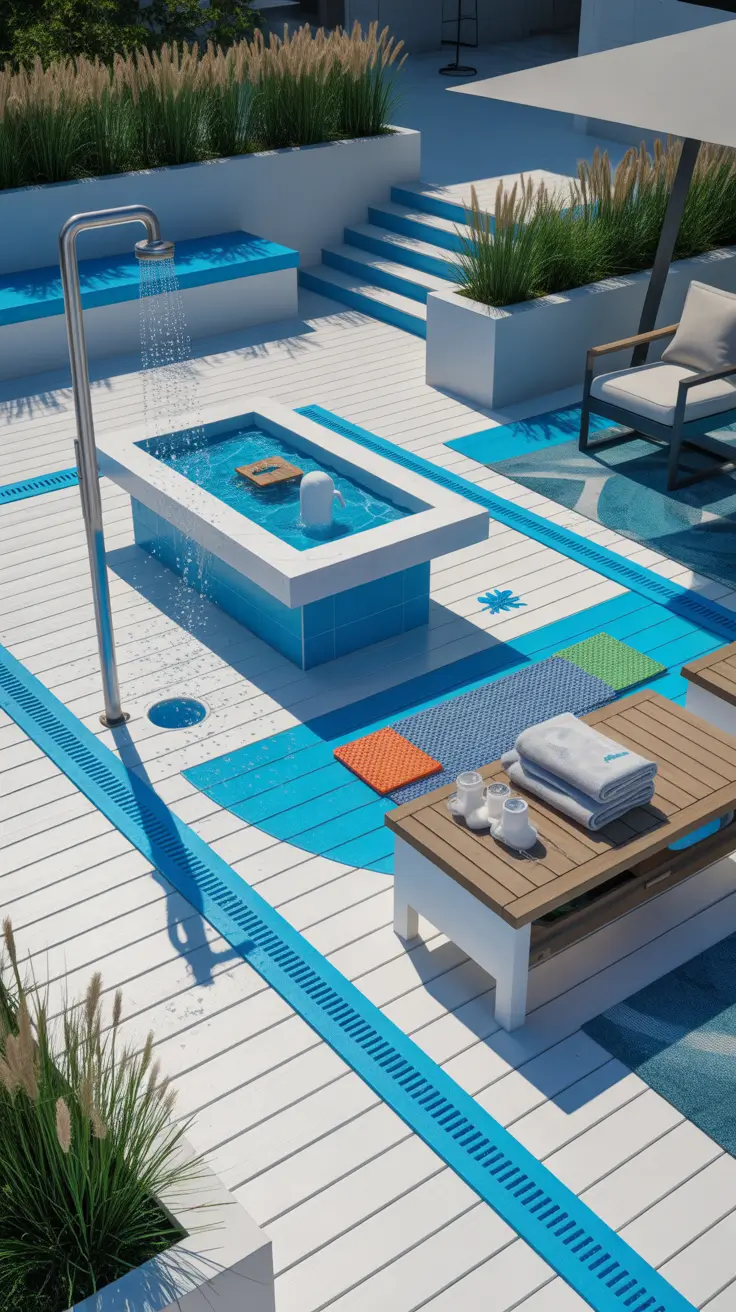
The main feature is a small raised deck or patio platform with a water table, hose connection, and built-in drainage channel. I include a waterproof storage bench for towels and toys, plus a teak-style outdoor rug to visually define the area. For safety and comfort underfoot, Playground design rubber tiles or anti-slip decking surfaces work exceptionally well. I also like adding a simple outdoor shower wand, a splash basin, and a shaded lounge chair so parents can supervise comfortably.
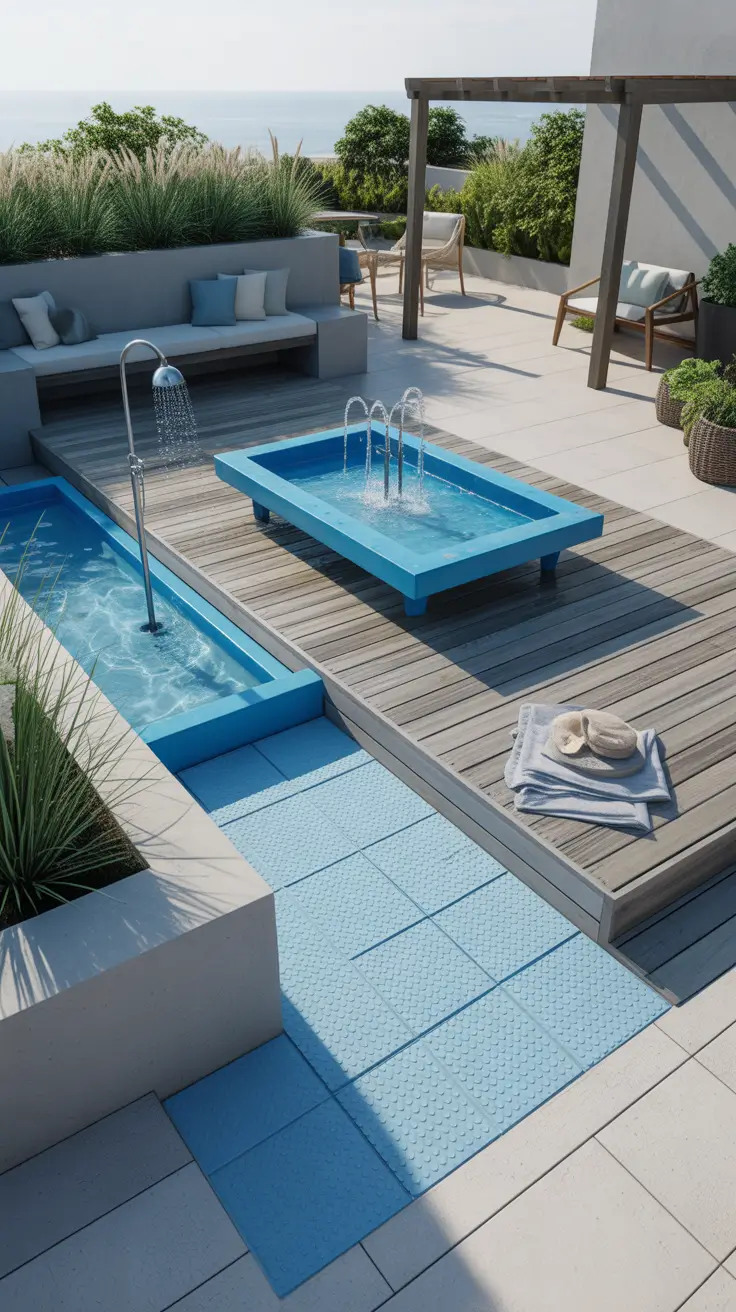
From experience, families enjoy this setup most when it’s designed like a routine-friendly zone, not a temporary toy setup. I always recommend creating clear “wet” and “dry” sections so kids can transition smoothly. Many home improvement experts in the US emphasize slip-resistant surfaces and proper drainage for family outdoor areas, and I consider that non-negotiable for this concept. My personal advice is to include hooks for towels and a basket system for quick cleanup, so the space stays functional day after day.
To improve this section further, I would add a compact misting pole, a waterproof Bluetooth speaker for playful ambiance, and a small planting border with coastal grasses for a true seaside look.
Charcoal Rope Climbing Corner
A charcoal rope climbing corner is a sleek, modern solution for families who want climbing and strength play without installing a huge structure. I design this as a dedicated corner in the Backyard with a strong visual frame, using dark charcoal tones and natural textures so it feels architectural and intentional. This can be added to almost any Playground design backyard plan, and it works especially well for kids who love movement and challenge. Because it’s vertical and compact, it’s also ideal for a Small space outdoor layout.
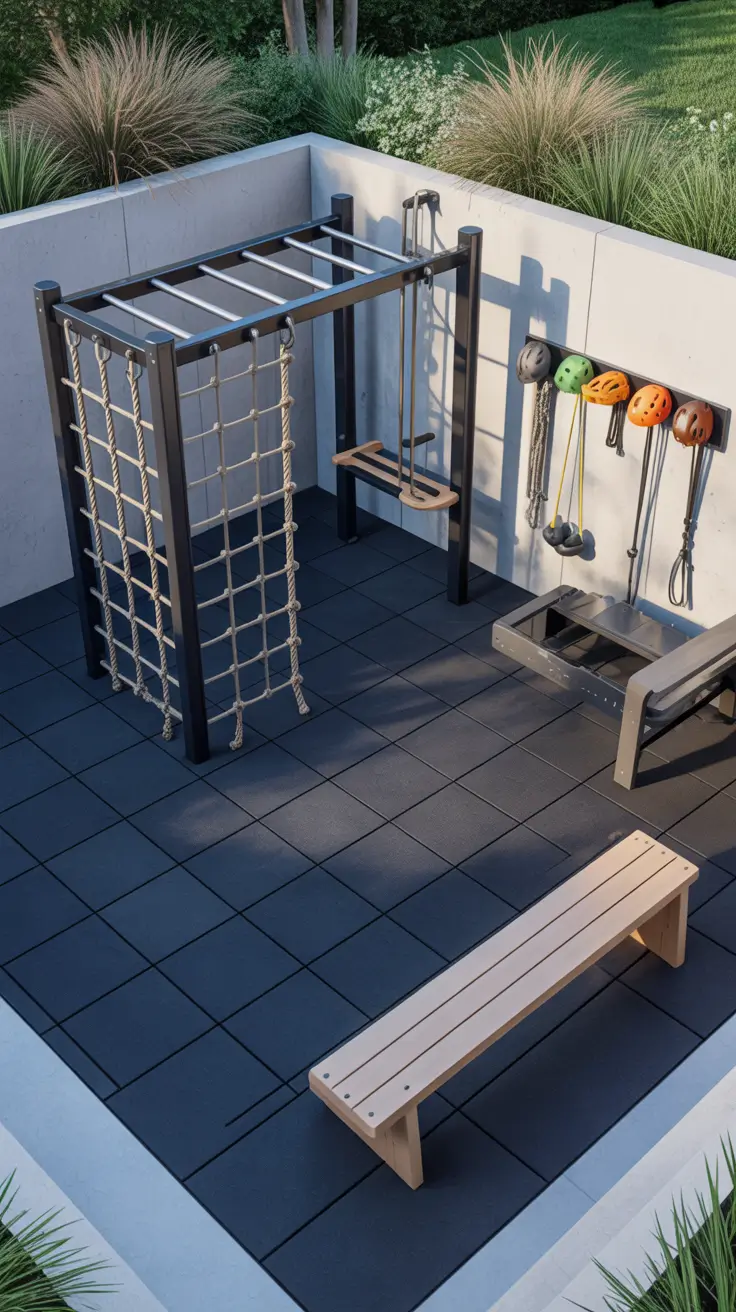
The core elements include a sturdy climbing net, rope ladder, and a compact pull-up bar attached to a metal or wood frame. Underneath, I always include a soft landing zone such as Playground design rubber tiles or Playground design rubber mulch depending on the budget and style. A simple bench along the side gives kids a spot to rest, while wall-mounted storage hooks keep helmets, balls, or jump ropes organized. If the family wants Cheap diy, I sometimes recommend rope elements combined with sealed wood posts, as long as everything is properly anchored and checked for safety.
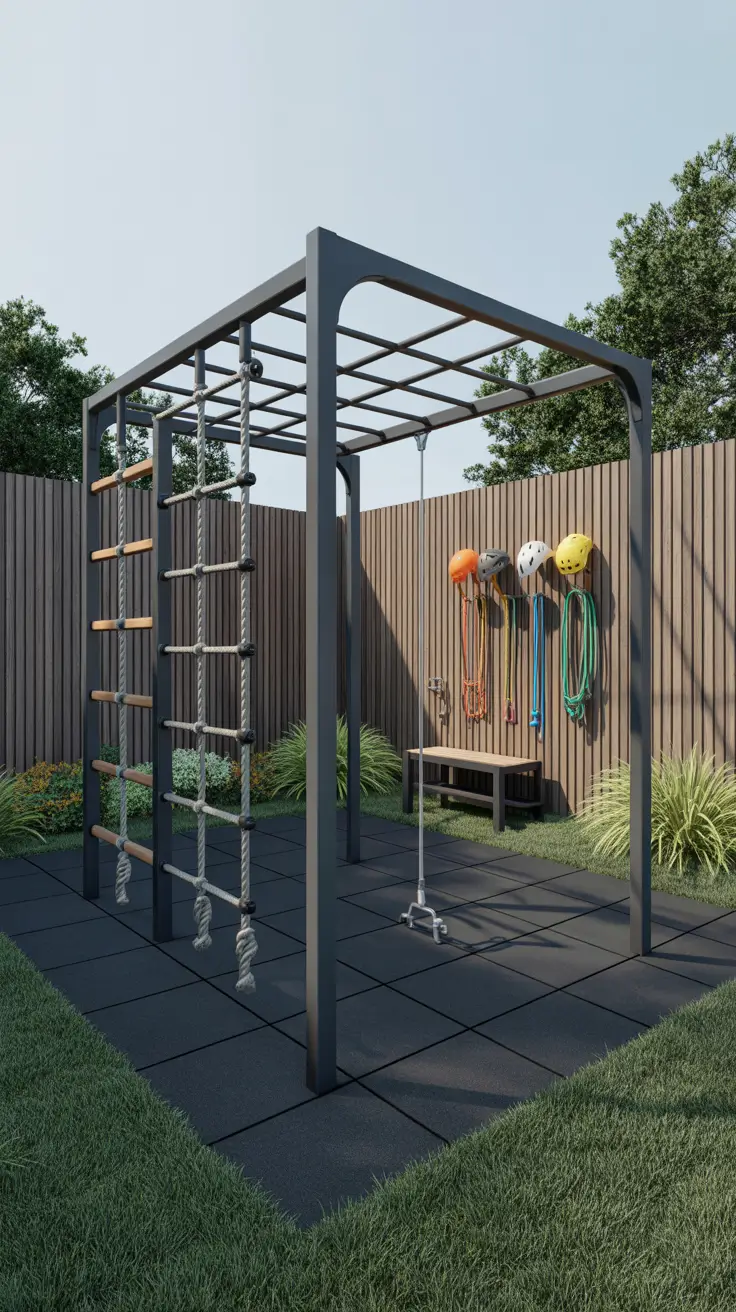
In my experience, a climbing corner reduces indoor bouncing and gives kids a productive outlet for energy. I also find that when the area looks modern and curated, families maintain it better and use it more often. My recommendation is to choose rope materials rated for outdoor use, and to keep the design symmetrical to avoid visual clutter. This approach keeps the Playground looking like part of the home’s outdoor architecture rather than an afterthought.
To complete this section, I would add a small chalkboard wall for “challenge of the day,” plus motion-friendly ground markings for jumping and coordination games.
Pastel Rainbow Soft Play Patio
For younger kids, I love designing a pastel rainbow soft play patio that feels cheerful but still modern. This concept works perfectly for renters or families who don’t want permanent installation because everything can be modular and weather-resistant. It’s one of the most practical Simple easy ideas because it transforms a patio or small yard into a safe play zone without heavy construction. The color palette is soft, calming, and very 2026, especially when paired with light wood and clean-lined furniture.
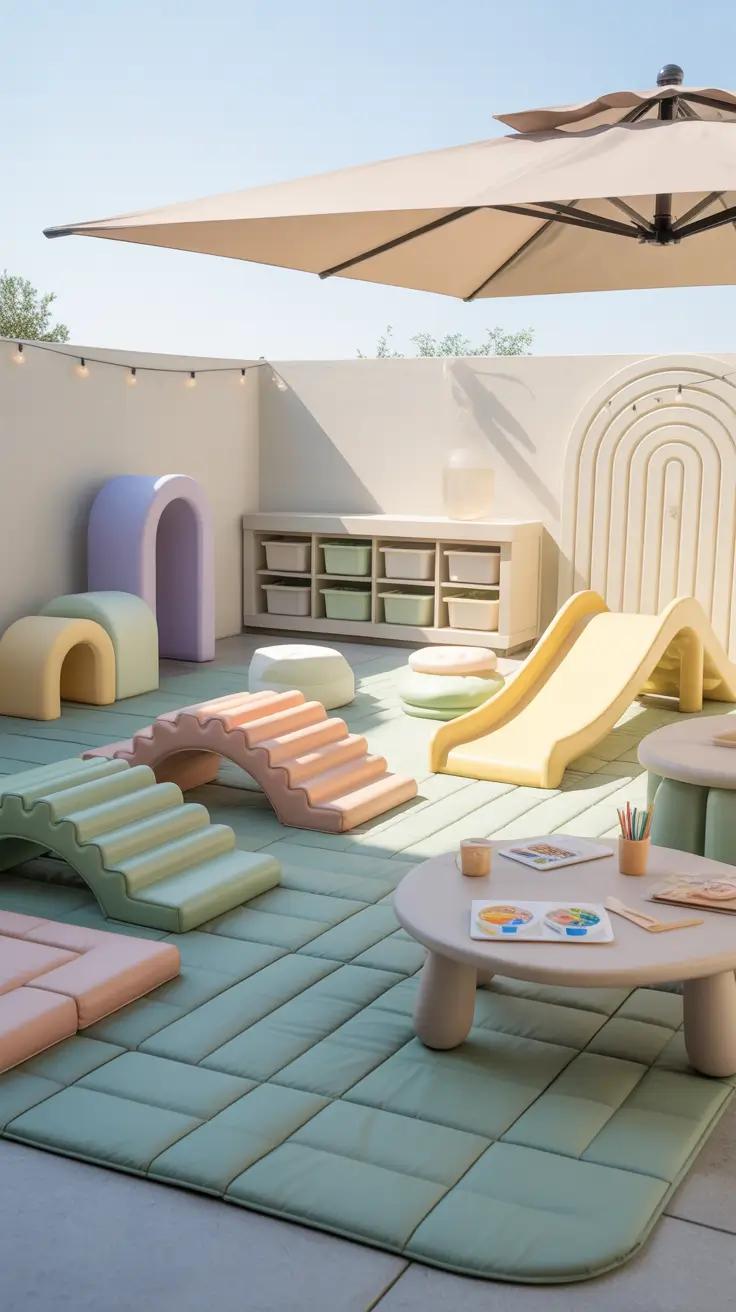
The main design elements include outdoor foam climbers, soft play arches, and a low slide designed for toddler safety. I add a padded outdoor rug with drainage, plus a shaded canopy or umbrella to reduce heat exposure. Storage is essential, so I incorporate a slim weatherproof cabinet, pastel bins, and a low table for snacks and crafts. To keep it safe and clean, I recommend a base layer of interlocking rubber tiles or foam tiles made for outdoor use, especially if the patio is concrete.
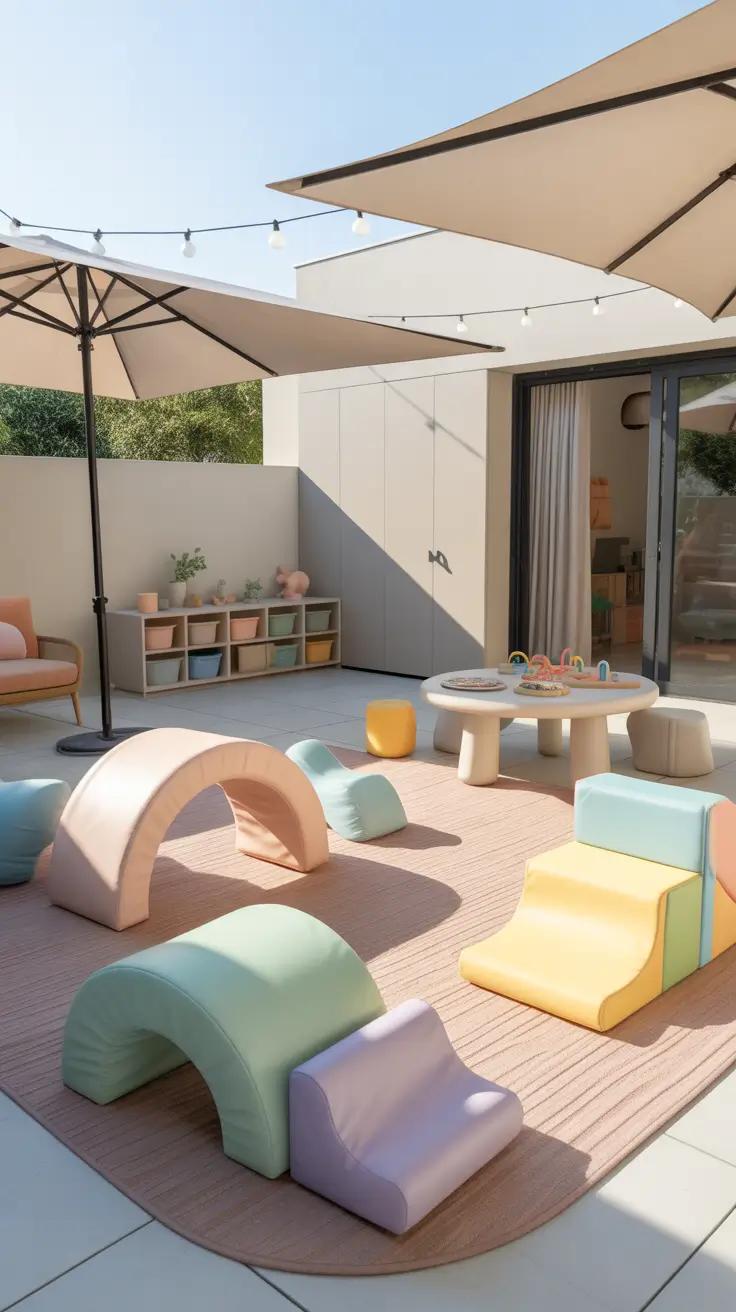
From my experience, soft play patios become the “default” family space because parents feel comfortable letting kids play independently. I recommend keeping the pastel tones consistent and limiting toys to curated sets so the zone stays photo-ready and relaxing. Many design-focused parenting publications highlight the value of calm, organized play environments, and I agree because it reduces overstimulation and supports longer, happier play sessions. I also advise rotating the play elements monthly so children stay engaged.
To make this section even better, I would add a compact bubble machine corner, a small mirror wall for movement games, and an outdoor-safe garland or string lights for soft evening ambiance.
Terracotta Mud Kitchen Station
A terracotta mud kitchen station is one of the most timeless outdoor setups, and it’s especially popular again in 2026 because families want natural, screen-free play. I design it as a warm-toned outdoor “mini kitchen” that blends into the Garden and encourages imaginative play with real textures and materials. It’s also a fantastic Cheap diy project, especially when built using reclaimed wood or Pallets. This station is perfect for messy play, and it fits beautifully into a larger Playground design or a standalone corner.
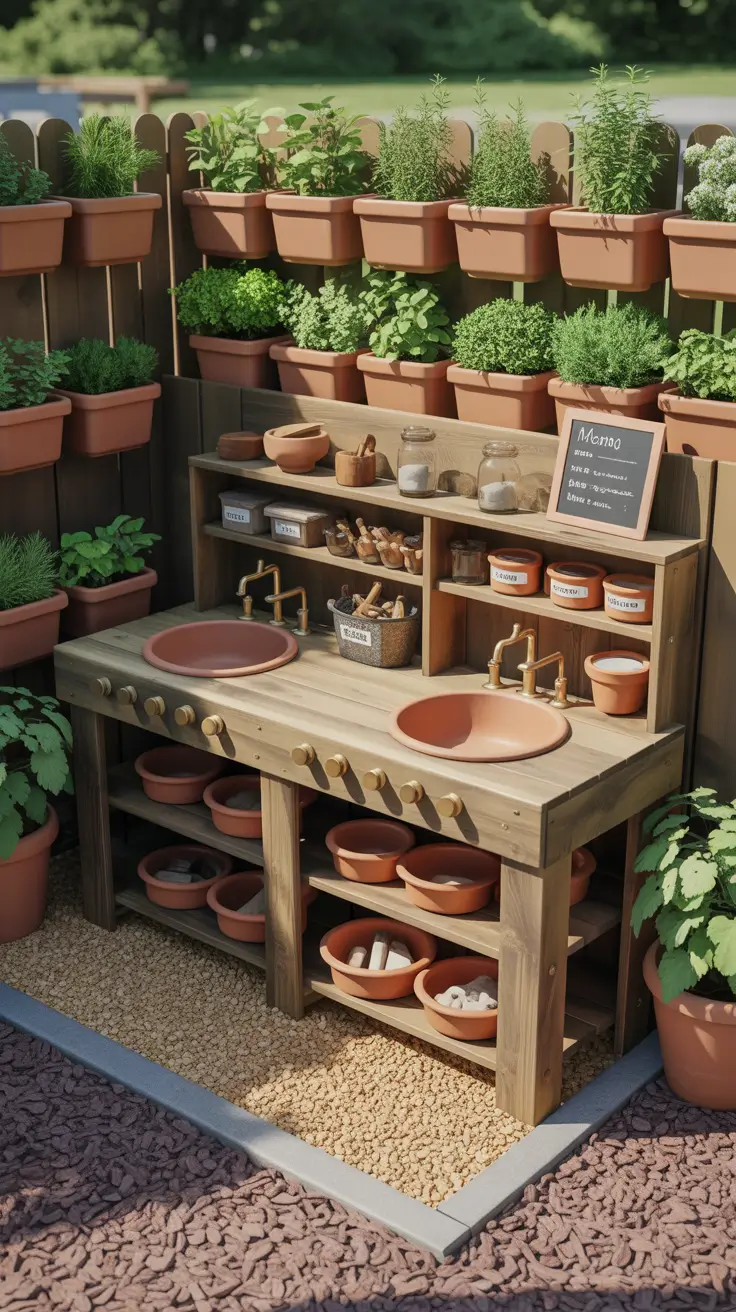
The key items include a sturdy counter with two basins, a water dispenser or hose connection, hooks for utensils, and open shelving for pots and bowls. I like adding labeled jars for sand, pinecones, and dried leaves, plus a simple chalkboard menu sign. Underfoot, I recommend a mud-friendly base like gravel with edging, or Playground design rubber mulch around the perimeter to keep the mess contained. For realism and design cohesion, terracotta planters, a small herb wall, and a wood privacy screen make the kitchen look like a stylish part of the yard.
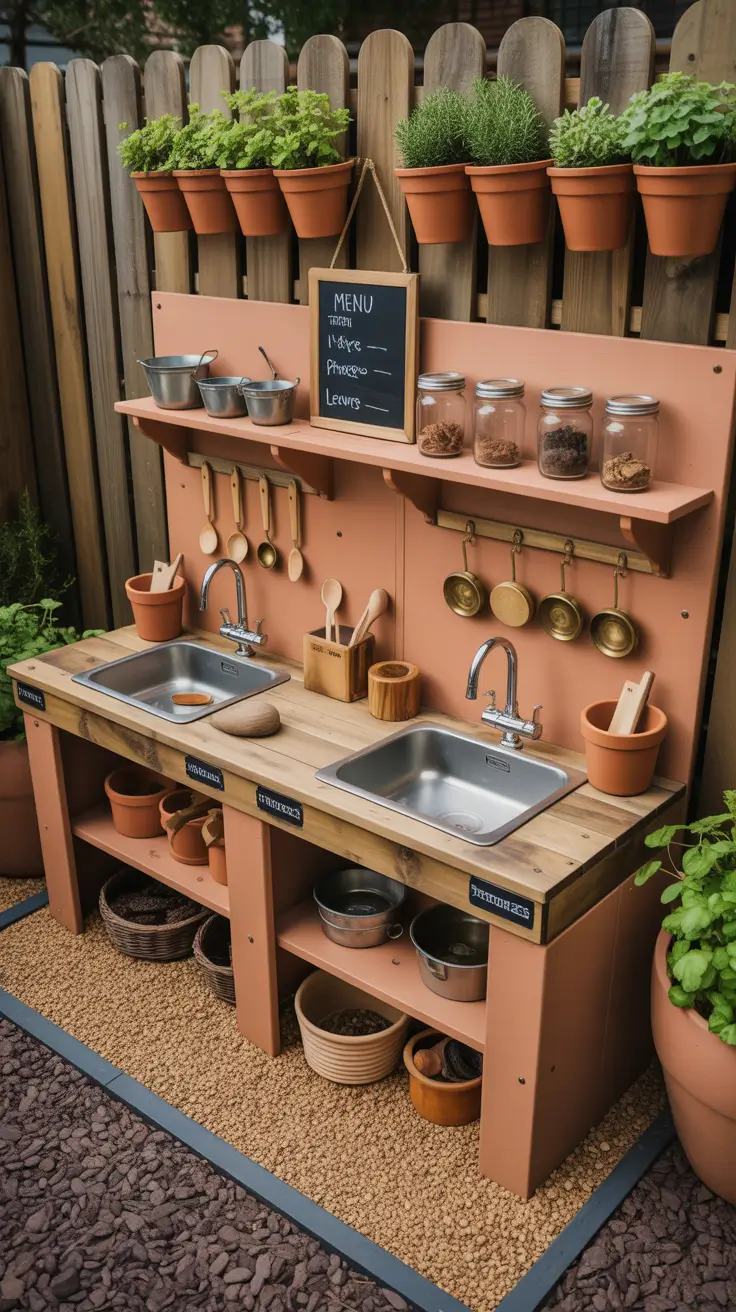
In my experience, mud kitchens are where kids spend the longest time because the play has no fixed rules. I always recommend using real, durable materials rather than plastic because it makes the space feel authentic and encourages more meaningful play. Many outdoor education advocates emphasize that messy nature play builds resilience and creativity, and I see that constantly in real projects. My advice is to place the station near a cleanup zone with a towel hook and a small rinse bucket, so the experience stays fun for parents too.
Tropical Playhouse Village
I design a tropical playhouse village as a mini “outdoor neighborhood” that makes kids feel like they’ve stepped into their own world, while still looking modern enough for a 2026 home exterior. The layout is especially effective when I’m building Playground design backyard concepts for families who want imaginative Play without clutter. I keep the structure arrangement organized and walkable, with clear pathways and open sightlines so adults can supervise easily. This is one of my favorite outdoor area ideas for kids 2026 because it turns even an ordinary Backyard into a story-driven play environment without needing a huge Playground footprint.
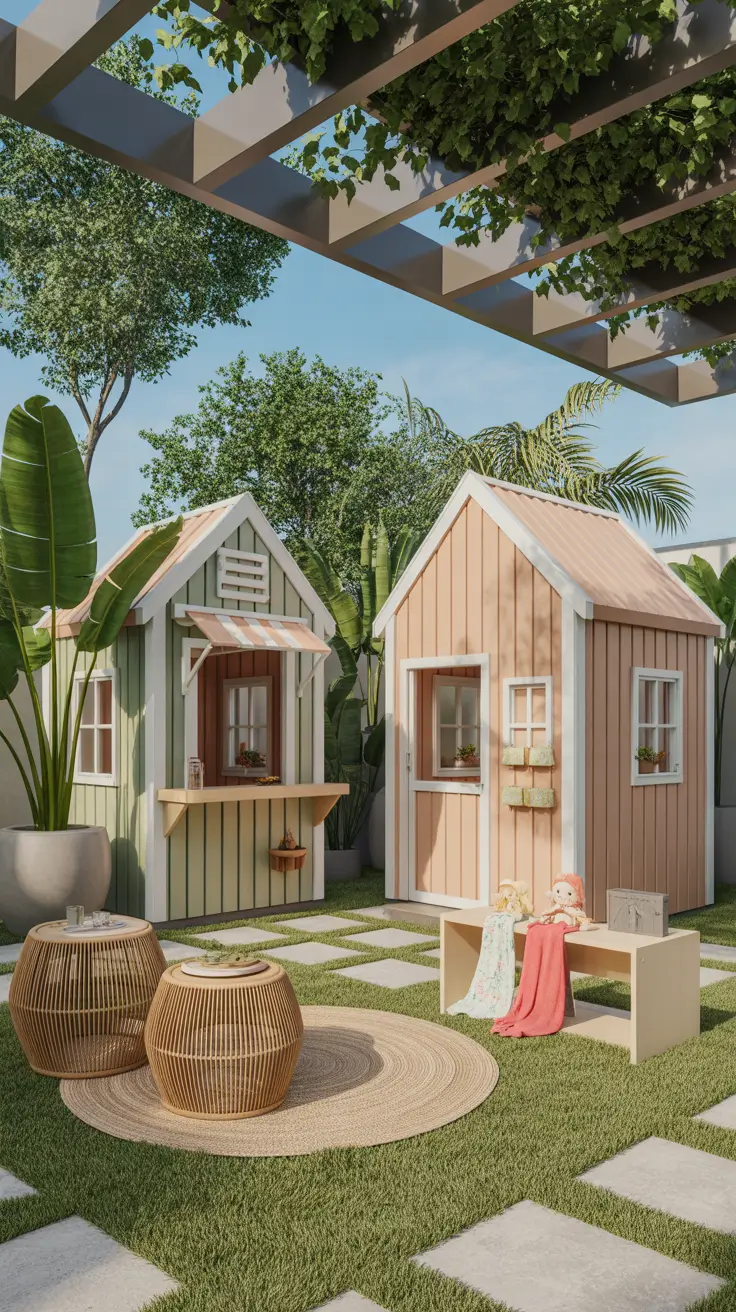
For the core setup, I use two to three small weatherproof playhouses, each with a theme: a market hut, a kitchen hut, and a quiet “clubhouse.” I add tropical elements like oversized banana-leaf planters, rattan stools, and a bamboo-style outdoor rug to create a cohesive look. A shaded canopy or pergola makes the village usable in hotter months, and I include low storage benches for costumes, mini tools, and outdoor toys. If a family is working with A budget and needs Cheap diy, I often recommend building one playhouse using Pallets, sealing and painting it in muted tropical tones so it stays realistic rather than cartoonish.
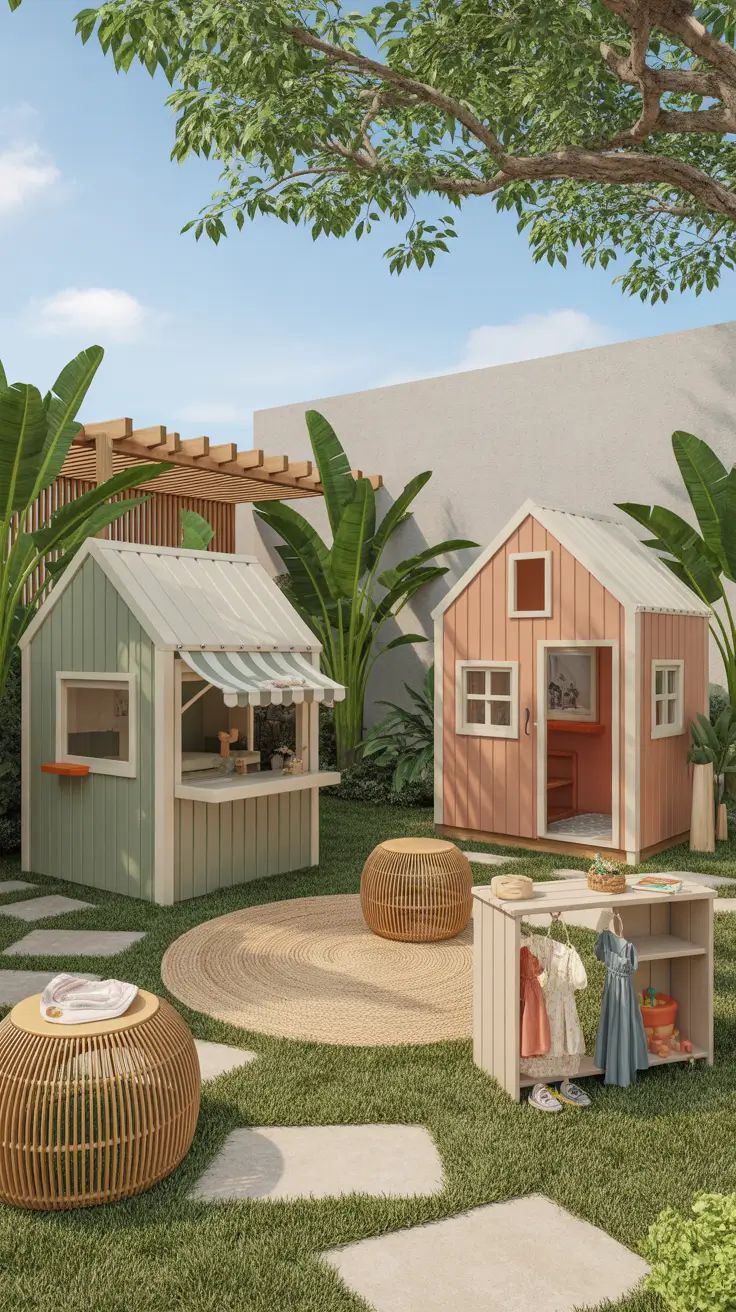
To strengthen this section, I would add a small outdoor sink station nearby for easy cleanup, and a compact solar string-light system so the village feels magical in the early evening while staying safe.
Black-and-White Parkour Loop
A black-and-white parkour loop is the most modern, visually striking option in this Playground design plan, and I recommend it for active kids who need movement-based play every day. I design it as a continuous loop of low obstacles that children can climb, jump, and balance across, without creating unsafe heights. The black-and-white palette keeps the space sleek and architectural, which is ideal for families who want a Playground that blends with contemporary homes. It’s also surprisingly adaptable to Small space yards because the loop can wrap along a fence line.
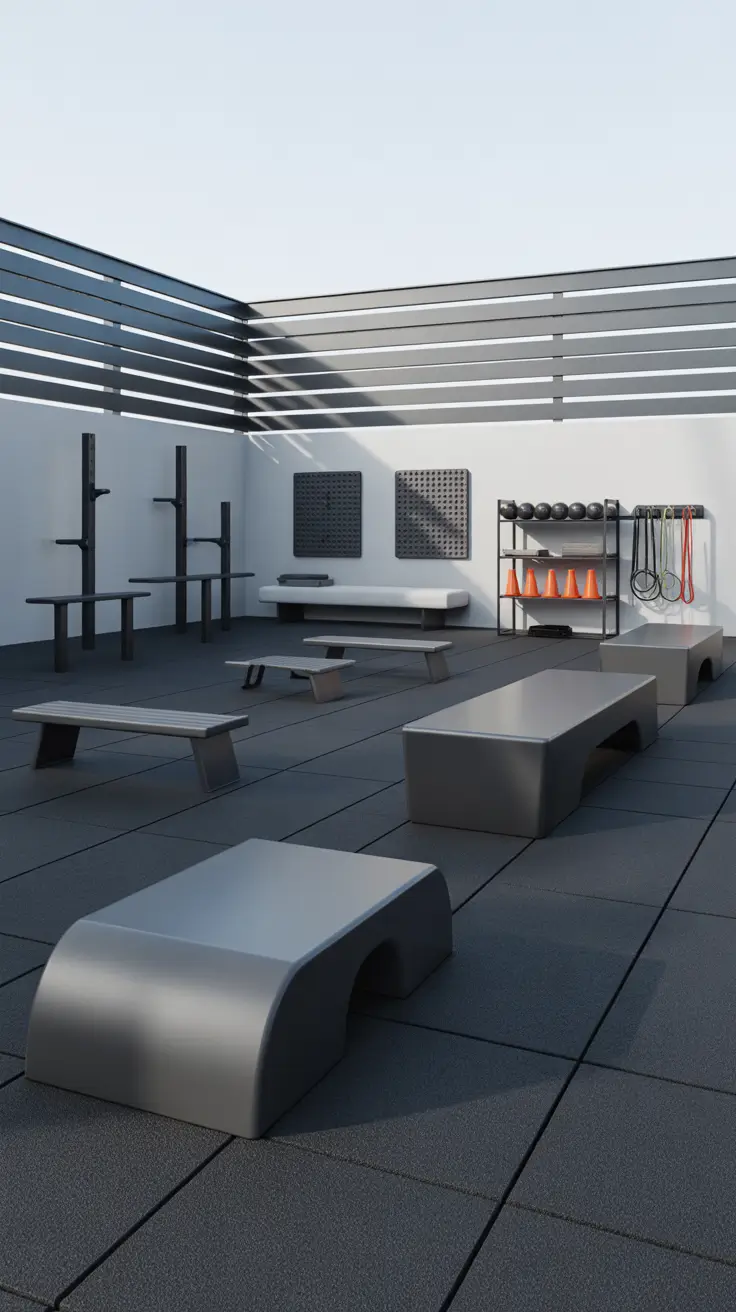
For the layout, I use a sequence of stepping platforms, low balance beams, mini vault blocks, and wall-mounted grip panels. The ground is essential here, so I always install Playground design rubber tiles or a thick layer of Playground design rubber mulch to reduce injury risk. I include a slim bench for resting, a vertical storage rack for cones and jump ropes, and a simple hydration station like a small outdoor cooler shelf. If the family wants Simple easy maintenance, I specify composite or sealed wood materials that hold up to weather while keeping the modern look.
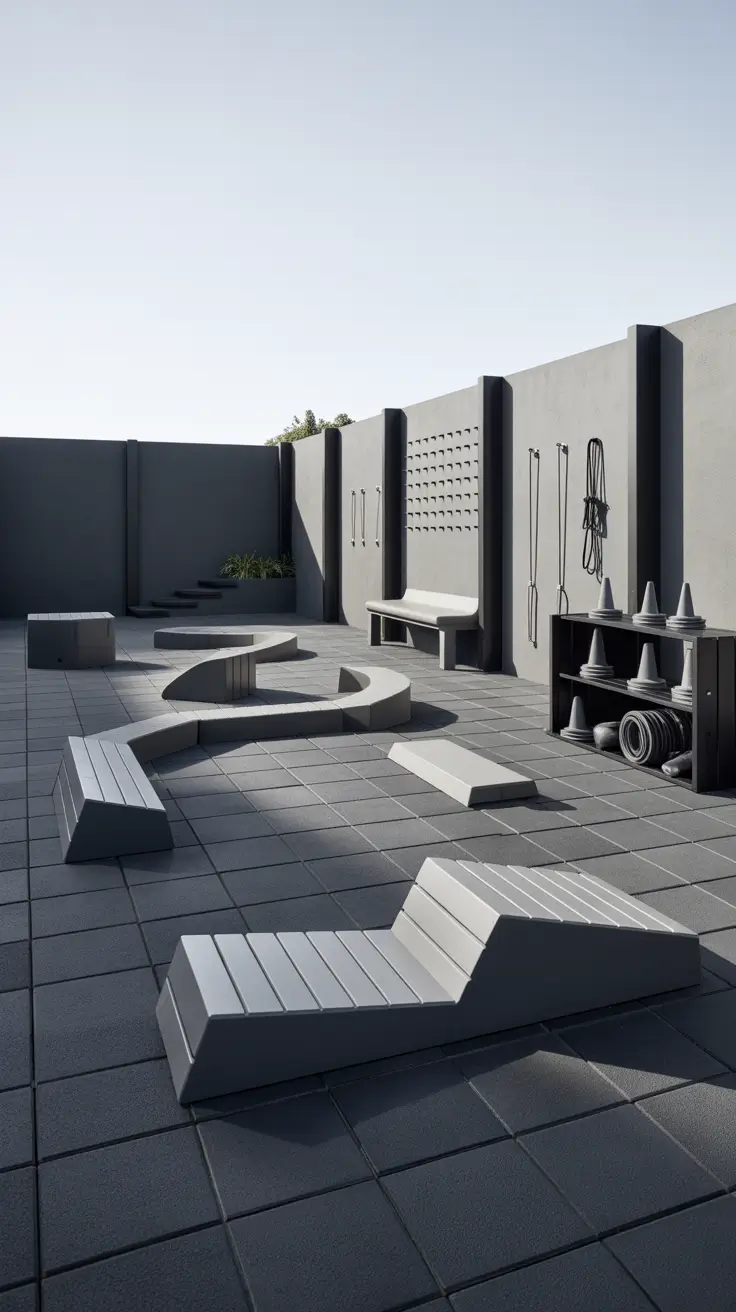
From my professional experience, parkour-style play improves coordination and builds confidence because kids learn to assess risk and control their bodies. I recommend keeping obstacle heights low and focusing on variety rather than intensity, so the loop stays safe and inclusive for different ages. Many US child-safety guidelines stress that fall surfaces matter as much as the equipment itself, and this is one area where I never compromise. My advice is to start with a small loop and expand gradually as children grow, which is also helpful for families on A budget.
To complete this section, I would add ground markings for timed challenges, plus a simple timer board to make skill-building fun without turning the space into pressure-based competition.
Forest-Style Natural Wood Playground
When a family wants a timeless outdoor environment that feels like a private nature park, I design a forest-style Playground design natural wood space that looks integrated into the landscape. This concept is deeply Nature-inspired and works beautifully for a backyard that has trees, garden borders, or even a simple lawn that needs structure. Instead of bright plastics, I use raw wood tones, natural rope, and organic shapes so the Playground feels like it belongs outdoors. It’s one of the strongest outdoor area ideas for kids 2026 because it balances design beauty with real long-term function.
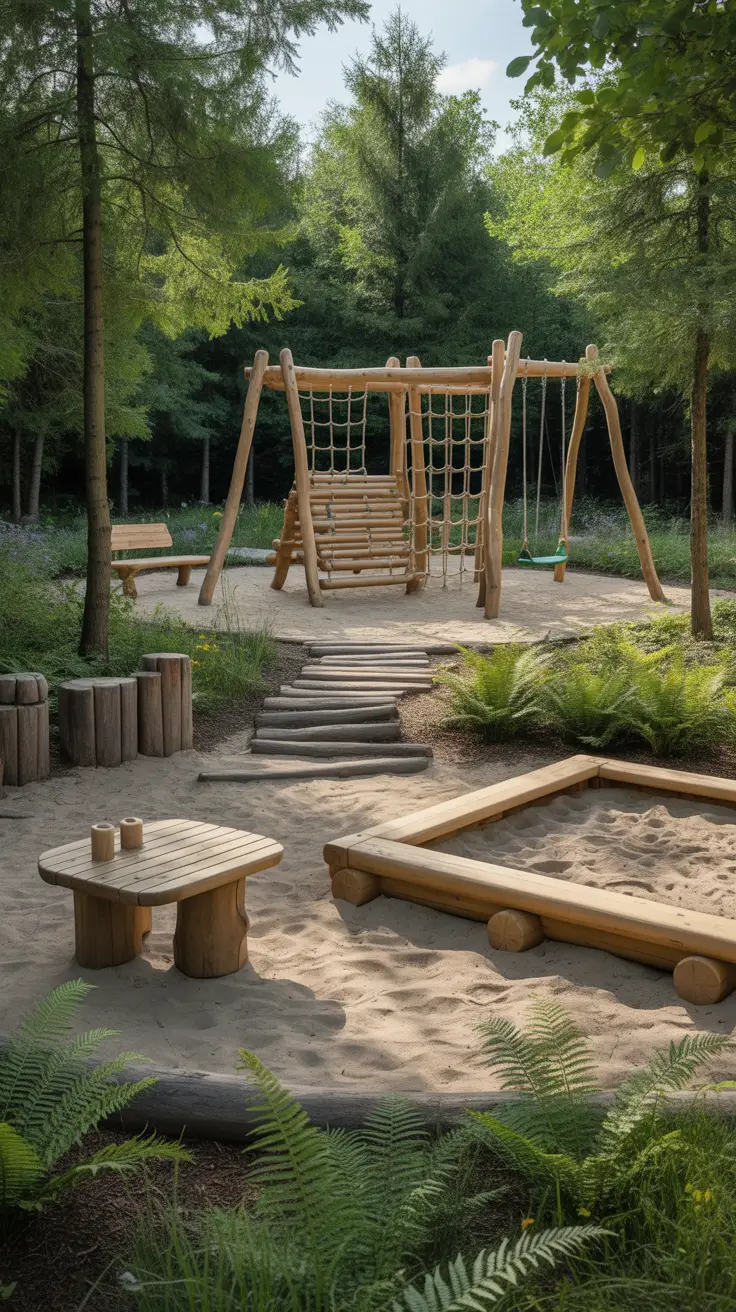
The main elements include a natural wood climbing frame, log stepping stones, a swing set with neutral seats, and a small tower or platform with a gentle slide. I also add a natural sand area and often incorporate Playground design sand boxes as a built-in feature that looks like part of the terrain. Under the structure, I recommend Playground design rubber mulch for safety while keeping the woodsy look. I finish the space with rustic benches, a small firepit-style seating circle (decor only if kids are small), and native plants that attract butterflies and birds.
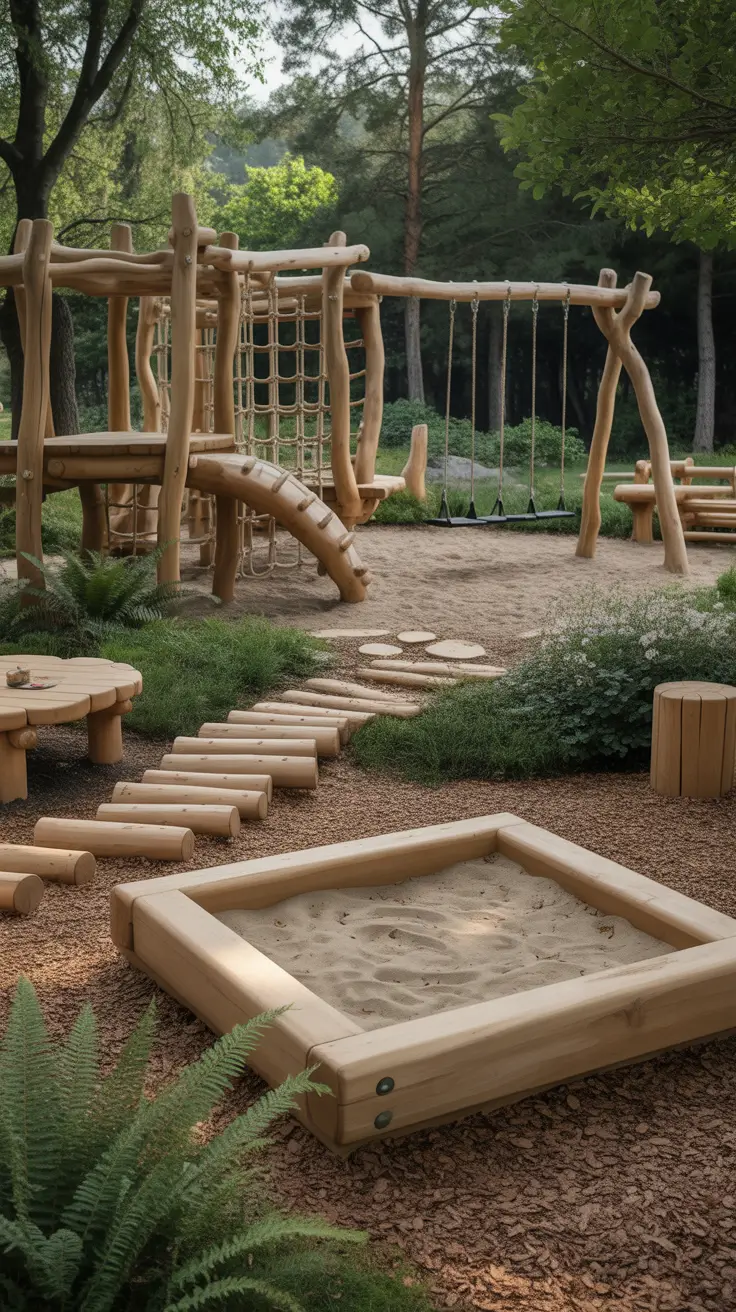
In my experience, children play longer in forest-style playgrounds because the environment sparks open-ended imagination instead of directing play. I also find that parents love this design because it ages well and doesn’t look outdated after a year. Many landscape and outdoor-living professionals recommend natural materials for longevity and visual harmony, and I agree because wood and stone feel authentic. My advice is to choose sealed hardwood or high-quality treated wood and to check rope and connections seasonally to keep the structure safe.
To improve this section further, I would add a small nature exploration table with magnifying tools, and a bug hotel or birdhouse wall to strengthen the outdoor-learning element.
Sunny Yellow Outdoor Art Wall
A sunny yellow outdoor art wall is the perfect solution for families who want creativity-based Play without expanding the Playground footprint. I design this as a clean, modern “creative studio” zone that can be installed on a fence, garage wall, or privacy screen. The yellow tone brings energy, but the structure stays minimal, which makes it ideal for Small space backyards or patios. It’s also a smart Cheap diy option because many elements can be made from reclaimed wood and sealed materials.
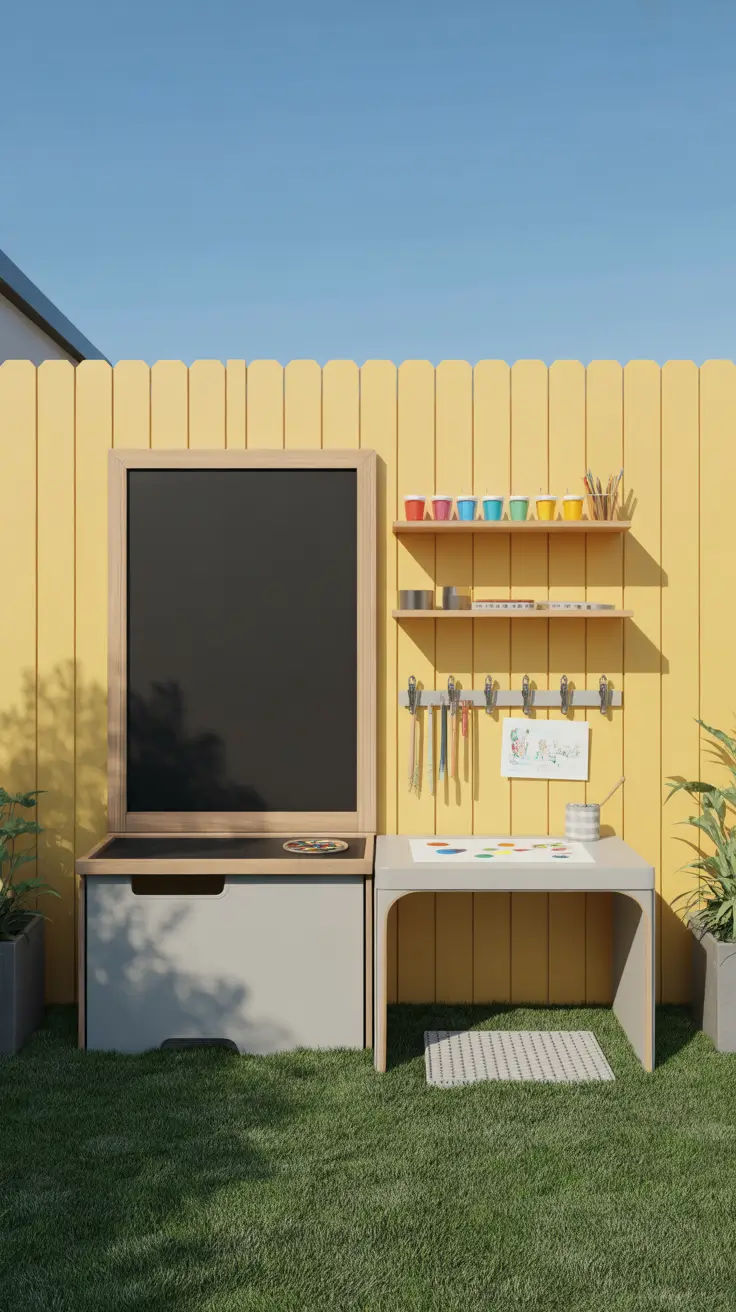
The key features include a large weatherproof chalkboard panel, a magnetic art board, and a roll-down paper station protected by a clear acrylic cover. I add shelves for paint cups, clip hooks for drying artwork, and a small outdoor work table with wipeable surfaces. A compact storage cabinet keeps mess contained, and I recommend adding a washable outdoor mat under the art zone. For families wanting more sensory creativity, I sometimes integrate a simple water-brush station so kids can paint with water safely without staining, which also supports Simple easy cleanup.
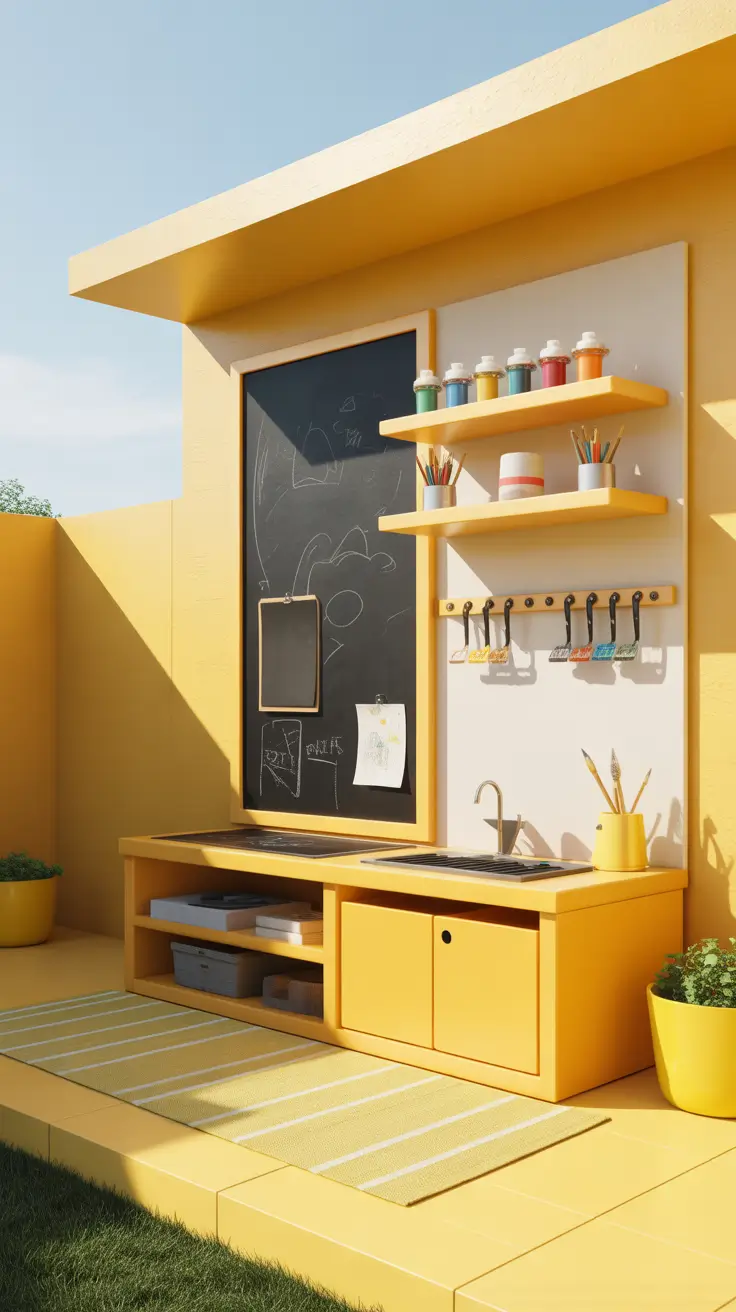
From experience, art walls become daily routines because kids naturally stop there for a few minutes every time they go outside. I recommend keeping materials accessible but organized, because children are more likely to create independently when everything is visible and reachable. Many design and organization experts in the US emphasize “open storage” for creativity spaces, and I’ve found it works well outdoors too when you use weatherproof bins. My personal advice is to add one rotating feature, such as seasonal stencils or a themed prompt board, so the wall stays exciting.
To complete this section, I would add a small gallery strip with clip frames for displaying finished art, plus an outdoor-safe spotlight so the space feels like a real studio.
Lavender Reading Hammock Nook
A lavender reading hammock nook is one of the most calming additions to a backyard, and I treat it like a true outdoor lounge room for kids. In 2026, families want wellness-focused outdoor areas as much as active play, and this concept supports quiet time and sensory reset. I design it with soft lavender accents, layered textiles, and a cozy enclosure feeling created through plants or light fencing. It’s a great addition to any Play garden because it balances the more active zones.
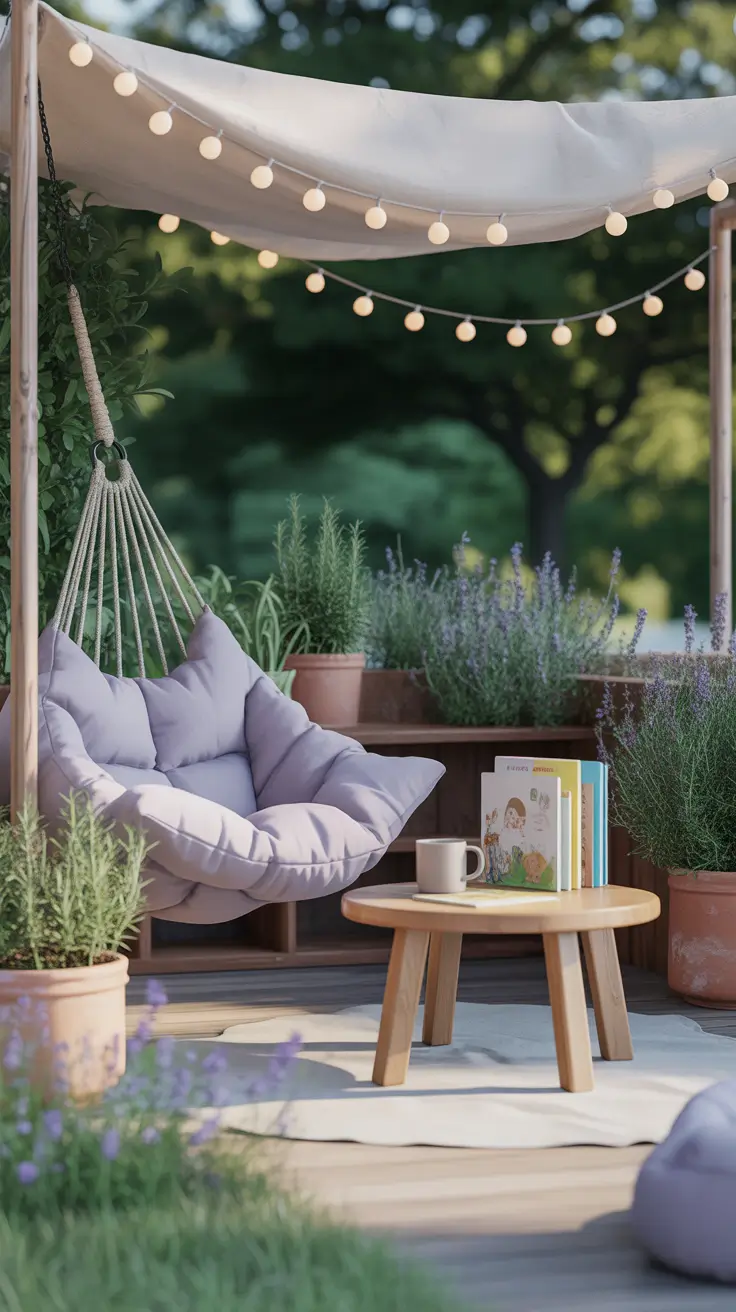
The main furniture piece is a child-safe hammock chair or small hammock bed with strong anchoring. I include outdoor cushions, a weatherproof blanket basket, and a low reading table or stump-style side table. A lavender-toned shade canopy keeps the nook cool, while hanging string lights add soft evening glow. I also like to add a mini bookshelf with waterproof covers, plus planters of lavender, rosemary, and ornamental grasses to make it feel like part of a Sensory garden.
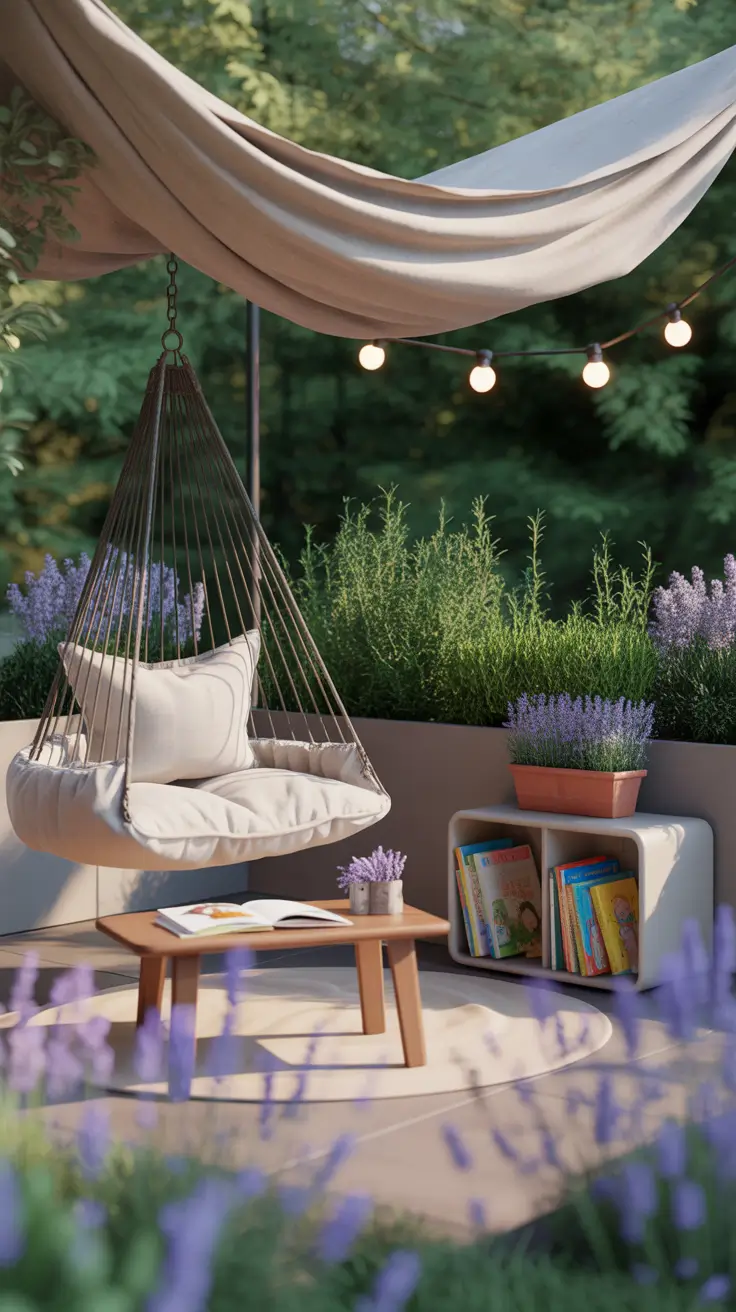
In my professional experience, quiet zones improve the overall function of a Playground design because they give children a place to regulate emotions without going indoors. I recommend treating the nook as a “real room” with boundaries, so kids feel ownership and comfort. Many interior designers and child-development professionals highlight the importance of calm corners in play environments, and the same principle works outdoors. My personal advice is to keep this area slightly separated from noisy zones like Water play or climbing so it truly feels restful.
To strengthen this section, I would add a small outdoor speaker for calm music or audiobooks, and a soft stepping path leading into the nook so it feels like a special destination.
Navy Rubber Tile Mini Court
A navy rubber tile mini court is the most practical option for families who want everyday movement play in a clean and modern layout. I design it as a compact sports and activity zone that supports ball games, scooters, jump-rope challenges, and even mini yoga sessions. The navy color looks premium, hides dirt better than light tones, and pairs beautifully with modern fences and outdoor furniture. It’s also one of the easiest Playground design upgrades because it uses Playground design rubber tiles as a strong foundation.
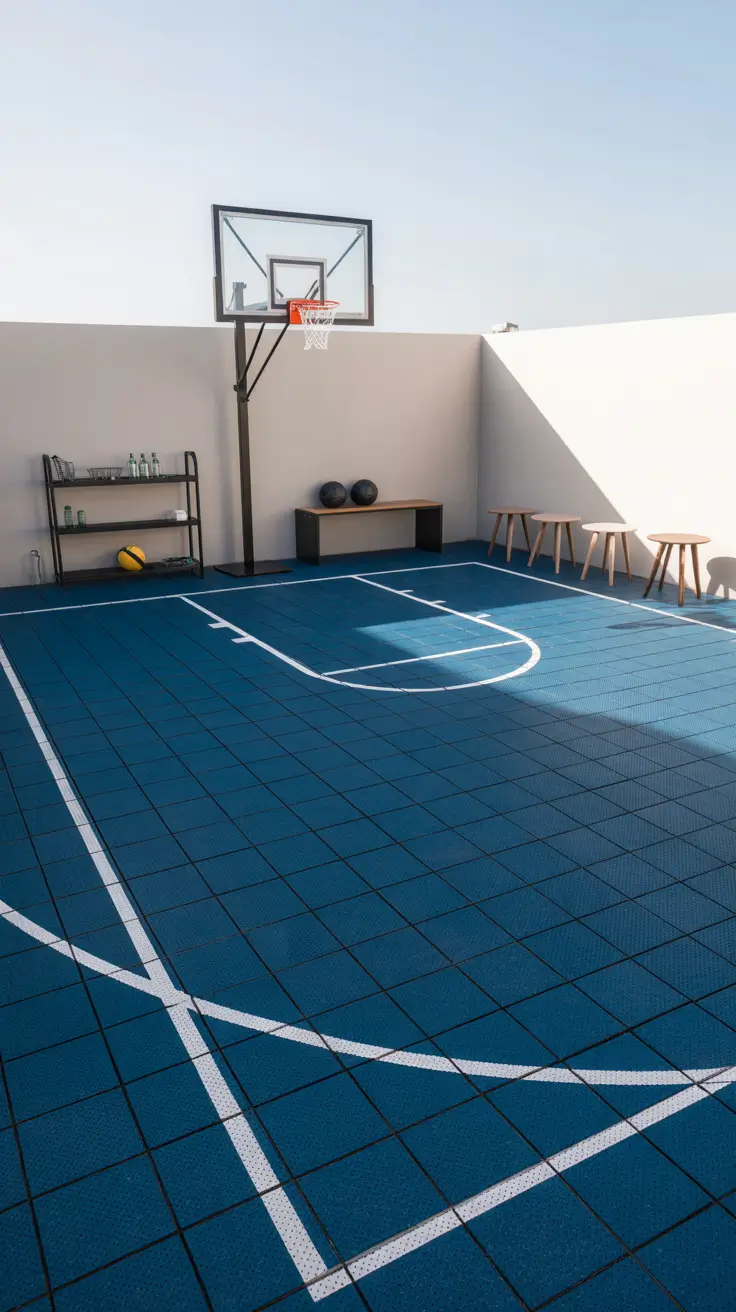
The court includes a clean rectangular layout with painted line markings for multiple games. I add a compact basketball hoop, a rebound wall panel, and a storage bench for balls, cones, and chalk. I also like adding two low stools for rest breaks and a water station shelf for hydration. For families on A budget, I recommend starting with half the court and expanding later, because rubber tiles are modular. If you want an even more durable base, Playground design rubber mulch can be used around the edges as a transition zone.
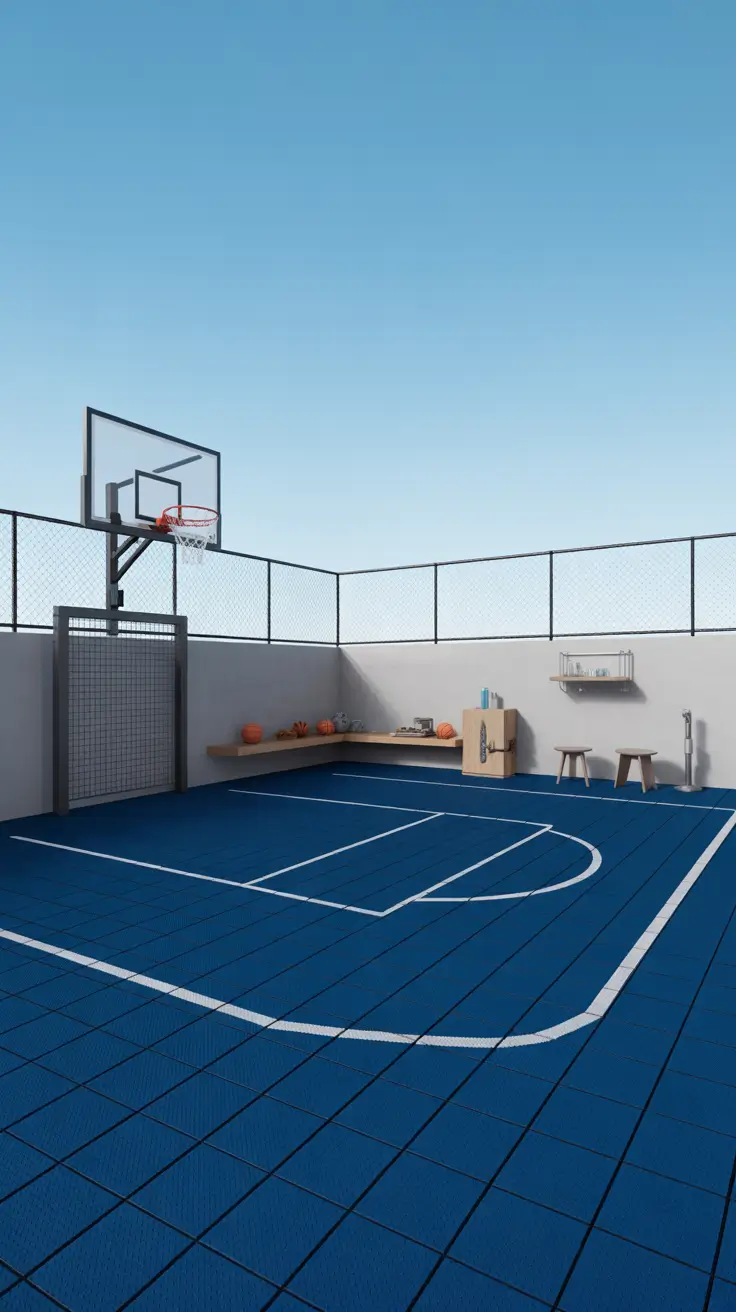
From my experience, mini courts are the most-used outdoor areas because they work for multiple ages and don’t require complex supervision. I recommend keeping the design minimal and investing in good-quality rubber surfacing because it improves comfort and reduces injuries. Many sports-surface professionals in the US emphasize shock absorption and slip resistance for home courts, and I fully agree. My advice is to add a nearby seating area for parents so supervision feels relaxed instead of stressful.
To complete this section, I would add a slim LED floodlight for early evenings, and a small scoreboard board to make casual games feel exciting without becoming overly competitive.
Warm Oak Sandbox Lounge
A warm oak sandbox lounge is my go-to choice when I want a space that feels both playful and design-forward. Instead of a basic box, I design the sandbox as a built-in lounge feature that looks like outdoor furniture. This is a powerful option for Playground design sand boxes because it adds comfort for adults and encourages longer play sessions for kids. It can fit into a big Backyard or a Small space if the shape is customized and the seating is integrated.
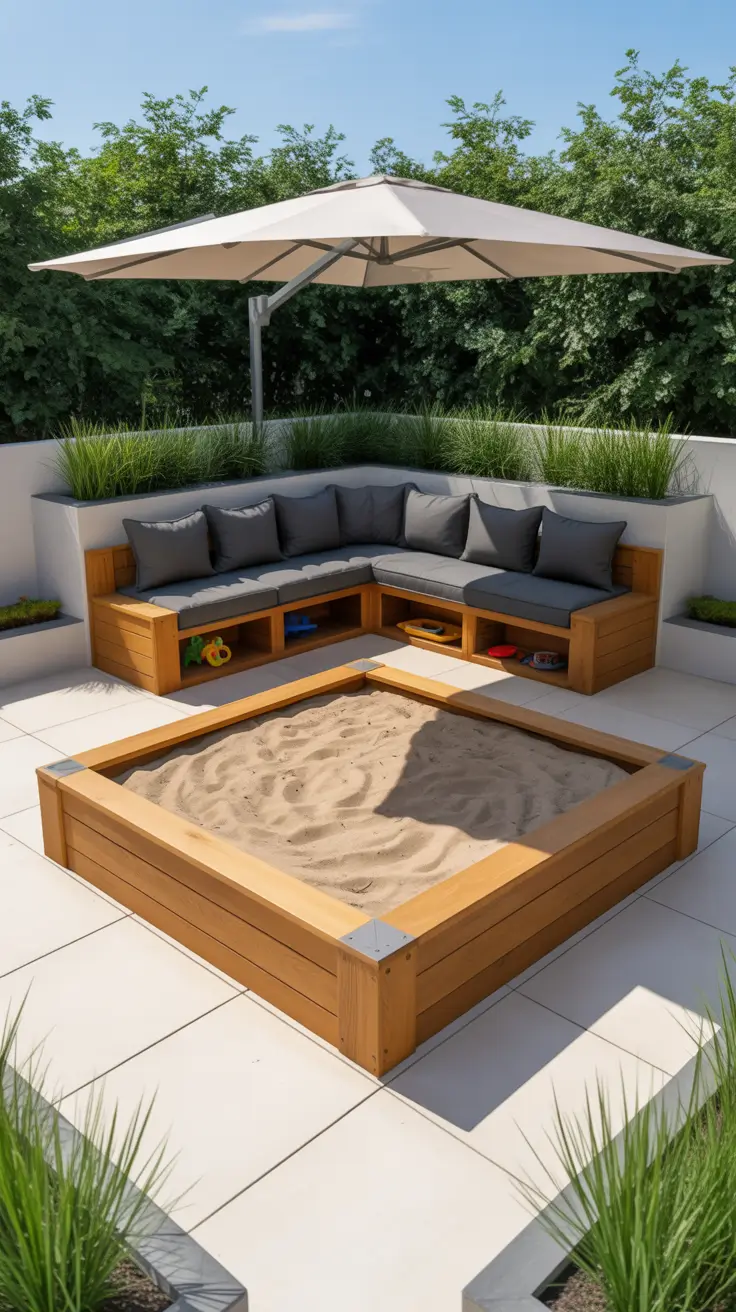
The design includes a large sandbox framed in warm oak-toned wood with built-in corner benches and thick outdoor cushions. I add a sliding cover to keep the sand clean, plus a storage compartment for toys under the seating. To make the lounge feel modern, I include a small shade umbrella or pergola overhead and a neutral outdoor rug nearby. Around the sandbox, I often use Playground design rubber mulch to reduce mess and define the zone, and I include planters with soft grasses to keep the edges attractive.
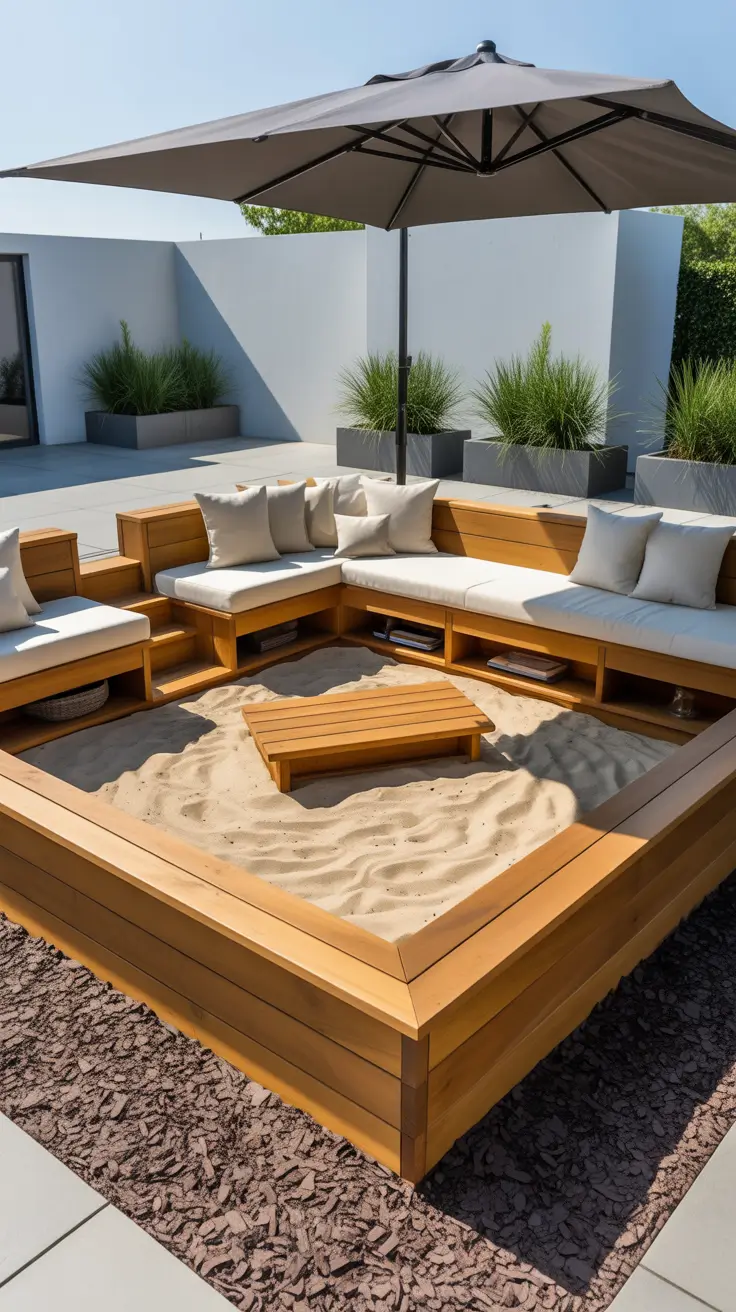
In my experience, sandbox lounges work best when they feel like a family gathering spot, not just a kid station. I recommend choosing fine, clean play sand and rinsing toys weekly, because maintenance keeps the space enjoyable. Many home and garden experts in the US emphasize covered sandboxes for hygiene and longevity, and I agree because it protects your investment. My personal advice is to incorporate a small water element nearby, such as a pitcher station, so kids can build wet sand structures without dragging water across the whole yard.
Red Ride-On Road Track
I like to start with a ride-on road track because it instantly creates structure for Play without taking over the entire Backyard. For 2026, the trend is a clean, modern “mini streetscape” using soft curves, muted tones, and a simple loop design that works even in a Small space. I typically set this track along the edge of the yard or beside a Garden path so it naturally blends into the landscape, rather than looking like a random toy area.
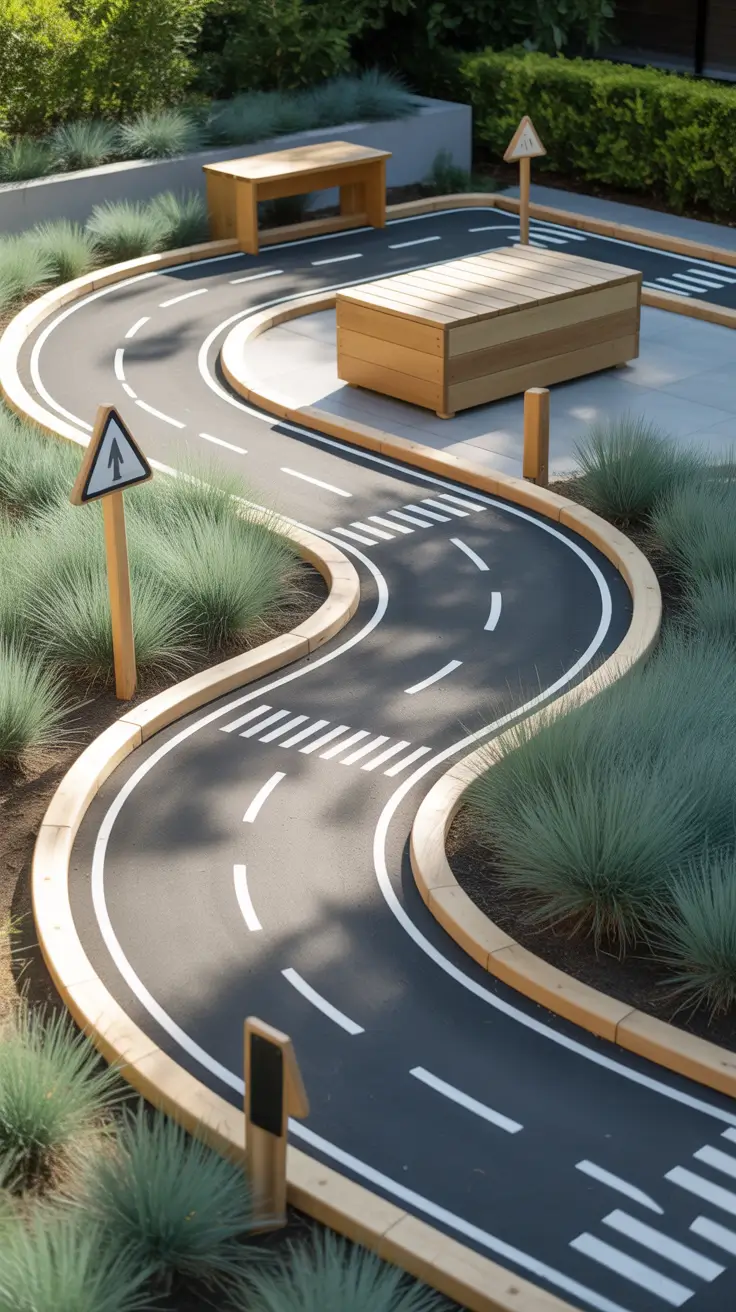
To build it, I recommend a smooth painted concrete strip, pavers, or compacted decomposed granite bordered by low timber edging. Add a few minimalist wooden road signs, a small “parking zone,” and a low bench for shoes and helmets. If you want a Cheap diy version, I’ve seen families use sturdy outdoor paint on existing patio slabs and create lanes, crosswalks, and parking spots with stencils. A small storage box nearby keeps ride-on cars, scooters, and chalk organized, making the area feel intentionally designed.
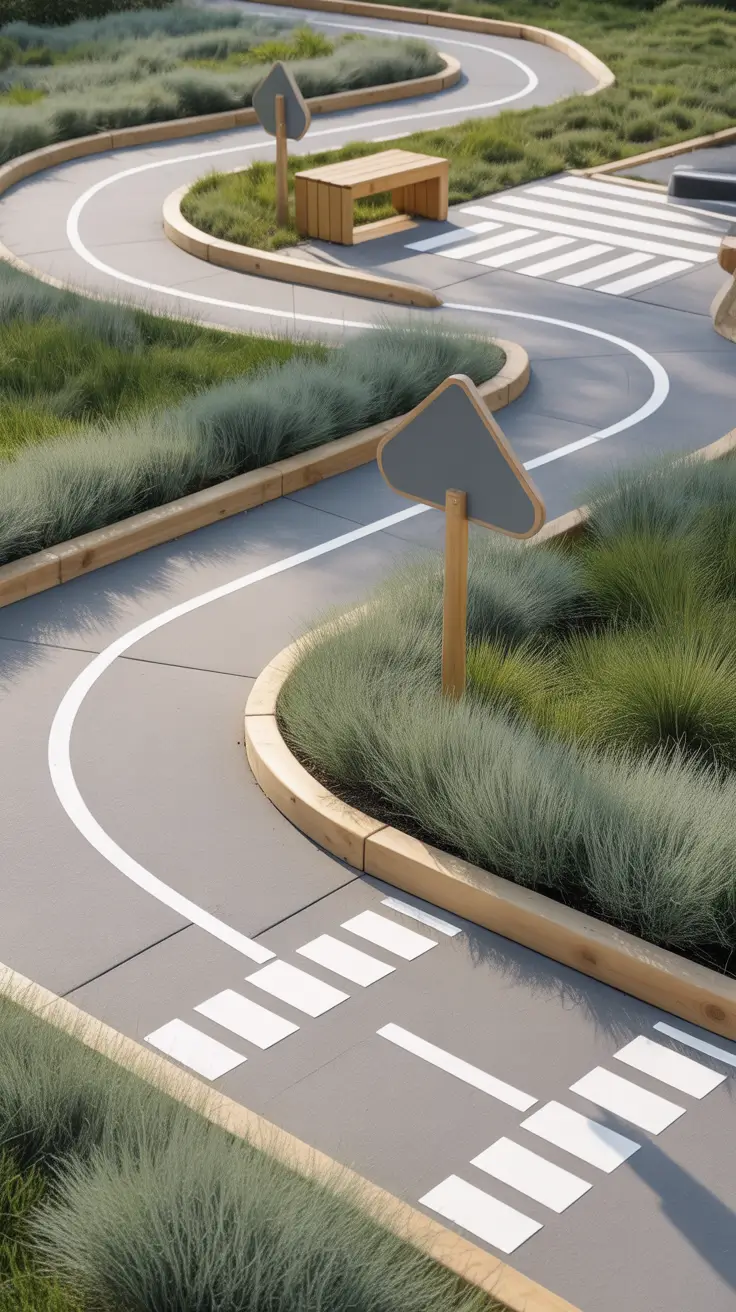
From my experience, this kind of Play garden concept teaches kids real-world skills like navigation, turn-taking, and pretend play in a calm way. Many child development specialists emphasize that structured movement play builds confidence and coordination, and I’ve found that a track layout naturally reduces collisions compared to “open roaming” ride-on toys. When the track looks like part of the yard design, adults enjoy the space too, which increases how often the family actually uses it.
To finish the setup, I would add soft boundary planting and a safety surface on the inside edges where kids might fall, such as Playground design rubber tiles or Playground design rubber mulch near turning zones. If you’re missing anything in this section, it’s lighting and storage. I always include low-voltage path lighting and a weatherproof bin so the area stays tidy and usable into the evening.
Soft Green Nature Discovery Lab
A nature discovery lab is one of my favorite outdoor area ideas for kids 2026 because it blends learning with design. This concept works beautifully in a Garden corner or side yard because it looks like a curated outdoor classroom rather than a toy dump. I design it as a calm, green-toned zone with natural textures, low tables, and exploration stations that encourage curiosity, observation, and gentle sensory play.
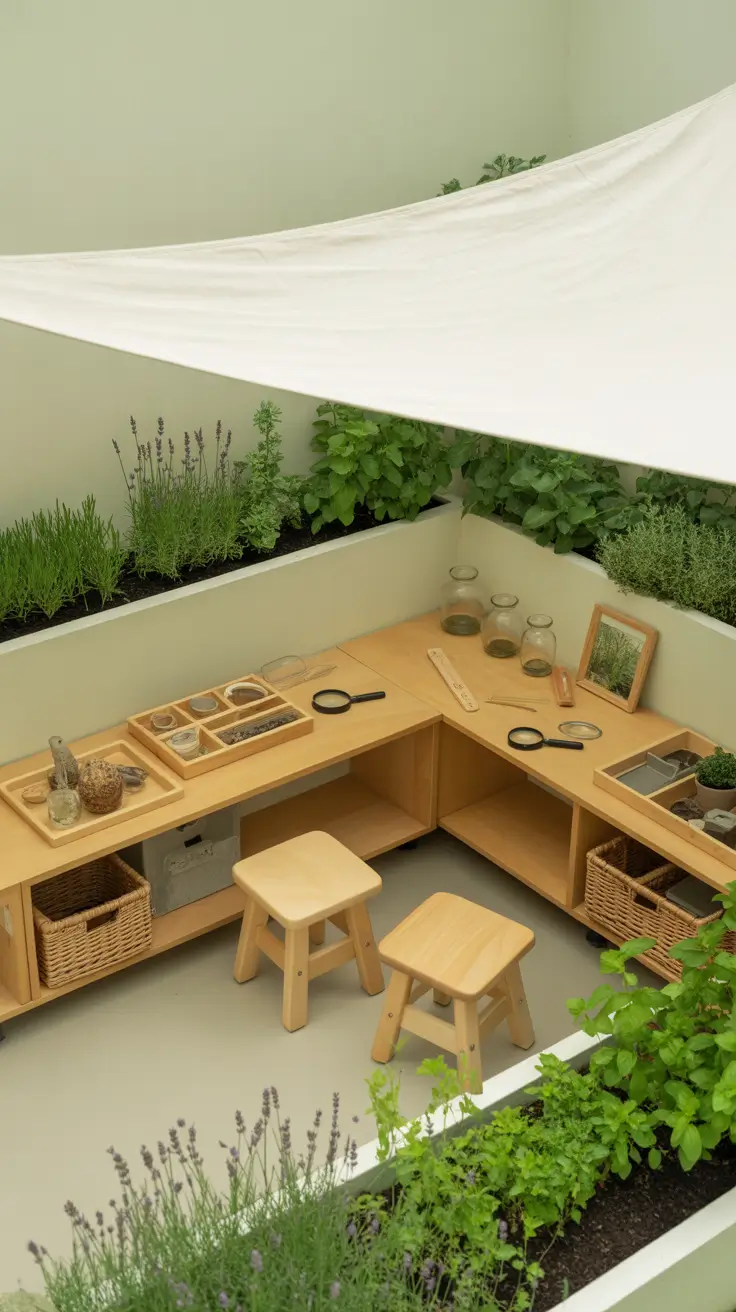
For furniture, I use a low, weatherproof work table, a couple of stackable stools, and slim open shelving for baskets. A covered “specimen station” with jars, magnifiers, and nature trays makes the space feel intentional. I often include raised planters where kids can grow herbs or flowers, turning it into a true Sensory garden with scent, texture, and seasonal change. If the family is into Montessori principles, this is also a perfect Montessori outdoor setup because everything has a designated place and children can independently choose activities.
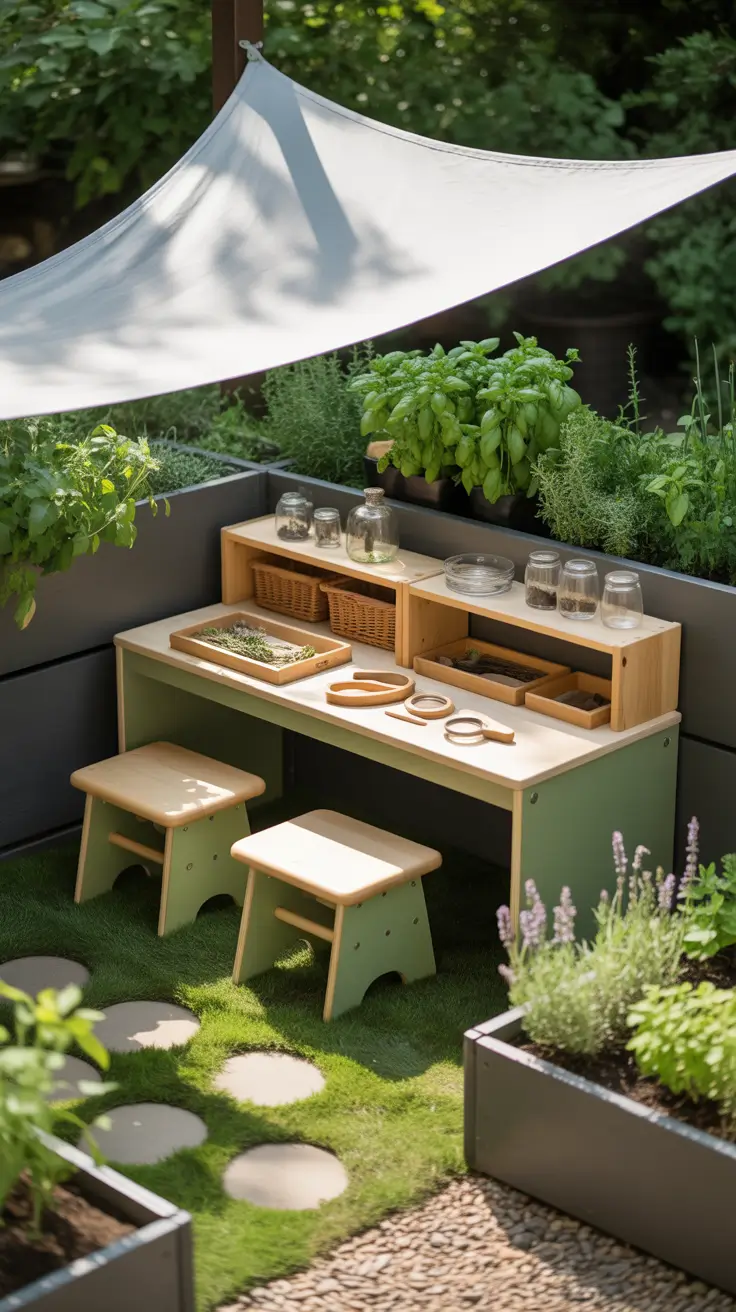
I personally like how this lab encourages quiet focus, which balances high-energy areas like trampolines or water play zones. Several well-known parenting and design publications in the US have highlighted outdoor learning spaces as a major trend, and I agree because kids thrive when they can touch, sort, and investigate natural materials daily. I’ve seen children spend longer in this type of zone than in many traditional play structures, simply because it changes every week as nature changes.
What should be added here is a simple canopy or pergola roof and a hose access point for washing hands and tools. Even a compact shade sail makes the discovery lab usable in summer. If you want a Simple improvement that adds real value, install a small outdoor sink or a water jug stand beside the work table to support messy experiments.
Monochrome Outdoor Music Wall
A modern music wall is a standout feature for 2026 because it gives kids creative Play without requiring a huge footprint. I design this as a clean monochrome installation that feels like outdoor art. It can be mounted to a fence, a shed wall, or a freestanding panel, which makes it ideal for a Small space backyard. The key is to keep the palette calm while letting sound and interaction provide the excitement.
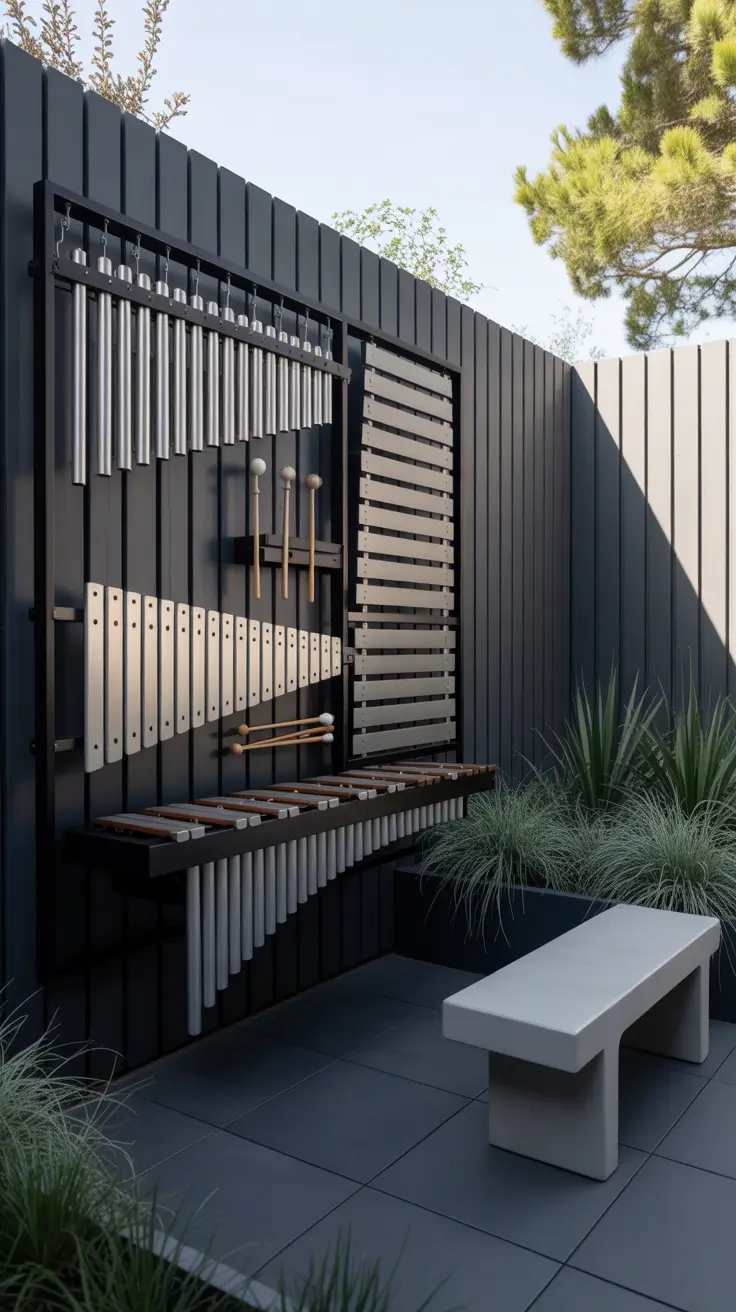
For the setup, I attach weather-resistant percussion instruments like metal chimes, stainless-steel pots, outdoor-safe xylophone bars, and textured rhythm panels. This is where Playground design music wall really shines, especially when you use real materials like sealed wood, powder-coated metal, and rubber bumpers to reduce harsh noise. I often include a small “composer shelf” below the instruments for sticks, shakers, and removable items. If you want it to feel high-end, use uniform hardware and arrange elements in a balanced grid layout.
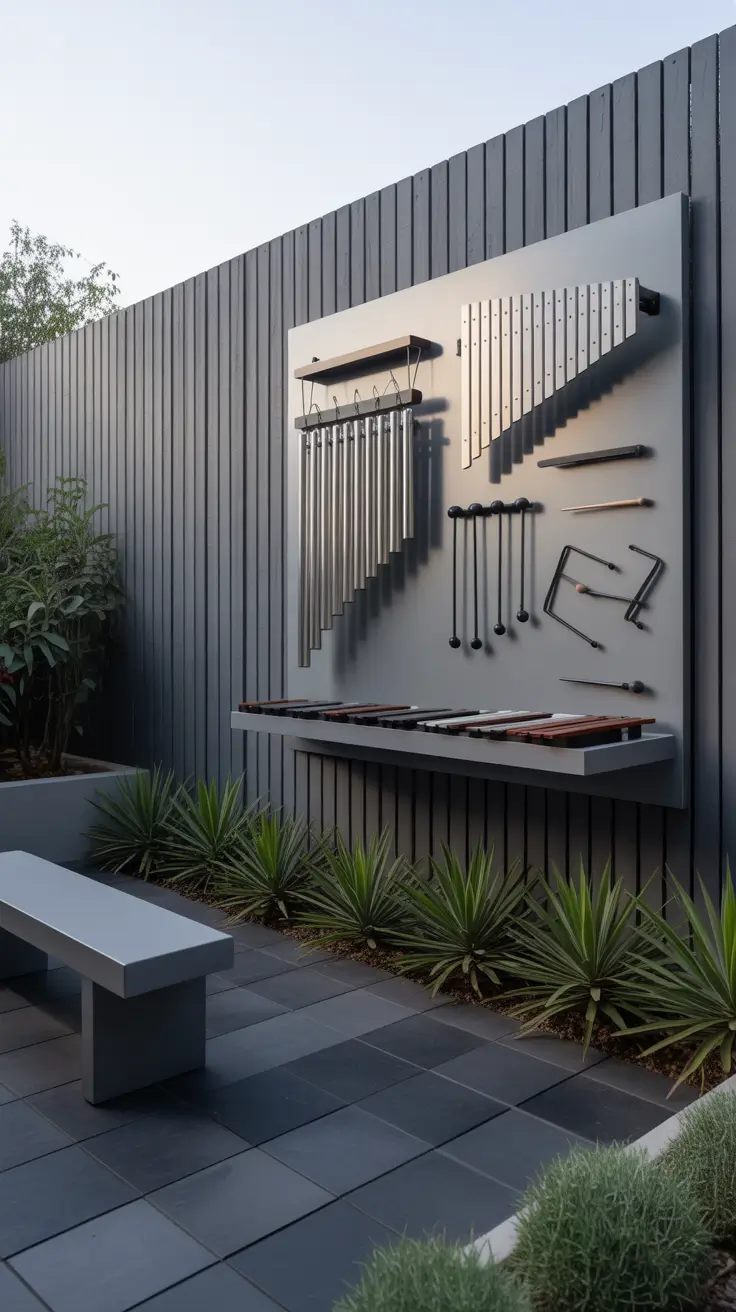
In my opinion, a music wall is one of the most inclusive play ideas because it supports children of different ages and abilities. It also aligns with what many educators recommend about open-ended creativity: kids can engage for five minutes or an hour, and it never gets old. I also love that a monochrome palette keeps the backyard looking modern, even with a highly active play feature.
To complete this section, I would add an acoustic softening zone beneath it, like Playground design rubber tiles or rubber pavers, so dropped sticks don’t create constant clanging. If something is missing, it’s seating for adults and kids. A slim outdoor bench or two cube stools nearby turns it into a mini stage area where children can perform comfortably.
Sunset Ombre Trampoline Strip
Trampolines are still popular, but in 2026 the design focus is how to integrate them into the yard so they look intentional. I like the idea of a “sunset ombre strip” where the trampoline zone becomes a styled landscape feature rather than a random black circle. The concept works by building a long, narrow activity strip that includes the trampoline, soft surfacing, and warm-toned planting that transitions from sandy beige to terracotta to muted coral, like a sunset gradient.
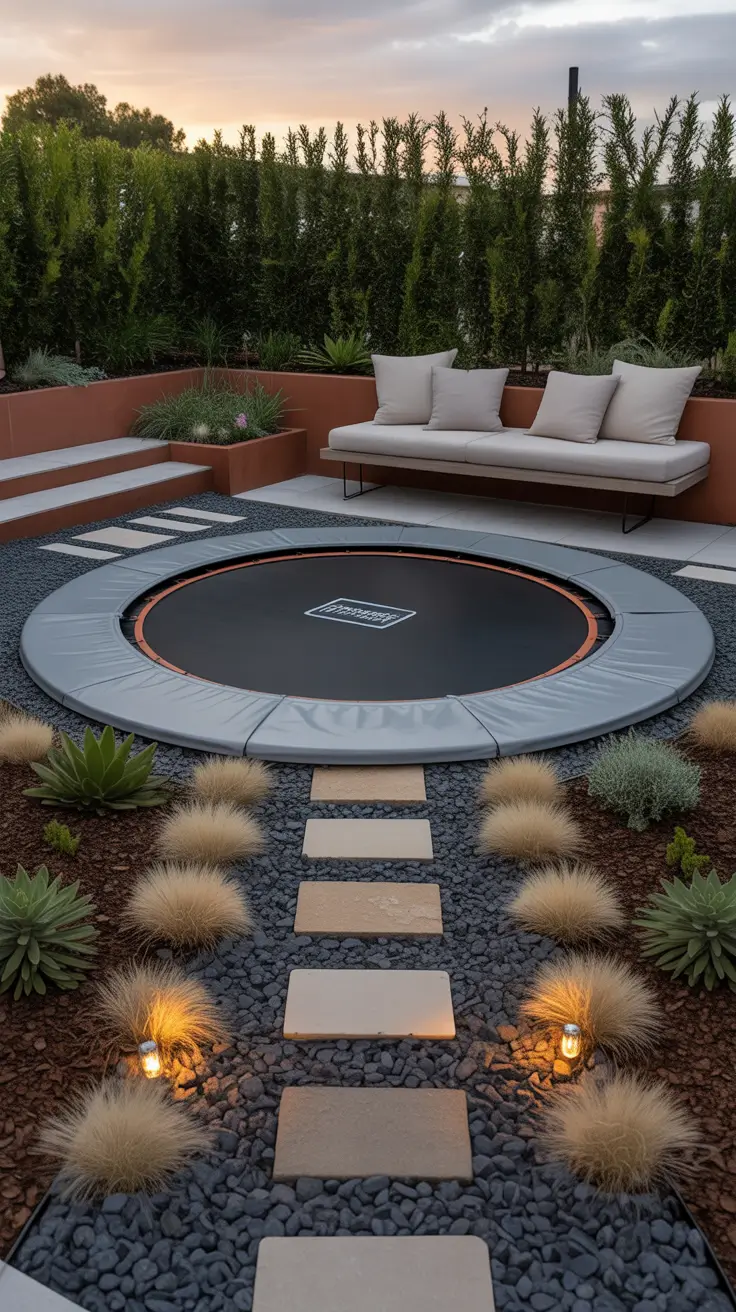
For the trampoline area, I recommend an in-ground or low-profile model with a safety enclosure in a neutral color. Around it, I install smooth stepping stones and a durable surface such as Playground design rubber mulch or Playground design rubber tiles for safe landings. I also add slim planters or a linear bed with ornamental grasses, drought-tolerant shrubs, and warm-toned outdoor cushions on a small bench. This keeps the zone feeling like modern landscaping, not just a play station.
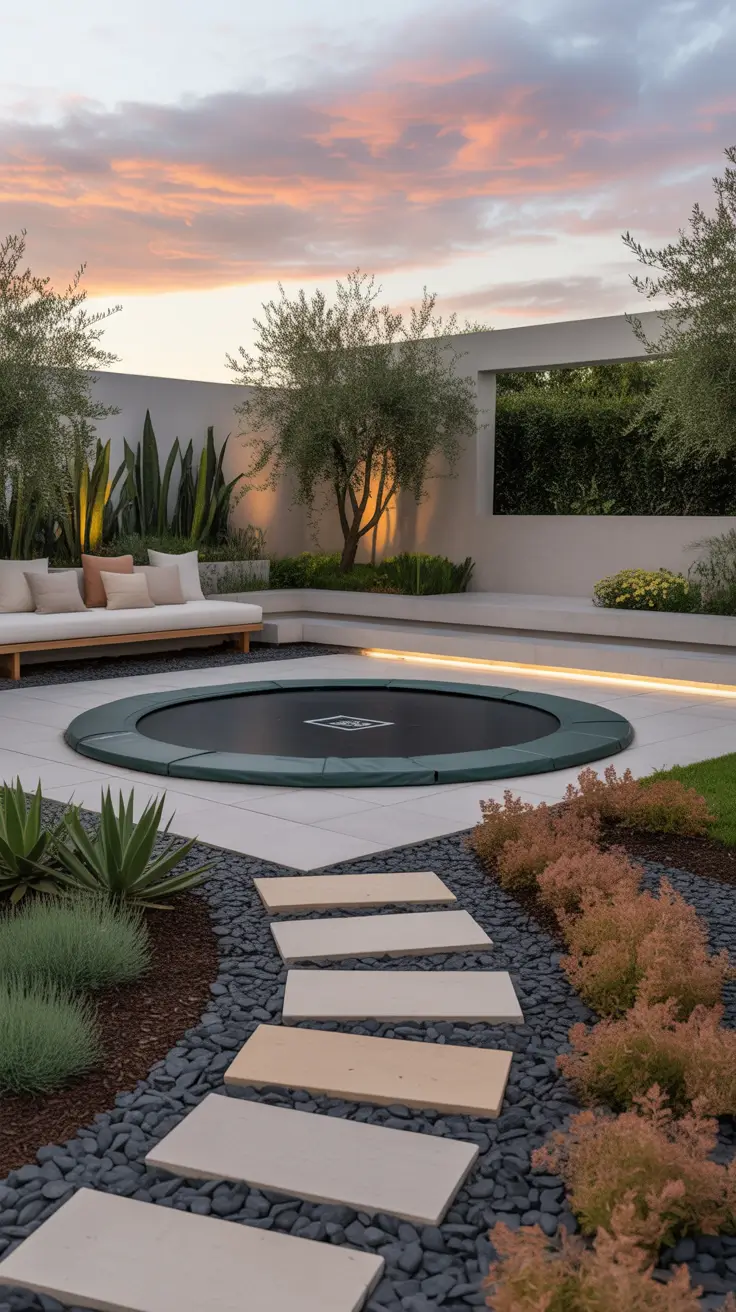
I’ve noticed that when trampolines are visually blended into the yard, families use them more because the area feels calm instead of cluttered. Many landscape designers emphasize that repeating colors and materials throughout a yard creates harmony, and this ombre approach does exactly that. It also looks fantastic in photos, which is a big reason it’s trending in outdoor area ideas for kids 2026 content.
To make it truly complete, I would include storage for shoes and a shaded sitting area nearby for supervision. A small pergola or umbrella with a bench helps adults stay comfortable while keeping kids safer. If something is missing here, it’s night use. I recommend low pathway lighting along the strip to keep it functional and stylish in the evening.
Beige Scandinavian Play Pergola
A Scandinavian play pergola is one of the most aesthetic and practical ways to create a play zone that also looks like a designer patio. I love this concept because it works with almost any home style and instantly adds structure to a Backyard. In 2026, beige and soft neutrals are dominating outdoor design, and a pergola helps you define a dedicated play room outdoors, especially if you want something Simple that doesn’t require a full Playground build.
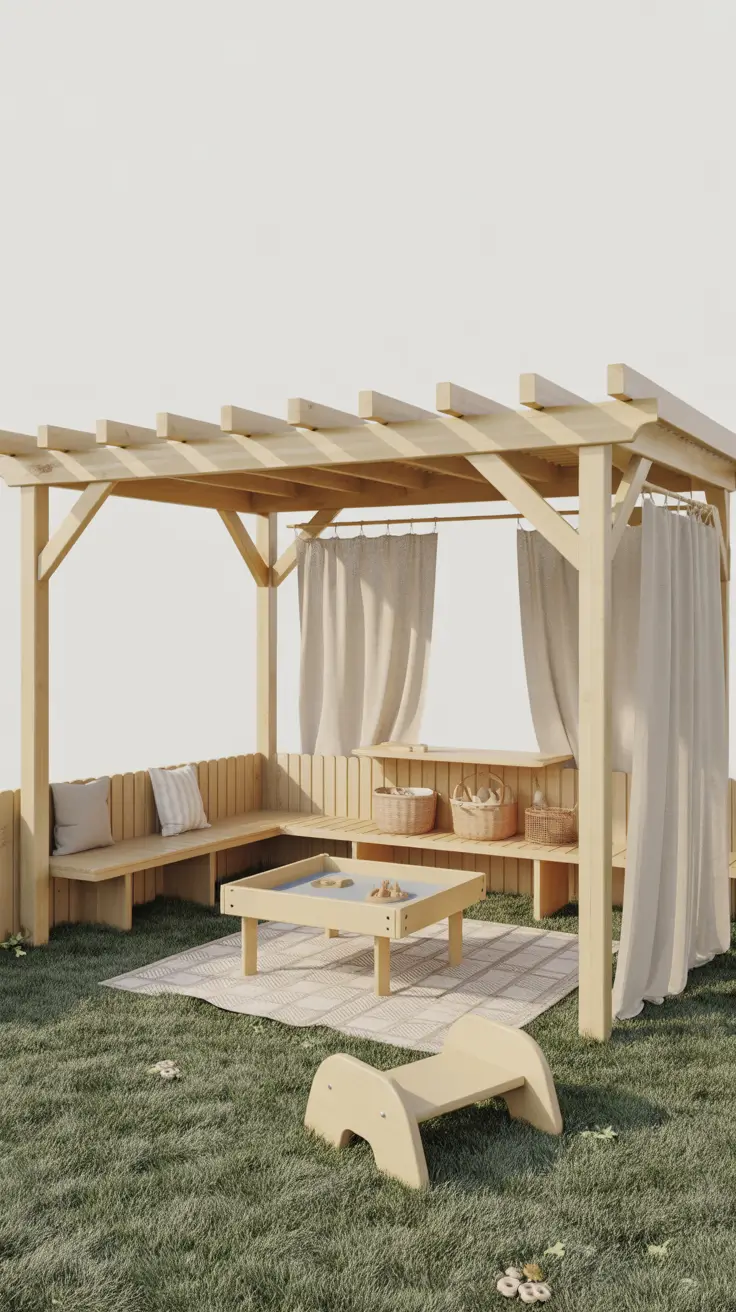
Inside the pergola, I include a low natural wood bench, a sand-and-water table, and a small open shelf for baskets. This is a perfect place to introduce Pallets as a Cheap diy option for building a low seating platform or storage wall, as long as the wood is sanded and sealed properly. I also incorporate Playground design natural wood elements like climbing bars, a small ladder, or a swing attachment, keeping everything minimal and intentional. Linen-style outdoor curtains or a shade screen add softness while controlling sun exposure.
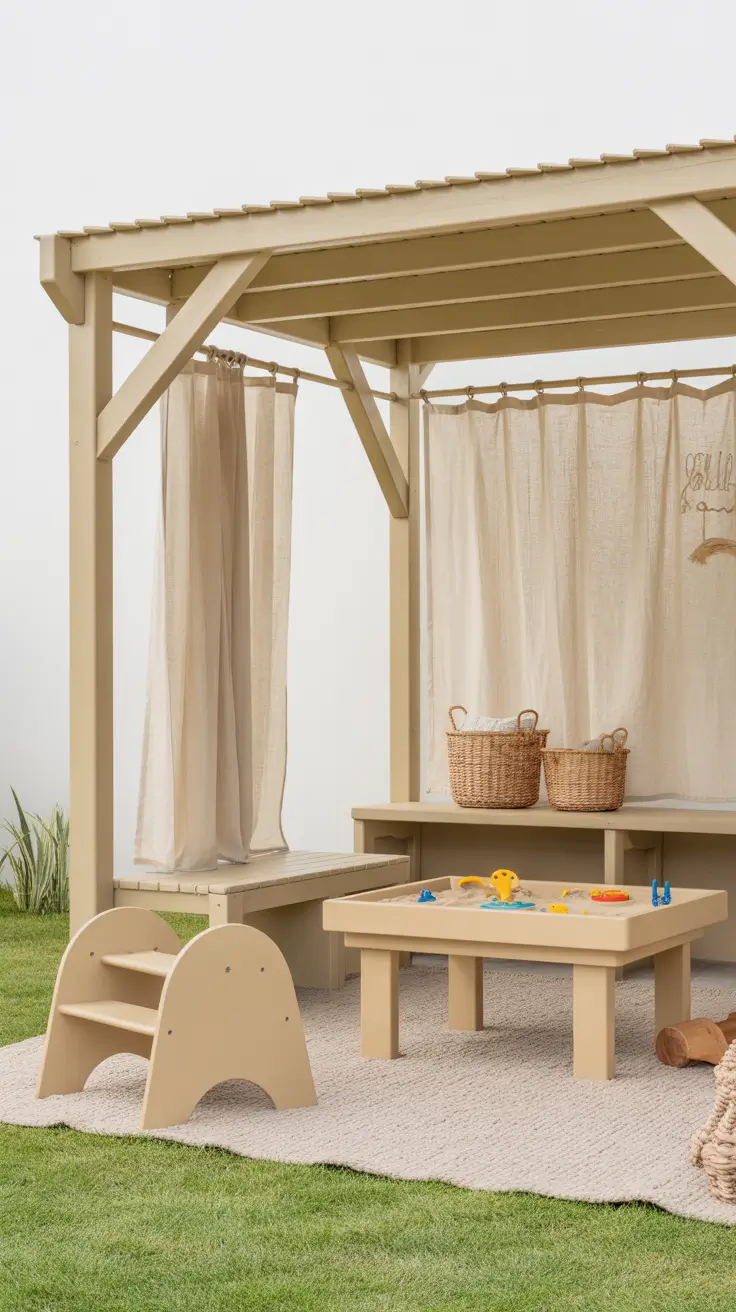
From my personal experience, kids play longer when they feel like they have a “home base.” It becomes a space for crafts, snack breaks, and imaginative play that stays cooler and more comfortable than open sun areas. Many family-friendly design experts recommend creating multi-purpose outdoor rooms, and this pergola is exactly that. It’s also a great place for Montessori outdoor organization, because baskets and labeled zones help kids reset the space independently.
To finish this section, I would add a durable outdoor rug and soft flooring underneath for comfort. If something is missing, it’s weather protection. I recommend adding a waterproof roof panel or retractable shade system so the area stays usable during light rain and intense sun.
Aqua Splash Tunnel Run
Water play is a must-have for many families, but the modern approach is to create a structured water zone that drains well and doesn’t ruin the lawn. The Aqua Splash Tunnel Run is one of my favorite outdoor area ideas for kids 2026 because it feels like a mini adventure course. I design it as a straight or slightly curved pathway that includes a misting tunnel, splash pads, and a soft drying zone at the end. This can work in a narrow side yard, making it surprisingly good for a Small space setup.
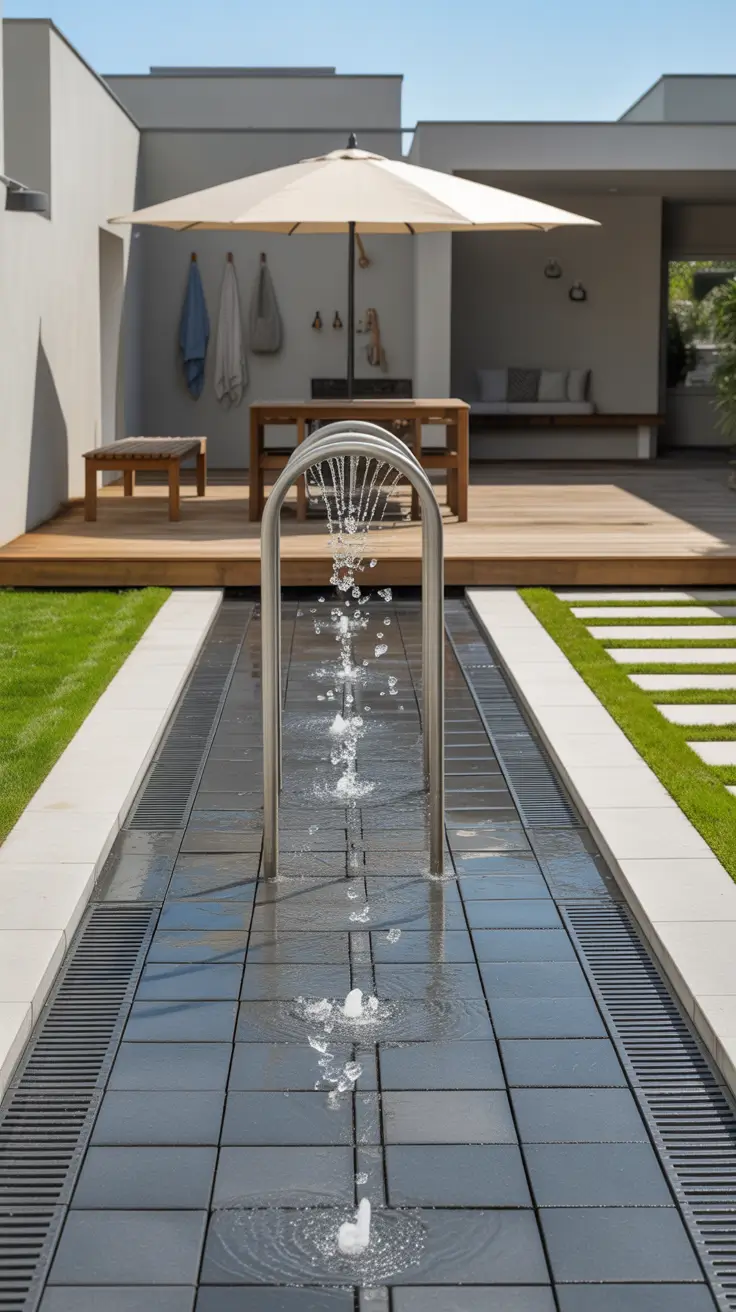
The core features include a lightweight arch tunnel fitted with misting nozzles, a textured slip-resistant surface, and a drainage channel that directs water away from the house. I often add stepping stones, a low deck at the end for towels, and a bench for adults. If the family wants a Cheap diy approach, the tunnel can be built from PVC and outdoor fabric panels, while the run surface can be rubber outdoor tiles. This is where smart material choice matters, because a water zone needs durable, safe flooring and easy hose access.
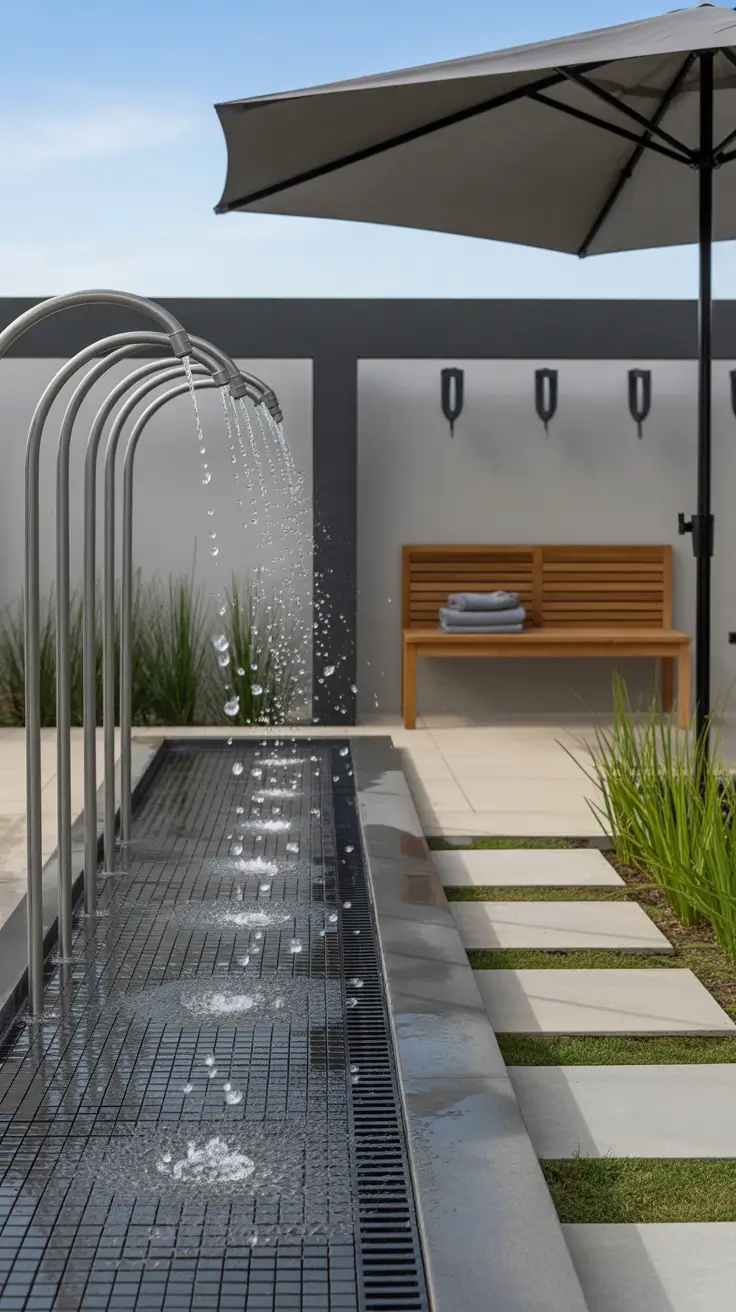
In my opinion, Water play is one of the best ways to get kids moving in summer without forcing it. It encourages running, laughing, and sensory engagement, and it’s also a natural social activity. Many pediatric health experts emphasize active outdoor time, and I’ve found water setups are one of the easiest ways to make that happen daily. The trick is keeping it visually clean and easy to maintain so parents don’t avoid using it.
To complete this section, I would add a drying station and a storage wall for towels and water toys. If something is missing, it’s shade. I always recommend adding an umbrella or shade sail at the end of the run so kids can cool down and parents can supervise comfortably.
Rustic Stone Story Circle
A story circle creates a cozy outdoor gathering spot that supports calm play, reading, and family connection. I love how it balances high-energy zones and adds a timeless element to a Play garden layout. For 2026, the trend is rustic stone combined with warm wood, creating a natural amphitheater effect. This idea works beautifully as the center of a Garden or as a transition zone between the home and the active play area.
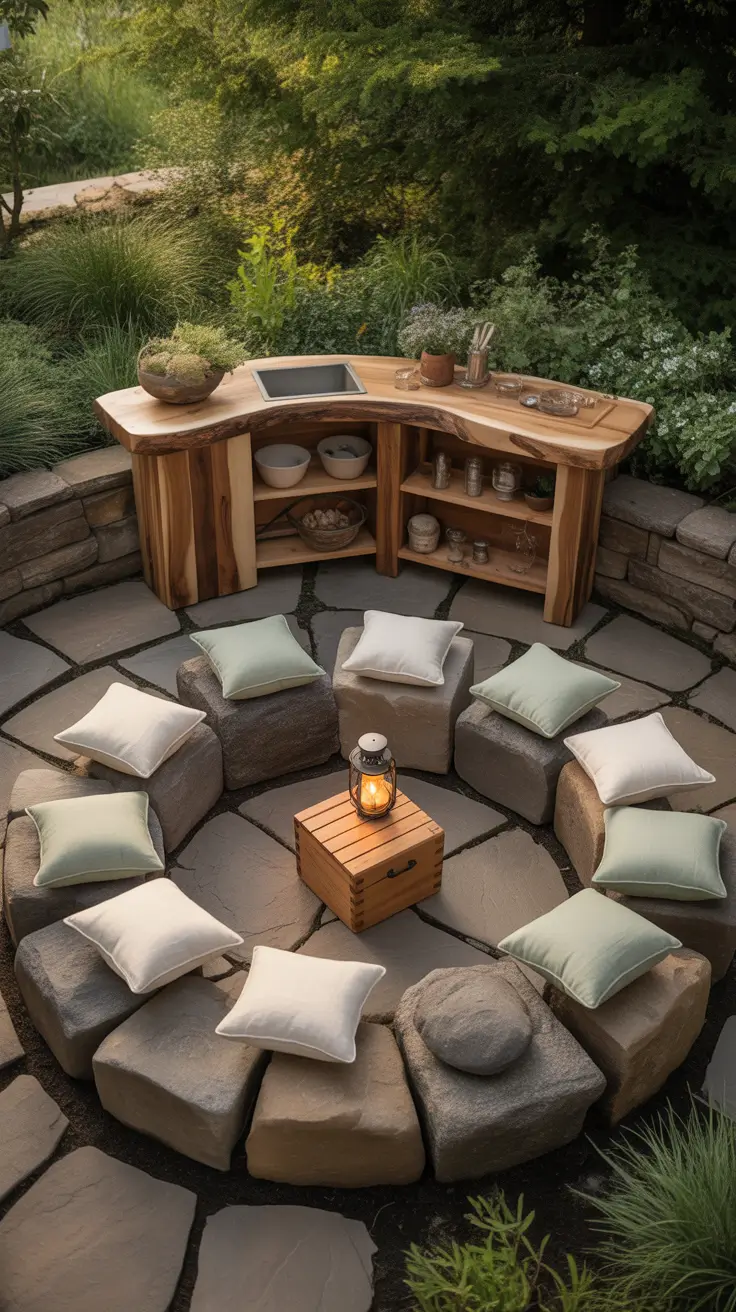
I build the story circle with a round stone base, low seating boulders, and a central feature like a fire bowl or lantern pedestal. For kid comfort, I add outdoor cushions in earthy tones and a small weatherproof book box. Nearby, I often include a mini mud-and-nature station to support imaginative storytelling, which pairs well with Playground design mud kitchen elements like a low sink, a mixing shelf, and natural utensils. If you’re creating a full Playground design plan, this circle acts as the “quiet zone” that anchors the entire layout.
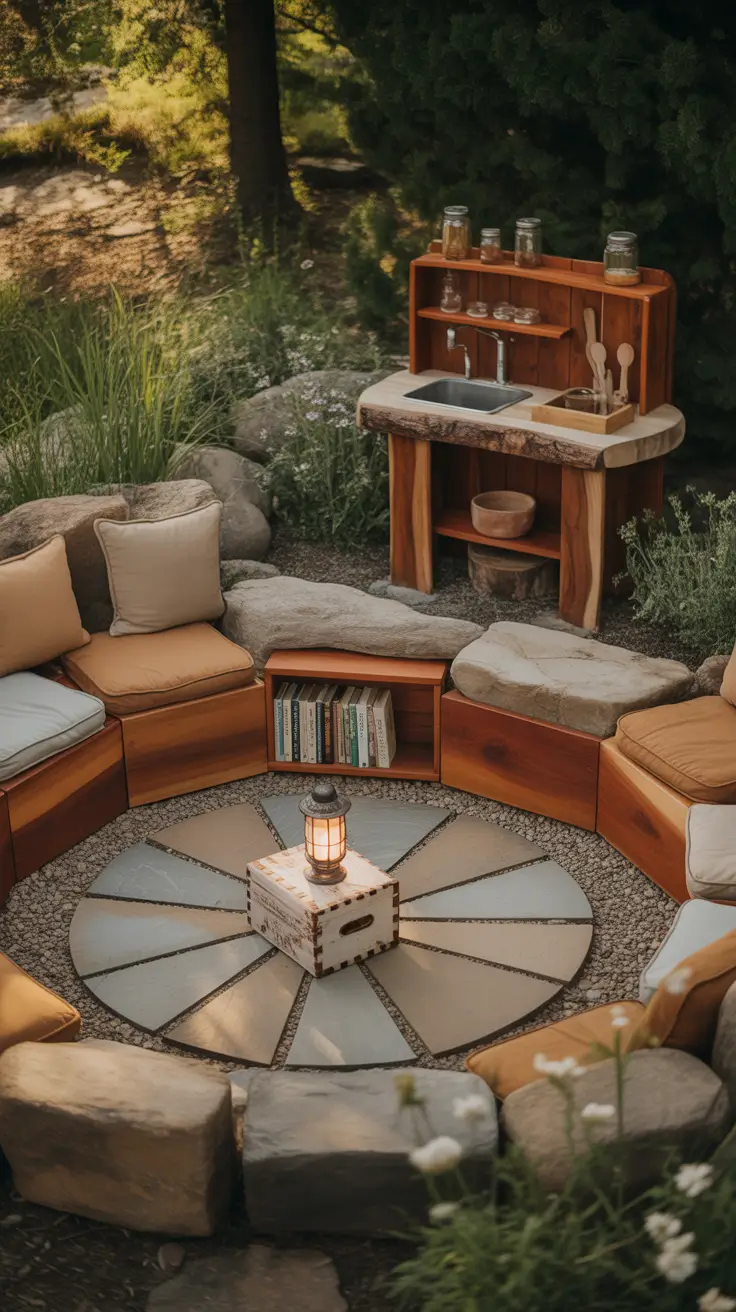
I’ve seen families use this space far more than they expect because it becomes a daily habit spot for reading, snacks, or winding down. Many landscape designers and family-lifestyle publications recommend including a restorative space in any backyard plan, and I fully agree. It supports emotional regulation and social bonding, and it makes the yard feel like a complete outdoor living environment, not only a play space.